Ain't Misbehavin': Piano Duets & Four Hands Digital Sheet Music

Ain't Misbehavin': Piano Duets & Four Hands Digital Sheet Music

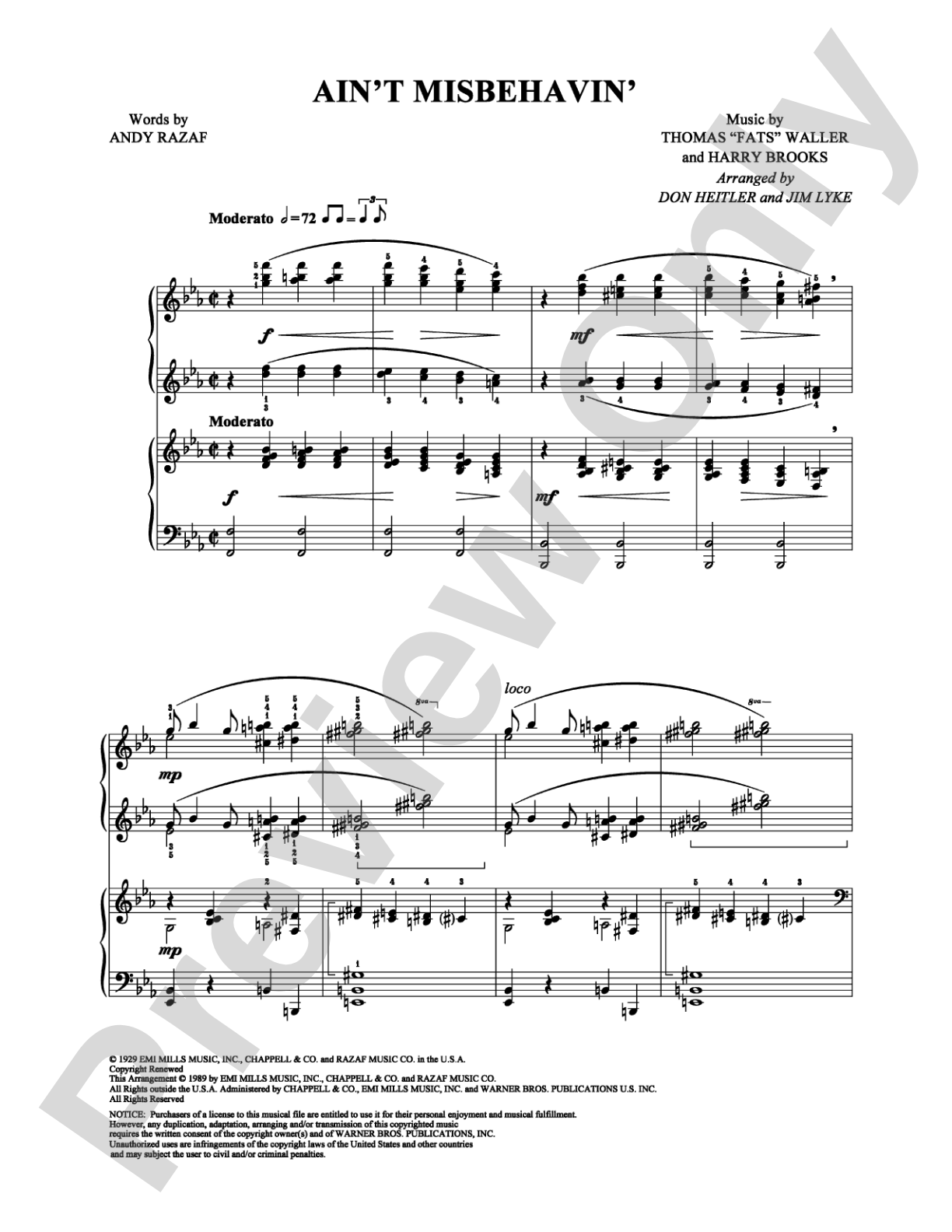
Harry Brooks, Fats Waller

Item: 00-PS-0000845

Digital Download
$3.99
Description

Ain't Misbehavin': Piano Duets & Four Hands Digital Sheet Music isn't in MakeMusic Cloud just yet...but it could be. Let us know you'd like to see it, and you'll help shape what comes next. In the meantime, start a free trial and dive into thousands of interactive titles your students can play along with today.

Sample Audio
No sample audio found.
Sample Video
Additional Details
SKU: 00-PS-0000845

More about this title

About the Creator: Thomas "Fats" Waller

Thomas "Fats" Waller (1904-1943) was a pianist, organist, and composer who became one of jazz's most influential figures during the swing era. His ability to blend stride piano technique with sophisticated harmonic sensibility made him a bridge between ragtime and modern jazz, and his prolific output as a songwriter gave the American songbook some of its most enduring melodies.

Why we love this

Ain't Misbehavin' is a jazz standard that swings hard but stays grounded, making it ideal for pianists who want to play together without getting lost in chord changes or excessive rubato. The duet format lets pianists of different levels share the same stage; one player handles melody and phrasing while the other anchors the groove. This arrangement captures the spirit of stride piano and swing without demanding virtuosic flash.

What to expect

Playful and urbane, with the swagger of a 1920s-30s jazz club. The music bounces with good humor and rhythmic vitality while maintaining enough sophistication to feel cool, never corny. There's space for both players to relax and enjoy the partnership.

Who it's for

Piano duet players range from intermediate students exploring jazz standards together to advanced players looking for accessible ensemble repertoire. Two pianists at the same skill level will find the music most rewarding, though the arrangement can accommodate one stronger player paired with a developing one.

How to get the most out of it

  • Establish the groove before the melody enters. The accompanist should lock into a steady feel for two measures so both players know they're in the same pocket.
  • Balance the voices so the melody reads clearly over the accompaniment. Have the melody player sit slightly higher dynamically, especially in the lower register where the parts may overlap.
  • Treat syncopated figures as conversational, not rushed. Let swing rhythms breathe; this is dialogue, not a race to the downbeat.
  • Listen for rubato cues from the melody player, but keep the left-hand comping steady. One floating line is plenty; the bass and harmony should stay metronomic.

How to use it

Open a recital or concert with this piece to set a warm, approachable tone. It also works beautifully as an interlude between more serious works, giving the audience a moment to smile while showcasing your pianists' ability to listen and lock together. The charm of two pianists reading from the same page appeals to families and young listeners.

Skills your students will build

  • Swing rhythm and jazz phrasing over steady harmonic grounding
  • Ensemble listening and balance between melody and accompaniment
  • Reading syncopated rhythms in a jazz idiom
  • Comping or stride-like left-hand patterns in jazz context
  • Collaborative communication without a conductor

You May Also Like