Agua de Beber (Water to Drink) (arr. Sam Burns) Sheet Music Preview

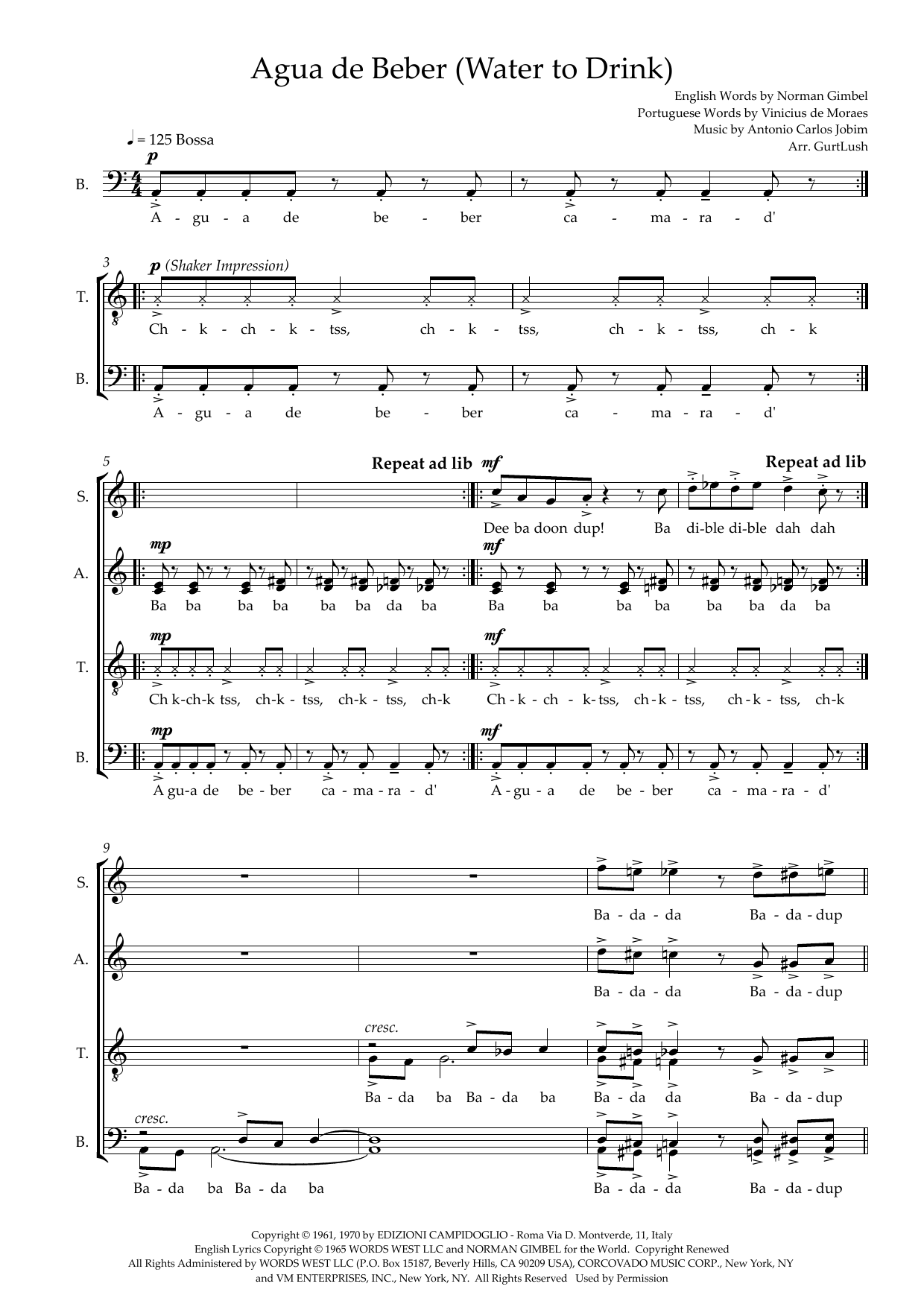
Agua de Beber (Water to Drink) (arr. Sam Burns): SSAATTBB Choral Octavo

As performed by Quarteto Em Cy Com Tamba Trio / Arranged by Sam Burns

Item: 35-DS00457679

Digital Download
$1.99
Description

Agua de Beber (Water to Drink) (arr. Sam Burns): SSAATTBB Choral Octavo isn't in MakeMusic Cloud just yet...but it could be. Let us know you'd like to see it, and you'll help shape what comes next. In the meantime, start a free trial and dive into thousands of interactive titles your students can play along with today.

Sample Audio
No sample audio found.
Sample Video
Additional Details
Publisher: Hal Leonard
Page Count: 4
SKU: 35-DS00457679

More about this title

About the Artist: Quarteto Em Cy Com Tamba Trio

Quarteto Em Cy Com Tamba Trio were pioneers of bossa nova and samba jazz in the 1960s, blending sophisticated harmonies with the infectious rhythms of Brazilian popular music. Their interpretations of Antonio Carlos Jobim and other Brazilian composers helped establish the genre's sound on the international stage, influencing generations of jazz and vocal ensembles.

Why we love this

Sam Burns captures the languid sophistication of this Jobim classic in an arrangement that respects the original's elegance while giving eight-part voices meaningful work. The voicing sits comfortably for mixed choirs and never veers into gratuitous complexity, which means your singers can focus on the rhythmic precision and harmonic lushness that make bossa nova sing.

What to expect

Agua de Beber moves with the easy sophistication of a Rio de Janeiro afternoon. The melody floats over rich, shifting harmonies, and the eight-part texture creates a warmth that feels both contemporary and timeless, with enough space for each voice to breathe.

Who it's for

This works beautifully for intermediate to advanced choirs comfortable with jazz vocabulary and Latin rhythms. It's an excellent choice for groups looking to expand beyond standard pop or show arrangements into the jazz repertoire without requiring instrumental accompaniment.

How to get the most out of it

  • Let the rhythm section anchor the groove; the voices should sit inside that pocket rather than rush the tempo or push ahead of the written rhythm.
  • Balance the solos and soli passages carefully so they breathe without getting lost in the texture of the full ensemble.
  • Pay attention to the Latin vowel shaping, especially on the title phrase, to capture the character of the original recording.
  • Experiment with light swing and subtle syncopation in the sustained sections; straight rhythms will flatten the bossa nova feel.

How to use it

Pair this with other Brazilian or Latin jazz standards to create a thematic concert segment, or use it as an opener that immediately establishes a cosmopolitan, jazz-inflected tone for your program. It also serves as a wonderful teaching piece mid-season when your ensemble has developed ensemble security and is ready to tackle stylistic nuance.

Skills your students will build

  • Reading jazz and bossa nova rhythmic vocabulary (syncopation, swing feel, Latin clave patterns)
  • Balancing eight-part harmonic texture with independence in each voice
  • Stylistic interpretation of Brazilian music (phrasing, vowel placement, rhythmic placement)
  • Listening for and locking into a groove-based harmonic progression

You May Also Like