

Agnus Dei (Requiem): SATB Choral Octavo
By Jay Althouse
Item: 00-PO-0005545
$1.90
Minimum order quantity: 20 copies
Pickup currently not available
Related Items
Agnus Dei (Requiem): SATB Choral Octavo |
$1.90
|
View |
Description
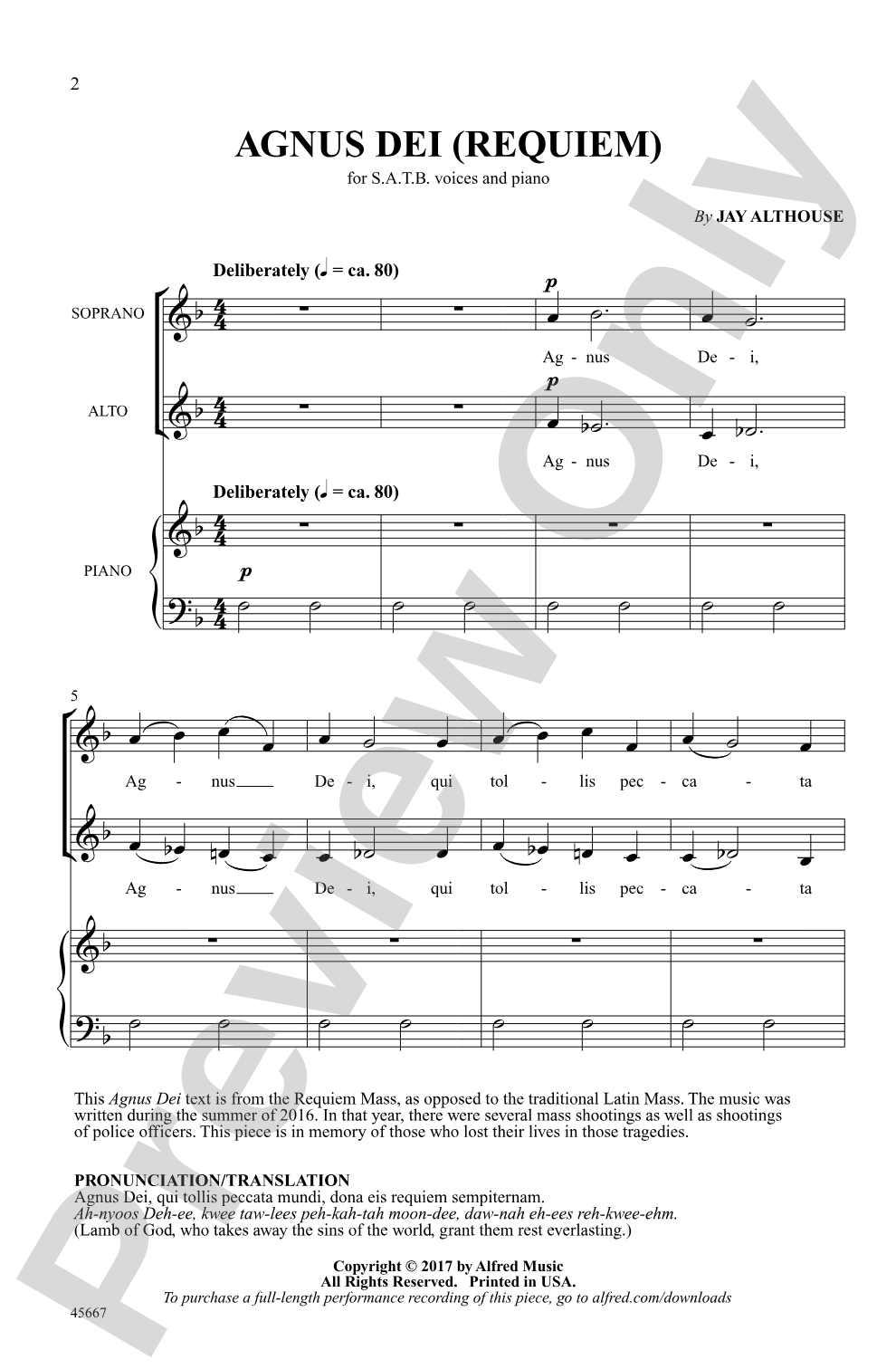
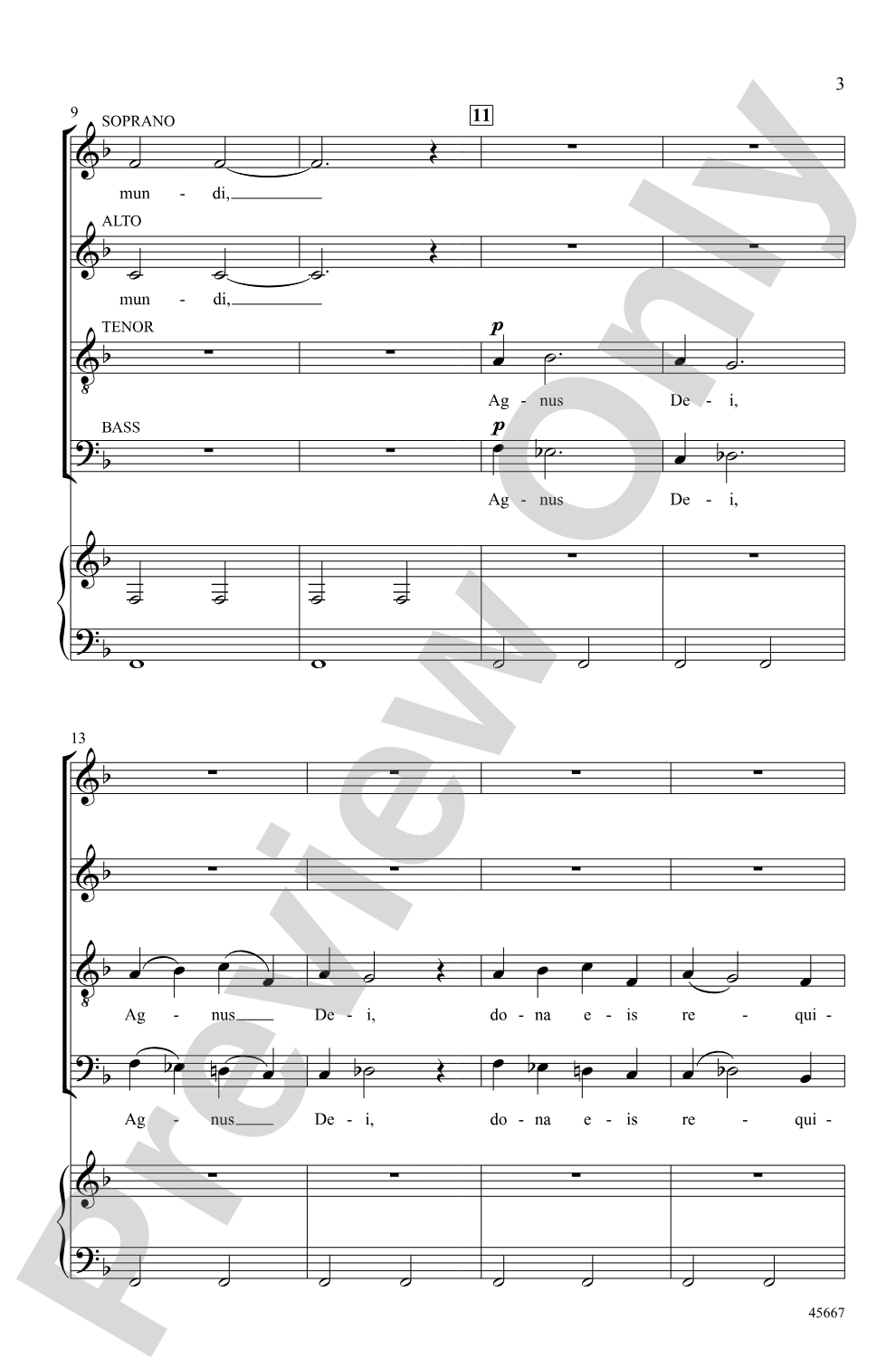
Written in response to numerous unfortunate tragedies in 2016, "Agnus Dei" (with a text from the Requiem Mass) honors the memory of victims. Two chromatic, contrary vocal lines weave over an insistent single note, which tolls in the piano until all voices combine in meditative, reflective, somber harmony.


Agnus Dei (Requiem): SATB Choral Octavo isn't in MakeMusic Cloud just yet...but it could be. Let us know you'd like to see it, and you'll help shape what comes next. In the meantime, start a free trial and dive into thousands of interactive titles your students can play along with today.
Request This Title
Tell us you want it.
Start Your Free Trial
Explore everything that's ready to play right now.
Sample Audio
1
Audio File
--:--
0:00
0:00
Sample Video
Additional Details
Series:
Alfred Choral Designs
Publisher:
Alfred Music
Page Count:
8
SKU:
00-PO-0005545
More about this title
About the Composer: Jay Althouse

Jay Althouse holds degrees in Music Education and Music from Indiana University of Pennsylvania, where he received the Distinguished Alumni Award. Early in his career, he worked in rights and licensing for a major educational publisher and served on the Executive Board of the Music Publishers Association of America. As a composer, he has created over 800 choral works performed widely across the English-speaking world.
Althouse is an ASCAP writer member and frequent recipient of the ASCAP Special Award for his compositions. Beyond choral music, he has co-written children's musicals with Sally K. Albrecht, edited vocal solo collections, and authored or co-authored instructional resources including The Complete Choral Warm-up Book and Accent on Composers. He co-wrote I Hear America Singing, performed by the San Francisco Girls and Boys Choirs at President Obama's 2009 Inauguration. Based in Wake Forest, North Carolina, he serves on the National Advisory Board of the Folk Art Society of America.
Why we love this
Althouse crafts a piece that meets a genuine need in choral repertoire: a work of remembrance that avoids sentimentality through its architectural precision. The chromatic contrary motion and the tolling piano note create a musical space where grief feels both contained and deeply felt, making this a powerful choice for concerts addressing loss or reflection.
What to expect
The opening unfolds like a bell tolling in darkness, its single note grounding two vocal lines that circle each other in chromatic motion. The effect is meditative and somber, building a sense of held grief that gradually opens into wider harmonic space as all four voices join together in quiet, unified reflection.
Who it's for
Choirs seeking repertoire that honors memory with musical substance will find this piece invaluable. It works for intermediate-to-advanced SATB ensembles capable of sustaining independence within chromatic writing and maintaining tonal focus in a sparse, quiet texture. Directors programming memorial concerts or moments of remembrance should consider this a cornerstone piece.
How to get the most out of it
- Balance the two chromatic lines carefully in the early sections; they should remain distinct and audible even as they weave together, so mark dynamic relationships between soprano/alto and tenor/bass parts during rehearsals.
- Let the piano's single tolling note establish a quiet, relentless foundation; the organist or pianist should maintain absolute steadiness to anchor the vocal lines above.
- Shape the final harmonic passage with genuine care for ensemble blend; this meditative conclusion requires all four voices to listen inward and match vowel color across the choir.
- Allow sufficient breath space before major harmonic shifts so the reflective quality never rushes, even when voices combine.
How to use it
This piece serves beautifully as a concert moment of remembrance, whether as part of a memorial service, a concert program addressing social themes, or a festival competition focusing on sacred or narrative repertoire. Its compact eight-page format and reflective character make it an ideal transition piece between larger works or a moving concert finale.
Skills your students will build
- Singing independent chromatic lines while maintaining ensemble awareness
- Balancing exposed vocal writing with a minimalist accompaniment
- Sustaining tone in sparse harmonic contexts and meditative tempos
- Shaping phrase endings with intentionality in a text-driven sacred work
- Blending multiple independent lines into unified harmonic resolution