

Agnus Dei: SATB Choral Octavo
By Sonja Poorman
Item: 00-PO-0003210
$1.90
Minimum order quantity: 20 copies
Pickup currently not available
Description
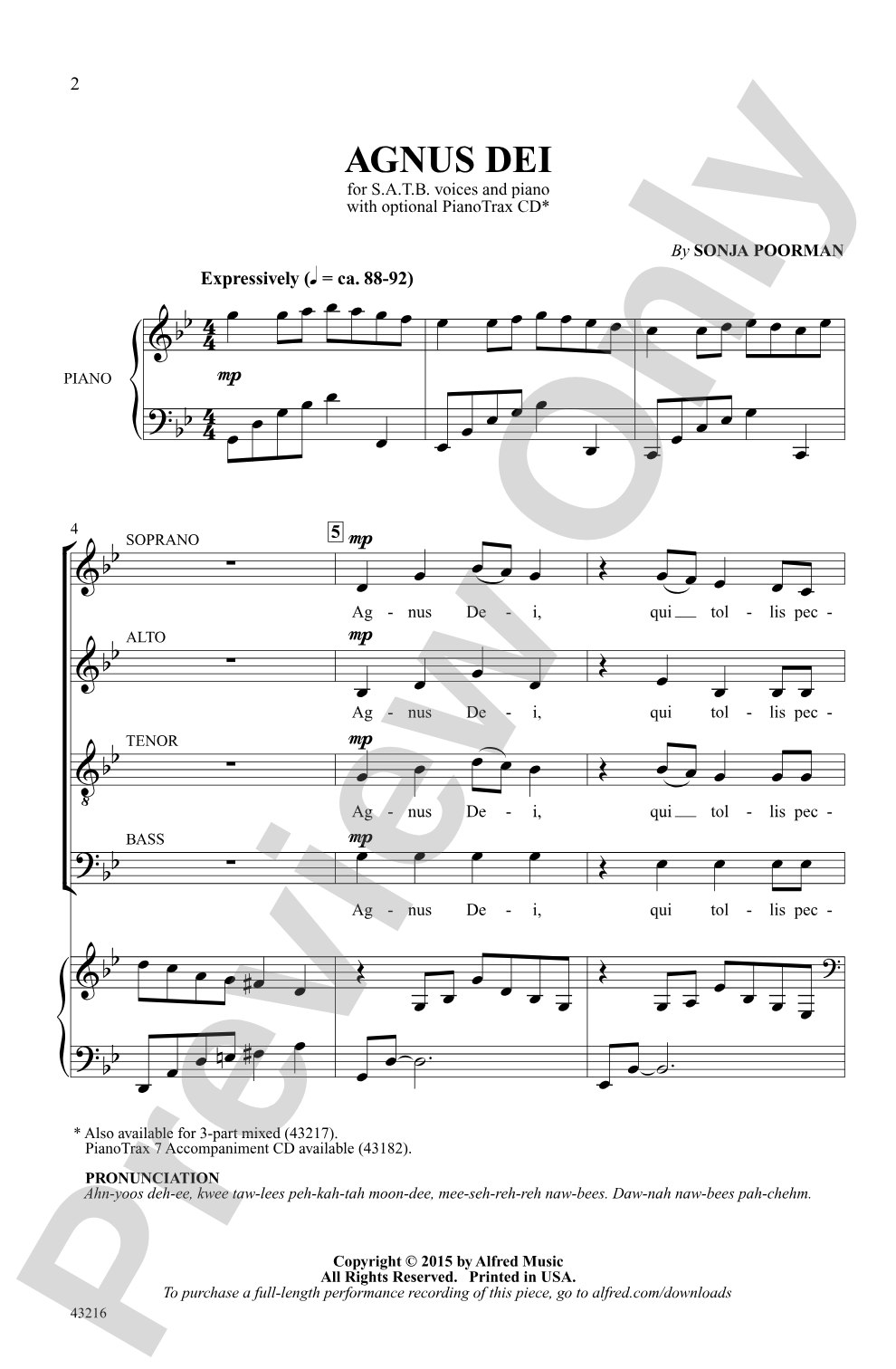
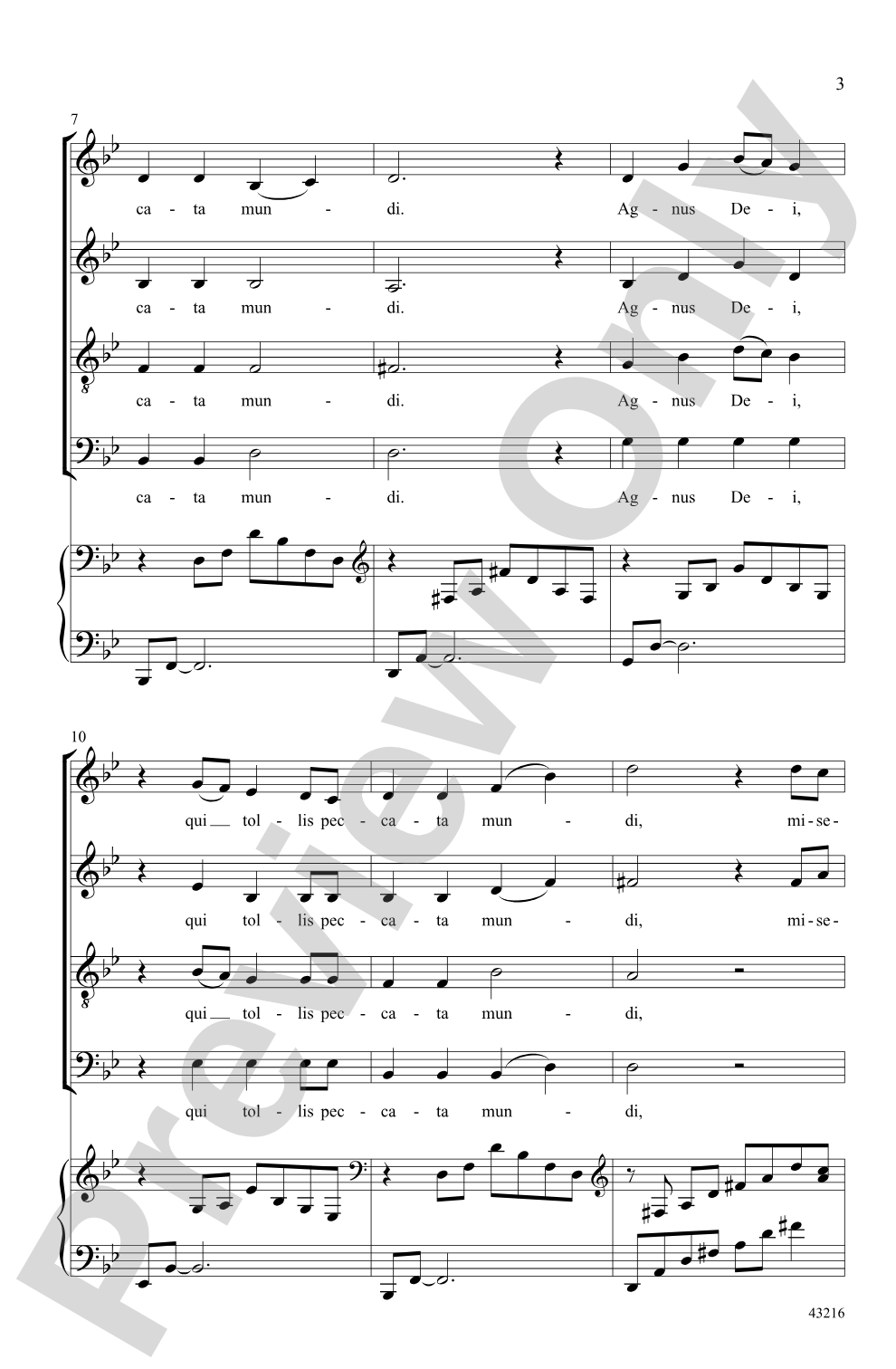
All sections of the choir take a turn singing the elegant melody in this harmonically rich concert work. Encourage pure vowels when pronouncing the familiar Latin text, which comes from the Mass Ordinary. A reverent piece of great depth.


Agnus Dei: SATB Choral Octavo isn't in MakeMusic Cloud just yet...but it could be. Let us know you'd like to see it, and you'll help shape what comes next. In the meantime, start a free trial and dive into thousands of interactive titles your students can play along with today.
Request This Title
Tell us you want it.
Start Your Free Trial
Explore everything that's ready to play right now.
Sample Audio
1
Audio File
--:--
0:00
0:00
Sample Video
No sample videos found.
Additional Details
Series:
Alfred Choral Designs
Publisher:
Alfred Music
Page Count:
12
SKU:
00-PO-0003210
More about this title
About the Composer: Sonja Poorman

Sonja Poorman brings three decades of experience writing and arranging choral music across sacred and educational contexts. She holds degrees in music education from Ball State University and the University of Miami, grounding her compositions in both pedagogical understanding and practical knowledge of ensemble capabilities.
Her career spans church and school settings, where she has directed choirs of all ages while developing a distinctive compositional voice. This dual background as both conductor and composer informs her work with particular attention to text setting, voice leading, and the musical growth of singers.
Why we love this
The melodic design here is genuinely elegant without becoming saccharine, and the harmonic language deepens with each entrance. Poorman builds natural climax and release, giving your ensemble real musical moments to inhabit rather than simply execute.
What to expect
The piece inhabits a space of genuine reverence without artificial grandeur. There is warmth in the harmonic language and a sense of contemplation that unfolds gradually, inviting singers and listeners alike into a moment of quiet reflection.
Who it's for
This octavo works well for intermediate to advanced SATB choirs seeking concert repertoire with liturgical substance. It suits both church musicians and school choirs preparing for festivals, spring concerts, or sacred music programs.
How to get the most out of it
- Shape each melodic entrance with attention to the text's liturgical weight. The familiarity of the Latin allows singers to focus on line rather than pronunciation, but avoid a rushed or overly light delivery.
- Balance the harmonic voices carefully in the inner parts. Rich harmony only works when all four parts are distinctly audible; adjust dynamics to let each section support the melody without obscuring it.
- Attend to vowel purity throughout, especially on sustained notes where impure vowels become prominent. The reverent character relies on vocal beauty and consistency.
How to use it
Program this as part of a sacred music set or as a centerpiece for a concert emphasizing choral depth. The twelve-page length and moderate difficulty make it suitable as a concert closer or as a bridge between lighter works and more demanding repertoire.
Skills your students will build
- Singing sustained melodic lines across all voice parts
- Balancing blend and balance in four-part harmony
- Interpreting liturgical text with appropriate character and phrasing
- Maintaining pure vowels on extended vocal phrases
- Understanding voice leading and harmonic function in a tonal context