
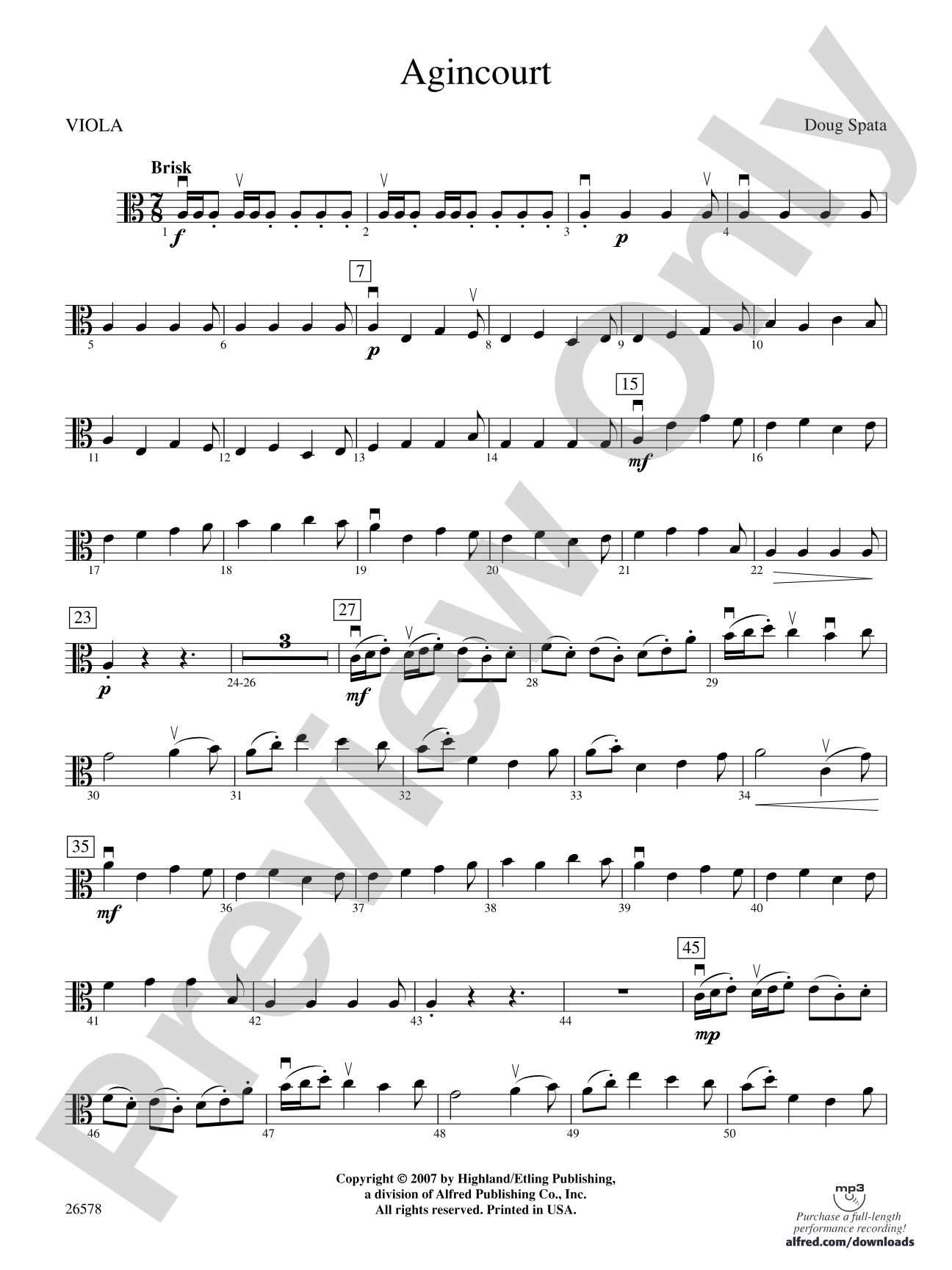

Agincourt: Viola
By Doug Spata
Grade: 3
Item: 00-PC-0001094_VA1
$5.99
Pickup currently not available
Description
Inspired by the climactic battle scene in Shakespeare's Henry V, Agincourt is a fiery, rhythmic piece in 7/8 time. Advanced orchestras will find the unusual rhythms an exciting challenge while audiences thrill to the expressive melodies and bold ostinatos throughout the piece. Agincourt is exhilarating and dramatic from its brash opening to its brazen end. This title is available in MakeMusic Cloud.


Don't just read it, hear it, play along with it, and watch your students grow with it. In MakeMusic Cloud, Agincourt: Viola comes alive with professional accompaniment, adjustable tempo, and built-in practice tools that turn solo practice into real progress.
Open in the Player
Jump straight in and assign it today.
Start Your Free Trial
Open this title and explore the full library in minutes.
Sample Audio
1
Audio File
--:--
0:00
0:00
Sample Video
Additional Details
Series:
Highland/Etling String Orchestra
Publisher:
Alfred Music
Page Count:
62
SKU:
00-PC-0001094_VA1
More about this title
About the Composer: Doug Spata

Doug Spata began his musical training as a clarinetist but found his primary voice as a composer for strings. His years directing orchestras gave him an intimate understanding of what student musicians need: music that challenges them technically while remaining deeply rewarding to play. His works have earned recognition across the country and internationally, performed by orchestras and chamber ensembles of every size.
Beyond the student repertoire he is known for, Spata has composed extensively across all genres: operas, ballets, symphonies, and large-scale orchestral works. This breadth of experience shows in every score he writes for young orchestras, where structural sophistication and performable writing coexist.
Why we love this
The 7/8 meter is not a gimmick here; it serves the drama of the piece, creating rhythmic propulsion that mirrors the urgency of battle without feeling forced or academic. Spata gives every section something memorable to play, whether that's the bold opening gesture, the expressive melodies that anchor the middle section, or the ostinatos that drive toward the brazen final statements. Advanced Grade 3 orchestras will spend their rehearsal time on genuine musicianship rather than wrestling with the meter itself.
What to expect
From the brash opening, Agincourt charges forward with the energy and urgency of battle. Beneath the rhythmic drive are expressive melodies that give the drama emotional weight, creating moments where the orchestra can breathe and sing before the momentum builds again. The piece closes with unrelenting forward motion, leaving audiences breathless.
Who it's for
Advanced Grade 3 orchestras with secure intonation and solid rhythmic foundation. These players should be comfortable reading accidentals and following detailed dynamic markings, and they need enough experience to embrace an unusual meter as an expressive tool rather than an obstacle. The piece works equally well for orchestras preparing for a concert or festival performance.
How to get the most out of it
- Establish the 7/8 pulse clearly in early rehearsals by conducting subdivisions in groups of 3+4, not as a single beat. Once the ensemble feels the internal structure, the rhythm becomes intuitive rather than intellectual.
- Bring out the bold ostinatos; they carry the piece's momentum. Ensure the violas and cellos balance their repeated figures so the orchestration remains transparent even when textures thicken.
- Shape the expressive melodies with rubato and dynamic intention. The rhythmic complexity of the accompaniment makes the lyrical moments even more poignant when they contrast sharply in character and pacing.
- Use the recorded accompaniment (available separately) during sectional rehearsals so individual string sections hear how their parts fit within the larger harmonic and rhythmic framework.
How to use it
This piece is a natural choice for a concert program centered on programmatic or narrative music, or as the dramatic centerpiece of a festival appearance where you want to showcase your orchestra's advanced technical skills and musical maturity. The Shakespeare connection also makes it a strong fit for cross-curricular events or a concert celebrating literature.
Skills your students will build
- Reading and executing rhythms in 7/8 time with confidence and precision
- Balancing ostinatos and repeated figures while maintaining transparency in orchestral texture
- Shaping expressive melodies with appropriate rubato and dynamic contrast against complex rhythmic accompaniment
- Responding to programmatic intent and dramatic arc in instrumental music
- Coordinating multiple rhythmic layers within a single ensemble