Ages Ago Sheet Music Preview

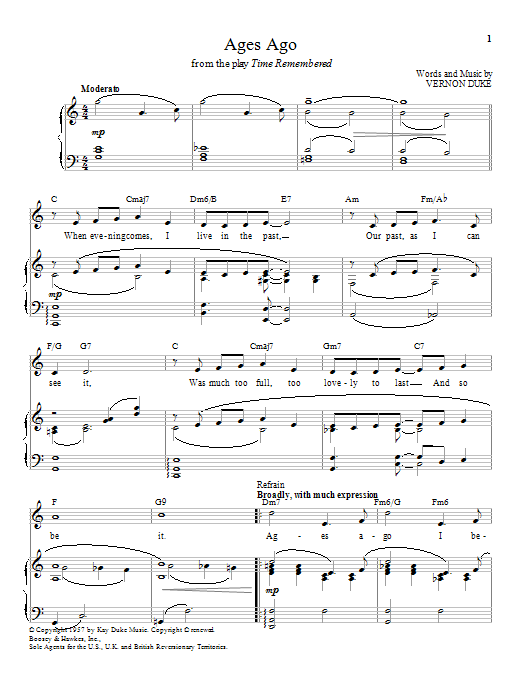
Ages Ago: Piano Vocal

As performed by Vernon Duke / As performed by Scott Dunn

Item: 35-DS00217625

Digital Download
$5.99
Description

Ages Ago: Piano Vocal isn't in MakeMusic Cloud just yet...but it could be. Let us know you'd like to see it, and you'll help shape what comes next. In the meantime, start a free trial and dive into thousands of interactive titles your students can play along with today.

Sample Audio
No sample audio found.
Sample Video
Additional Details
Publisher: Hal Leonard
Page Count: 3
SKU: 35-DS00217625

More about this title

About the Artist: Vernon Duke

Vernon Duke (1903–1969) bridged classical training and popular song with uncommon sophistication. A Russian-born composer who studied under Glazunov, Duke brought harmonic intelligence and orchestral sensibility to Broadway and film scores, composing for Ziegfeld productions and Hollywood while maintaining serious concert work. His theatrical music reveals a composer equally at home with jazz idioms and extended harmonic palettes.

Why we love this

Duke's songwriting pulls from genuine jazz vocabulary rather than approximating it, which means singers encounter real harmonic movement and rhythmic sophistication. The three-page format keeps it manageable for performance study while the piano writing offers enough independence to stay interesting for collaborators who aren't sight-reading.

What to expect

Nostalgic without sentimentality, sophisticated without pretense. The piece carries the warmth of a well-worn jazz standard while revealing enough harmonic color to reward close listening.

Who it's for

Vocalists preparing jazz standards repertoire and pianists looking for accompaniment material with real musical substance. Young singers benefit from learning Duke's approach to lyric setting and harmonic implication.

How to get the most out of it

  • Treat the syncopation as conversational rather than metronomic; Duke's rhythms breathe within the beat, not against it.
  • Balance the vocal melody against harmonic movement in the piano part. These lines deserve equal weight in rehearsal.
  • Explore the lyrical shape over individual measures. The phrasing rarely splits at bar lines, so work with breath and meaning first, bar divisions second.

How to use it

Pair this with other American songbook material in a recital showcasing theatrical composers of the 1930s and 1940s, or use it as a solo vehicle to demonstrate jazz diction and phrasing in a vocal showcase.

Skills your students will build

  • jazz interpretation and swing phrasing
  • reading jazz chord symbols and understanding harmonic progression
  • vocal balance with independent piano accompaniment
  • lyric diction in period style
  • jazz articulation and note shaping

You May Also Like