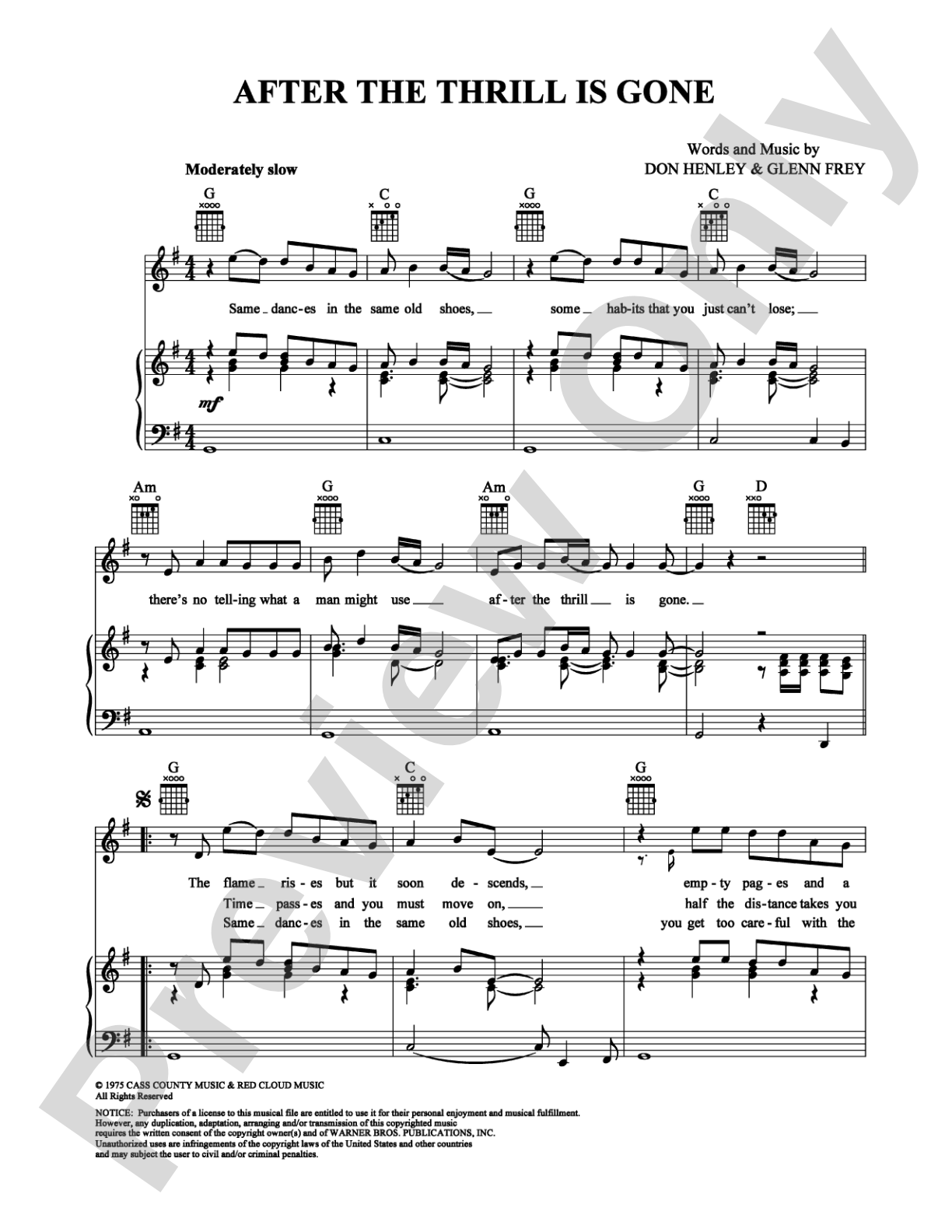
After the Thrill Is Gone: Piano/Vocal/Chords Digital Sheet Music

After the Thrill Is Gone: Piano/Vocal/Chords Digital Sheet Music

Eagles, Glenn Frey, Don Henley

Item: 00-PS-0008876

Digital Download
$3.99
Description

After the Thrill Is Gone: Piano/Vocal/Chords Digital Sheet Music isn't in MakeMusic Cloud just yet...but it could be. Let us know you'd like to see it, and you'll help shape what comes next. In the meantime, start a free trial and dive into thousands of interactive titles your students can play along with today.

Sample Audio
No sample audio found.
Sample Video
Additional Details
SKU: 00-PS-0008876

More about this title

About the Artist: Eagles

The Eagles emerged from Los Angeles in the early 1970s to become one of the most commercially successful rock bands in history. Their sophisticated blend of rock, country, and pop sensibilities produced multiple platinum albums and defined the sound of an era, with four members sharing songwriting and vocal duties across their catalog.

Why we love this

This track gives singers and pianists a chance to work with one of rock's most recognizable melodies and emotionally direct vocal lines. The piano/vocal/chords format makes it accessible for solo performers, duets, or small ensemble arrangements, and the song's conversational lyrics reward thoughtful interpretation.

What to expect

The song carries a reflective, slightly melancholic tone, with measured pacing that invites introspection. Its restrained arrangement and conversational vocal delivery create intimacy even in a medium-sized performance space.

Who it's for

This sheet music suits vocalists in pop, jazz, or crossover settings who want to perform a classic rock song with piano accompaniment. It also works for pianists developing their skills in comping and chord voicing alongside a singer.

How to get the most out of it

  • Pay attention to the vocal melody's contour and phrasing; the song gains power from its unhurried delivery rather than aggressive volume.
  • Use the chord symbols to explore harmonic color at the piano, especially during instrumental passages where you can voice the chords in ways that support the vocal line.
  • Shape the dynamics to mirror the emotional arc; the song builds gradually, so resist the urge to sing full voice from the beginning.

How to use it

Feature this in a pop or standards-based recital where it can sit comfortably alongside other singer-songwriter material from the 1970s. The song also works well in cabaret-style programming or as a bridge between rock and jazz repertoire.

Skills your students will build

  • Reading and interpreting vocal melody lines with a clear harmonic foundation
  • Voicing piano chords from lead-sheet symbols in contemporary pop contexts
  • Balancing vocal phrasing with piano accompaniment for cohesion and ensemble feel
  • Understanding song form and arrangement structure in classic rock composition

You May Also Like