
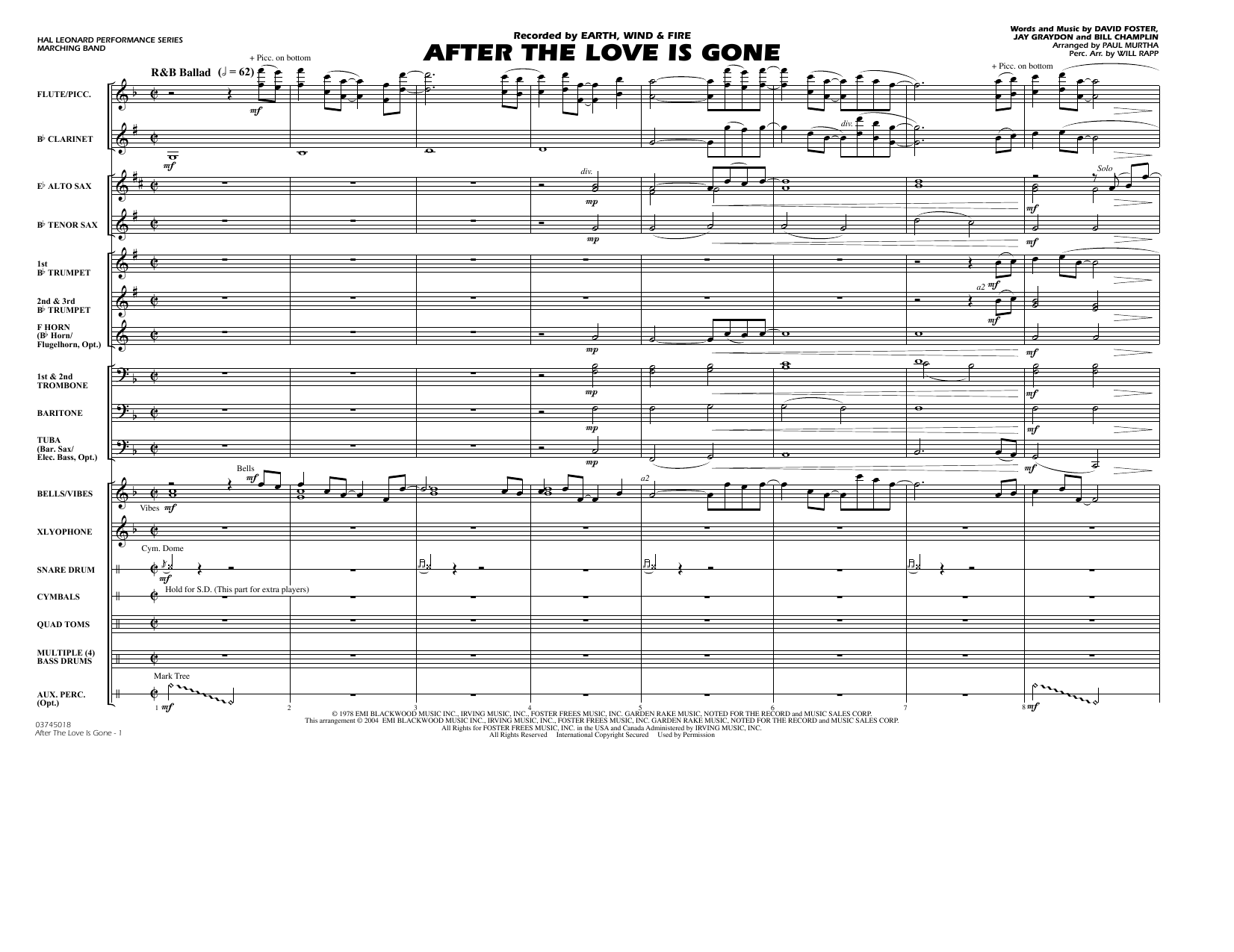

After the Love Has Gone (arr. Paul Murtha): Marching Band Conductor Score & Parts
As performed by Earth, Wind Fire / Arranged by Paul Murtha / Arranged by Will Rapp
Grade: 4
Item: 35-PK00463337
$65.00
Pickup currently not available
Buy Extra Parts (Digital PDF Download)
Parts Added to Cart!
Description
The woodwinds and mallets are featured in the intro to this landmark ballad from Earth, Wind Fire followed by brief solos for alto sax and trumpet. A nice groove and creative scoring throughout make this an excellent change-of-pace production number.


After the Love Has Gone (arr. Paul Murtha): Marching Band Conductor Score & Parts isn't in MakeMusic Cloud just yet...but it could be. Let us know you'd like to see it, and you'll help shape what comes next. In the meantime, start a free trial and dive into thousands of interactive titles your students can play along with today.
Request This Title
Tell us you want it.
Start Your Free Trial
Explore everything that's ready to play right now.
Sample Audio
No sample audio found.
Sample Video
No sample videos found.
Additional Details
Publisher:
Hal Leonard
SKU:
35-PK00463337
More about this title
About the Artist: Earth, Wind Fire
Earth, Wind Fire emerged in the 1970s as one of the most influential funk and R&B ensembles in popular music history. Their signature sound fused horns, strings, and rhythm section grooves with sophisticated arrangements and virtuosic musicianship, creating some of the era's most enduring hits. The band's catalog remains essential listening for musicians seeking to understand the intersection of jazz harmony, funk rhythm, and pop accessibility.
For music educators, Earth, Wind Fire's work offers a masterclass in orchestration and ensemble balance. Their recordings demonstrate how layered arrangements create both complexity and clarity, making their music ideal for student performers learning to blend voices and maintain pocket within intricate voicings.
Why we love this
Paul Murtha's arrangement captures the sophisticated groove and horn writing that made the original iconic while creating genuine solo opportunities for your alto sax and trumpet players. The instrumentation showcases mallets and woodwinds in a featured role from the opening, giving players beyond the low brass section a chance to shine on a recognizable pop ballad.
What to expect
Sophisticated and accessible at once. The ballad has that late-night, intimate quality of the original, yet the marching band voicing gives it presence and warmth. Students performing this walk the line between earnest lyricism and the groove that keeps audiences engaged.
Who it's for
Directors programming Grade 4 marching bands who want a production number with real musicianship and broad appeal. This works for ensembles with solid fundamentals and players ready to carry melody with confidence in front of an audience.
How to get the most out of it
- Lock the pulse in the rhythm section from the first rehearsal. The groove defines everything else; once that foundation sits solid, the melodic and harmonic layers settle naturally into place.
- Balance the featured intro carefully. Woodwinds and mallets need enough projection to carry the opening, but the blend should feel cohesive rather than soloistic.
- Shape the alto sax and trumpet solos with clear dynamics and articulation choices. These moments demand individual voice in a way that makes them memorable without overshadowing the ensemble.
- Bring out the creative scoring moments throughout. Murtha's voicings likely contain surprises and textural shifts that reward attention to the full score.
How to use it
Position this as a change of pace in a show built around uptempo movements or dramatic pieces. The ballad works beautifully as a mid-program moment that lets your ensemble breathe and showcase musicianship before returning to higher energy material. It's also a natural fit for pops concerts or spring shows where recognizable repertoire scores with audiences.
Skills your students will build
- Phrasing and lyrical shaping in a pop idiom
- Maintaining groove and pocket through harmonic complexity
- Blending disparate instrumental colors in a cohesive orchestration
- Solo confidence and individual expression within an ensemble framework
- Listening for and responding to dynamic and textural nuance