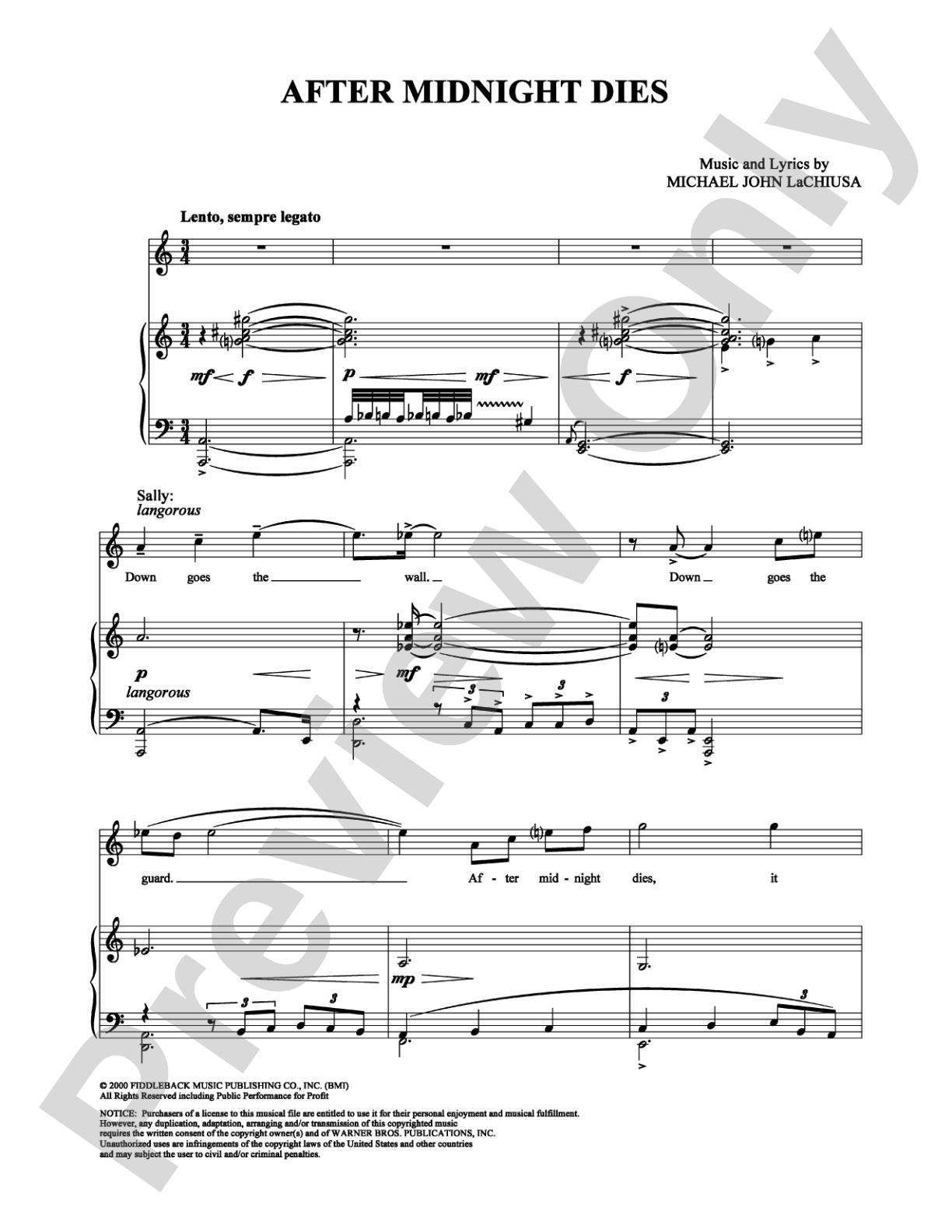
After Midnight Dies: Piano/Vocal/Chords Digital Sheet Music

After Midnight Dies: Piano/Vocal/Chords Digital Sheet Music

Michael John LaChiusa

Item: 00-PS-0008288

Digital Download
$3.99
Description

After Midnight Dies: Piano/Vocal/Chords Digital Sheet Music isn't in MakeMusic Cloud just yet...but it could be. Let us know you'd like to see it, and you'll help shape what comes next. In the meantime, start a free trial and dive into thousands of interactive titles your students can play along with today.

Sample Audio
No sample audio found.
Sample Video
Additional Details
SKU: 00-PS-0008288

More about this title

Why we love this

The chord chart format gives singers and pianists immediate agency over interpretation and accompaniment texture. Moving beyond a locked arrangement lets musicians find their own voice in the song, whether that means sparse, introspective piano or fuller harmonic color.

What to expect

The intimacy of midnight and what arrives after it; the piece carries a reflective, vulnerable quality shaped by the sparse presence of chord symbols and vocal melody. What unfolds between singer and piano feels open, responsive to the moment.

Who it's for

Singers preparing for solo or ensemble performance who work with a pianist or accompany themselves, and pianists learning to read chord charts and develop flexible, responsive accompaniment skills. This format works well for studio recording sessions, jazz-inflected contexts, or any setting where interpretation matters more than strict orchestration.

How to get the most out of it

  • Experiment with the density of voicing in the left hand. Minimal accompaniment can heighten intimacy during introspective verses; fuller chords can build intensity into sections where the lyric or melody demands more weight.
  • Pay attention to the relationship between melody and harmony. Mark moments where the vocal line creates tension against the underlying chords, then decide whether to lean into or resolve that dissonance in your playing.
  • Use the chord symbols as a conversation partner, not a prescription. If a chord feels more powerful played as a slash chord, rootless voicing, or upper-structure extension, test it in context and trust what serves the lyric.

How to use it

Position this in a recital that values modern song literature and intimate collaboration. It pairs naturally with other contemporary vocal works where emotional directness takes precedence over grandeur, or use it in a lesson sequence where students learn to read chord charts and develop accompaniment independence.

Skills your students will build

  • Reading and interpreting chord symbols for improvised and flexible accompaniment
  • Balancing vocal support with enough space for the singer's interpretation to breathe
  • Making harmonic choices that align with lyrical intent
  • Building fluency between lead-sheet notation and practical keyboard voicing

You May Also Like