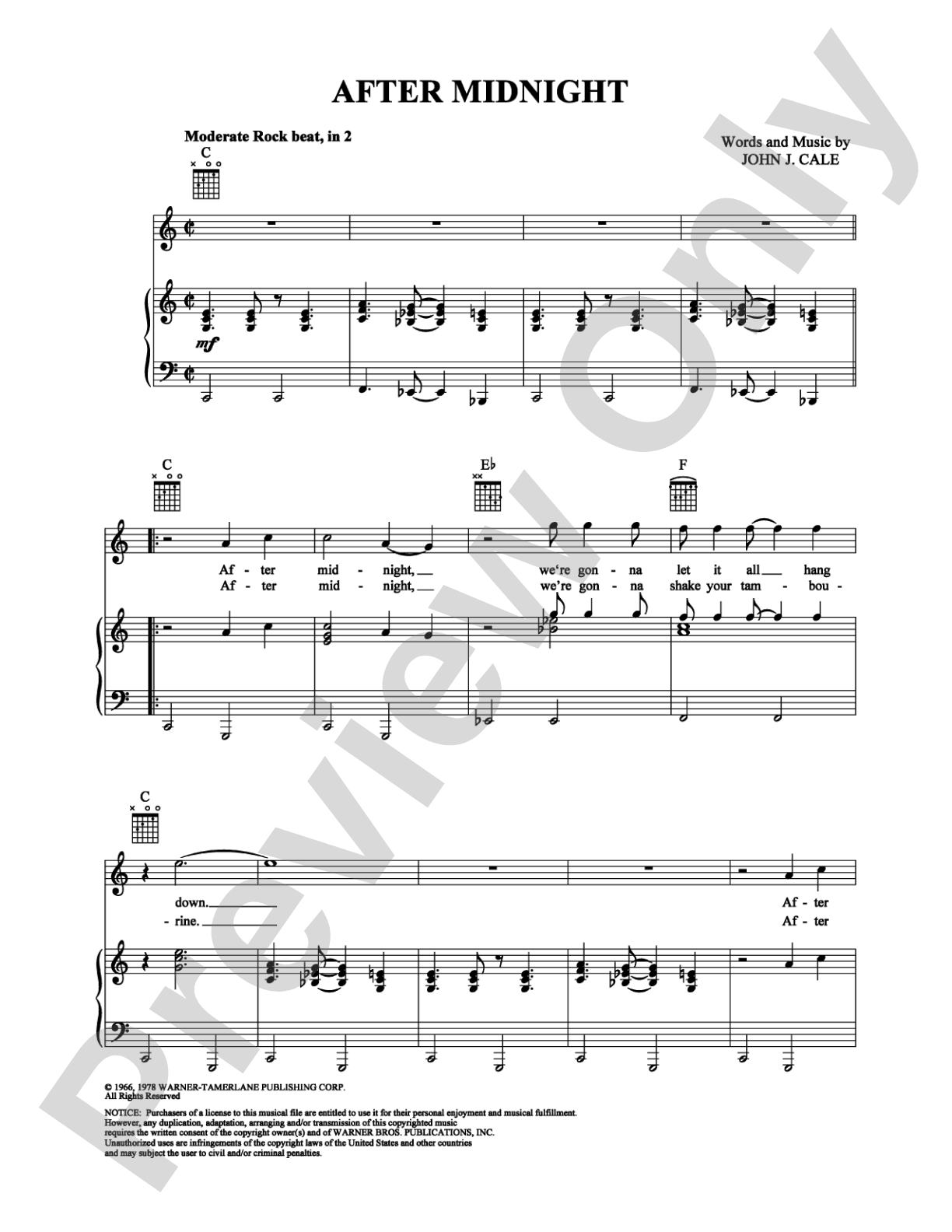
After Midnight: Piano/Vocal/Chords Digital Sheet Music

After Midnight: Piano/Vocal/Chords Digital Sheet Music

Eric Clapton, John J. Cale

Item: 00-PS-0008996

Digital Download
$3.99
Description

After Midnight: Piano/Vocal/Chords Digital Sheet Music isn't in MakeMusic Cloud just yet...but it could be. Let us know you'd like to see it, and you'll help shape what comes next. In the meantime, start a free trial and dive into thousands of interactive titles your students can play along with today.

Sample Audio
No sample audio found.
Sample Video
Additional Details
SKU: 00-PS-0008996

More about this title

About the Artist: Eric Clapton

Eric Clapton emerged from the British blues boom of the 1960s as one of rock's most influential guitarists and songwriters. His work spans decades of evolution from hard rock and blues to soul-influenced pop, earning him widespread recognition as a guitarist's guitarist and a craftsman of emotionally direct songwriting.

Why we love this

After Midnight captures Clapton's gift for blending blues sensibility with accessible melody, making it an excellent choice for singers developing interpretive control over a classic rock standard. The song's spare, conversational vocal line and supportive harmonic structure reward singers who understand phrasing and dynamics, while pianists get to explore the interplay between rhythmic groove and harmonic color.

What to expect

After Midnight carries a late-night introspection, with chord changes that suggest more emotional depth than the surface-level ease of the melody. The arrangement has an intimate quality, as though the pianist and singer are working something out together rather than presenting a polished product.

Who it's for

Singers working on contemporary standards and classic rock repertoire will find this a direct and musically honest choice. Pianist-singers, music theater students, and performers preparing for recitals or coffeehouse settings will benefit from a song that demands subtlety and emotional maturity rather than technical flash.

How to get the most out of it

  • Let the groove breathe. Resist the urge to rush; the pocket is everything in this song, and laying back slightly behind the beat creates the sultry feel Clapton's original captured.
  • Voice and piano should lock together as a single unit. The vocal melody and chord voicings work best when the piano follows the singer's interpretive choices rather than driving them.
  • Shape the verses with restraint. Save dynamic expansion for the choruses and bridge so the song feels like an intimate conversation that gradually opens up.
  • Experiment with the piano's textural role. This arrangement works whether the piano is sparse and minimal or full and supporting, so find the sound that serves the singer's voice best.

How to use it

This piece fits naturally into programs built around blues-influenced songwriting or classic rock standards. Consider pairing it with other Clapton compositions or similar-era material to create a thematic block. It also works well as a showcase for a vocalist with strong interpretive instincts rather than primarily technical strength.

Skills your students will build

  • Phrasing and breath control in a conversational vocal style
  • Reading and interpreting chord symbols while comping in a pop-rock context
  • Balancing vocal melody against instrumental accompaniment
  • Building groove and pocket awareness
  • Understanding tension and release through harmonic movement

You May Also Like