
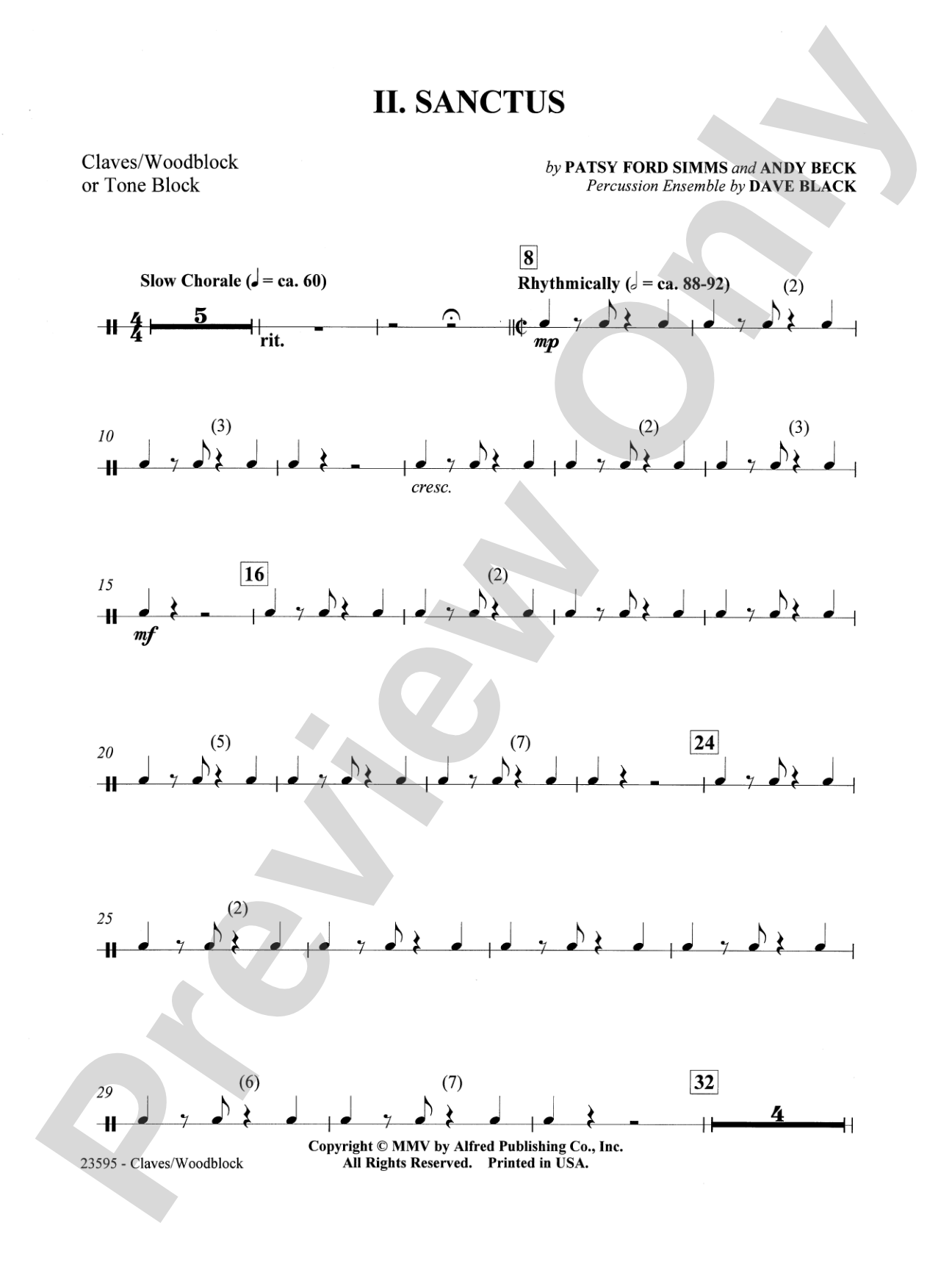

Afrika Kyrie na Sanctus: Tone Block: Choral SoundPax
Music by Patsy Ford Simms and Andy Beck, SoundPax percussion ensemble arr. Dave Black
Item: 00-PC-0000731_TB
$4.00
Pickup currently not available
Description
Perform two traditional mass settings in a whole new way with this exciting original which means "African Kyrie and Sanctus." Your singers will be inspired by the tribal rhythms and sonorous harmonies, and your audience (or adjudicators) impressed by the juxtaposition of Latin, English, and Swahili texts in both contrasting movements. Accentuate the multicultural flavor by adding the SoundPax drum ensemble, or using the SoundTrax CD. SoundPax includes parts for African Percussion Ensemble, bass.


Don't just read it, hear it, play along with it, and watch your students grow with it. In MakeMusic Cloud, Afrika Kyrie na Sanctus: Tone Block: Choral SoundPax comes alive with professional accompaniment, adjustable tempo, and built-in practice tools that turn solo practice into real progress.
Open in the Player
Jump straight in and assign it today.
Start Your Free Trial
Open this title and explore the full library in minutes.
Sample Audio
1
Audio File
--:--
0:00
0:00
Sample Video
No sample videos found.
Additional Details
Series:
Alfred Choral Designs
Publisher:
Alfred Music
Page Count:
40
SKU:
00-PC-0000731_TB
Instrumentation:
SoundPax
More about this title
About the Composer: Andy Beck
Andy Beck directs choral publications at Alfred Music and has composed and arranged more than 450 works for singers of all ages, many of which are performed regularly by choirs around the world. His pedagogical resources—including Sing at First Sight, Foundations in Choral Sight Singing, and Vocalize! 45 Vocal Warm-Ups That Teach Technique—have shaped how countless music teachers approach vocal development and music literacy.
Beyond the page, Beck is a sought-after guest conductor, clinician, and adjudicator who works extensively with honor choirs and all-state groups across the United States. He holds a Bachelor's degree in Music Education from Ithaca College and a Master's degree in Music Education from Northwest Missouri State University. A trained tenor who performs with the North Carolina Master Chorale Chamber Choir and directs musical theatre, Beck brings both artistic depth and educational vision to every score he publishes.
Why we love this
Beck and Simms have crafted a piece that genuinely engages both singers and listeners without sacrificing musical substance. The movement between contrasting languages (Latin, English, and Swahili) and the integration of African percussion creates a programming moment that feels fresh and purposeful rather than gimmicky. Whether you perform it with live percussion or recorded accompaniment, your choir will feel the distinctive character of this work.
What to expect
The work opens into a world of cross-cultural sound, where Latin liturgical tradition meets African rhythmic energy. Sonorous harmonies anchor the piece while tribal percussion drives the pulse forward, creating tension between contemplative reverence and driving momentum that feels both grounded and exhilarating.
Who it's for
This piece serves choirs at the intermediate to advanced level who want to tackle something with real multicultural substance and are equipped to work with layered texts and percussion parts. It works well for honor choirs, select ensembles, and festival-ready groups looking for repertoire that balances accessibility with artistic reach.
How to get the most out of it
- Establish the tribal rhythms early in rehearsal by having singers speak the text rhythmically before adding pitch. This grounds their understanding of the pulse and prevents the work from feeling academic or detached.
- If using the SoundPax drum ensemble, schedule a joint rehearsal at least two weeks before performance so singers can lock into the percussion colors and learn to balance their voices within the full texture.
- Pay close attention to the harmonic shifts between the Kyrie and Sanctus movements. These contrasts will land more effectively if intonation stays centered, particularly in the more dissonant voicings.
- Let the text switches between languages breathe naturally. Singers often rush when moving between unfamiliar syllables; slow the transitions in early rehearsals to build confidence.
How to use it
This piece shines as a concert centerpiece or festival selection where the cultural conversation it invites becomes part of the program arc. Consider programming it alongside other sacred or world music repertoire to deepen thematic coherence, or place it strategically to provide textural and rhythmic contrast within a mixed concert.
Skills your students will build
- Singing with clear diction across three languages (Latin, English, Swahili)
- Maintaining pulse and independence while performing over African percussion patterns
- Balancing ensemble blend with the addition of live drums or recorded accompaniment
- Interpreting harmonic color and texture in contemporary sacred music