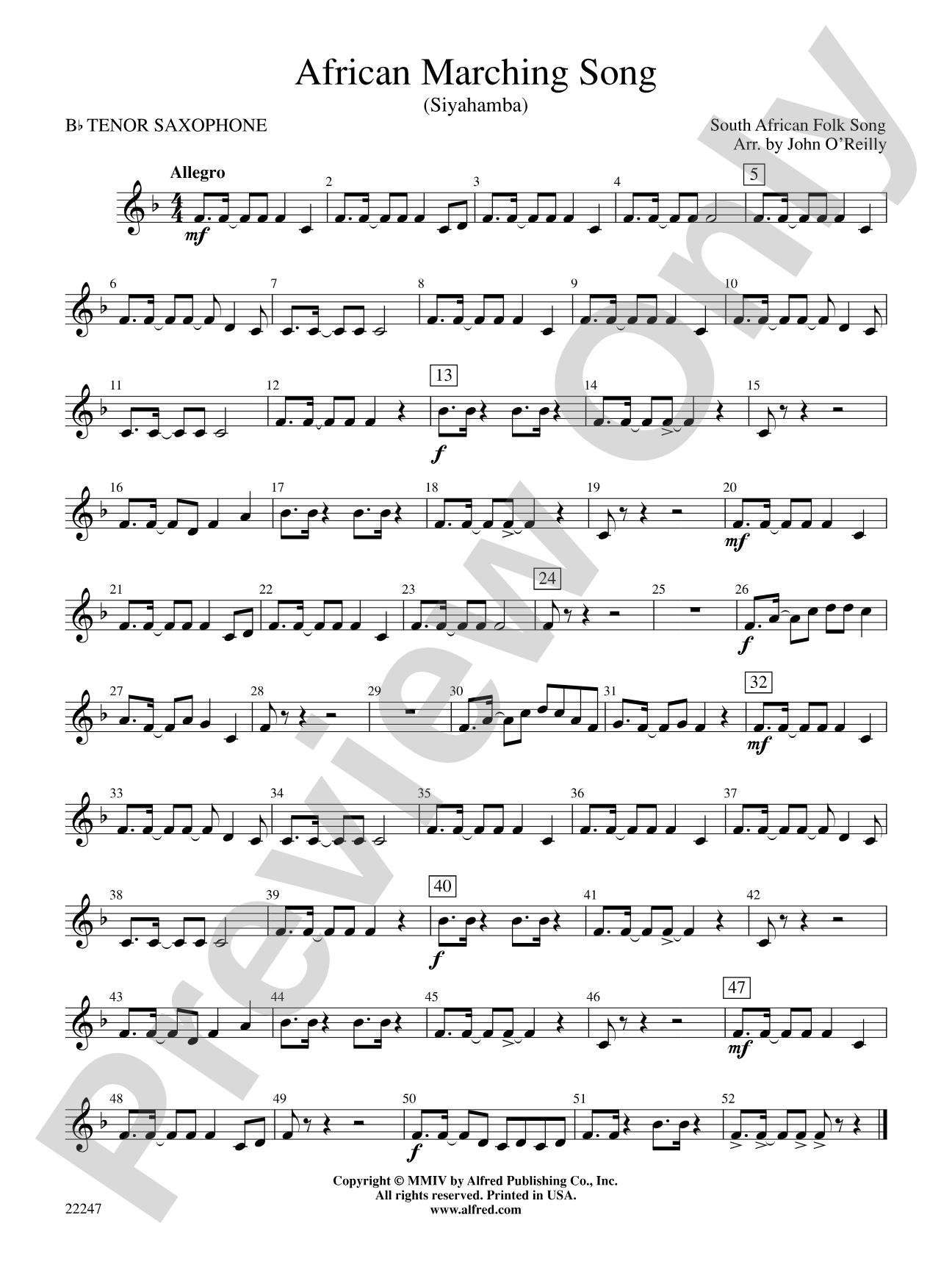
African Marching Song: B-flat Tenor Saxophone Sheet Music Preview

African Marching Song: B-flat Tenor Saxophone

Traditional / arr. John O'Reilly

Grade: 1.5 (Easy)

Item: 00-PC-0000501_TX1

Digital Download
$3.00
Description
The South African folk classic "Siyahamba" is authentically treated in this special arrangement for young band. Repeating percussion patterns using tom toms, bass drum, claves, and cowbell keep the African feel moving while syncopated block harmonies round out the accompaniment. Trumpets and flutes get to shine on the opening melody, and in typical African call and response tradition, everyone gets to join in as the arrangement progresses. Correlated to Accent on Achievement, Book 2, page 23. This title is available in MakeMusic Cloud.

Don't just read it, hear it, play along with it, and watch your students grow with it. In MakeMusic Cloud, African Marching Song: B-flat Tenor Saxophone comes alive with professional accompaniment, adjustable tempo, and built-in practice tools that turn solo practice into real progress.

Sample Audio
0:00
0:00
Sample Video
Additional Details
Series: Accent on Achievement
Publisher: Alfred Music
Page Count: 124
SKU: 00-PC-0000501_TX1

More about this title

About the Arranger: John O'Reilly

John O'Reilly is a prolific arranger and composer whose work appears throughout the Accent on Achievement series, one of the most widely adopted band method systems in American music education. His arrangements consistently balance accessibility with musical authenticity, making them reliable choices for directors seeking grade-appropriate literature that doesn't sacrifice artistic integrity.

Why we love this

This arrangement brings genuine African rhythmic tradition into the young band setting without oversimplifying the source material. The percussion writing is delightfully specific and varied—tom toms, bass drum, claves, and cowbell work together to create authentic movement and energy—while the call-and-response structure ensures every section gets a meaningful moment in the sun. It's the kind of piece that teaches cultural respect through music rather than reducing it to costume.

What to expect

Walking. There's forward motion in every measure—the percussion patterns propel the piece with quiet insistence while the harmonic layers build warmth and community. It feels both joyful and grounded, like a celebration that knows exactly where it's going.

Who it's for

Young band directors programming their first multicultural concert or seeking grade 1.5 literature that connects to classroom curricular standards. Students at this level gain both immediate success and meaningful exposure to non-Western musical traditions.

How to get the most out of it

  • Lock the percussion section's repeating patterns first. The tom tom, bass drum, and claves establish the rhythmic foundation; once they're secure and relentless, the harmony parts will sit naturally on top.
  • Shape the opening melody (trumpets and flutes) with gentle legit phrasing. This is an invitation, not a proclamation, so avoid over-articulation even though the rhythm feels modern.
  • Let the call-and-response exchanges breathe and answer one another. Each section should listen to the previous entrance and respond with fresh energy rather than simply joining a tutti moment.
  • Balance the syncopated block harmonies so they support without overpowering the melodic voices. The accompaniment rhythms are the engine; don't let them become the headline.

How to use it

This works beautifully as a concert opener or as part of a thematic program exploring world music and cultural traditions. Its straightforward difficulty and strong rhythmic identity make it equally suitable for solo competition or as part of a music history unit within the curriculum.

Skills your students will build

  • Maintaining steady rhythmic independence while playing repeating patterns
  • Call-and-response dialogue between instrumental sections
  • Syncopated harmonic accompaniment in block chord style
  • Stylistic awareness of African musical traditions and percussion practices

You May Also Like