

African Gloria: 2-Part Choral Octavo
By Sonja Poorman
Item: 00-PO-0003213
$1.90
Minimum order quantity: 20 copies
Pickup currently not available
Description
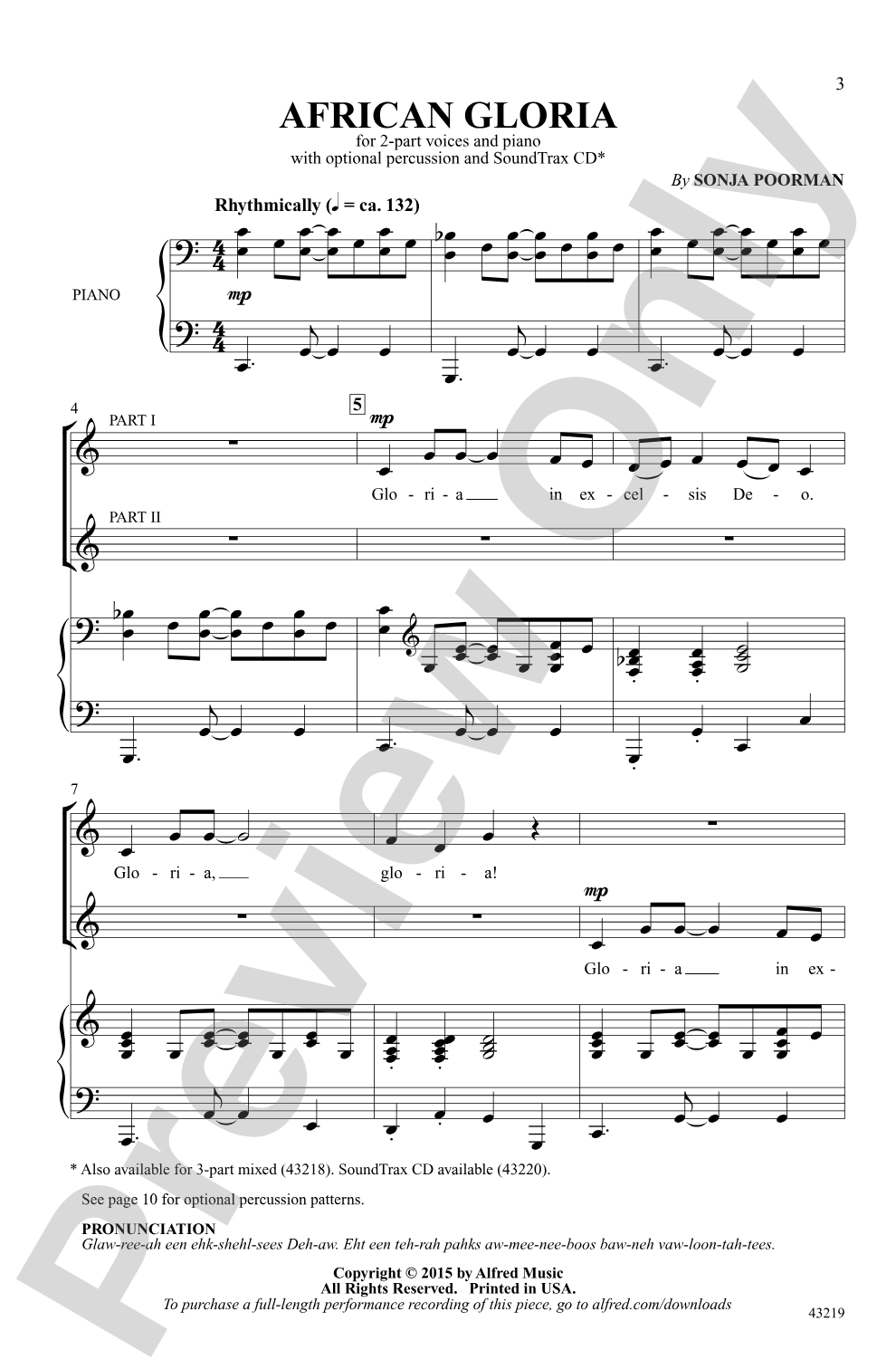
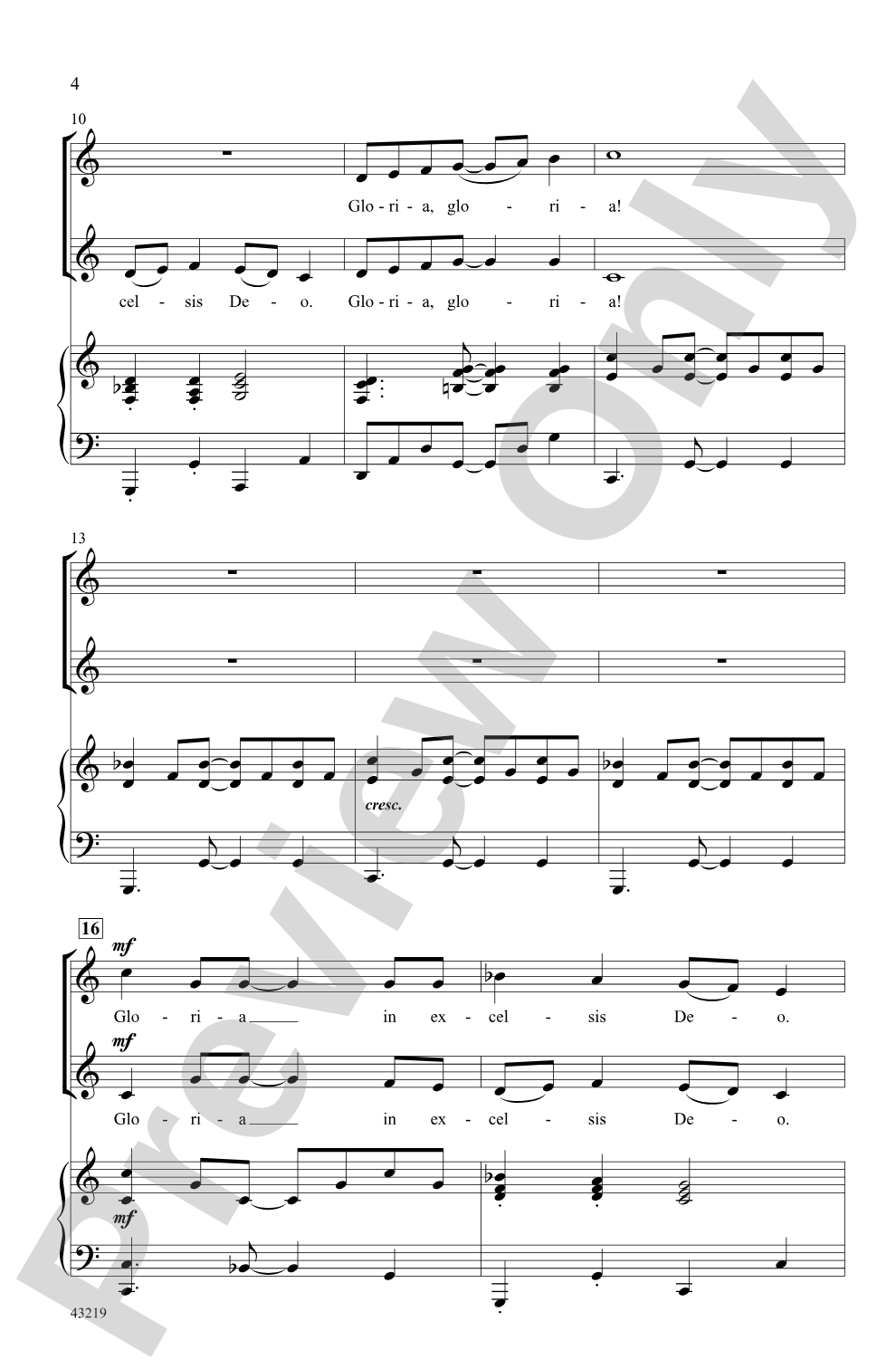
A traditional Latin text paired with the spirited rhythms of Africa. This joyful concert work includes a contrasting "et in terra pax" section, adding a lovely legato to the middle of the piece. Layered percussion patterns are included in the octavo.


African Gloria: 2-Part Choral Octavo isn't in MakeMusic Cloud just yet...but it could be. Let us know you'd like to see it, and you'll help shape what comes next. In the meantime, start a free trial and dive into thousands of interactive titles your students can play along with today.
Request This Title
Tell us you want it.
Start Your Free Trial
Explore everything that's ready to play right now.
Sample Audio
1
Audio File
--:--
0:00
0:00
Sample Video
No sample videos found.
Additional Details
Series:
Alfred Choral Designs
Publisher:
Alfred Music
Page Count:
12
SKU:
00-PO-0003213
More about this title
About the Composer: Sonja Poorman

Sonja Poorman brings three decades of experience writing and arranging choral music across diverse settings. Her background in music education from Ball State University and the University of Miami has shaped her ability to craft pieces that work for singers of all ages and abilities, whether in academic choirs or church programs.
Poorman's compositional voice reflects her deep knowledge of both traditional sacred music and contemporary approaches to choral writing. Her work consistently demonstrates how to honor classical forms while infusing them with fresh harmonic language and cultural richness.
Why we love this
Poorman's setting energizes the Gloria text by pairing it with authentic African rhythmic patterns that feel organic rather than ornamental. The deliberate shift to a lyrical "et in terra pax" section gives singers a chance to explore legit, sustained singing within the same piece, creating dynamic contrast that keeps the choir engaged and the audience attentive.
What to expect
African Gloria radiates celebration and joy, propelled forward by the intricate rhythmic textures woven through the two-part writing. The contrast between its driving opening and the serene, contemplative middle section creates an arc that feels both musically sophisticated and emotionally honest.
Who it's for
This octavo works well for treble choirs, developing mixed choirs, or any ensemble looking to expand their repertoire beyond traditional European sacred music. Directors seeking a festival-worthy piece that incorporates world music elements without sacrificing accessibility will find this especially useful.
How to get the most out of it
- Establish the African rhythmic feel early in rehearsal by having singers speak the text with the percussion patterns before adding pitch. This grounds the pulse and makes rhythmic entries feel natural rather than academic.
- Shape the "et in terra pax" section as a true emotional turning point. The shift from energetic rhythms to legato writing should feel like a deliberate choice, not just a tempo change.
- Layer the percussion patterns gradually during rehearsal rather than introducing them all at once. Start with one pattern, add a second voice part, then add the third to build confidence and clarity.
How to use it
Program this as the centerpiece of a concert exploring sacred music across cultures, or use it as a vibrant closer to a concert that needs an energetic, uplifting final impression. It pairs beautifully with other multicultural sacred works or can stand alone as a statement piece about the universality of praise.
Skills your students will build
- Singing rhythmic patterns across multiple simultaneous lines
- Maintaining independent vocal lines in a 2-part texture
- Understanding and performing music from African musical traditions
- Balance and blend when percussion patterns are present
- Vocal legato in sustained passages and contrast with rhythmic sections