African Alleluia: Tuba Sheet Music Preview

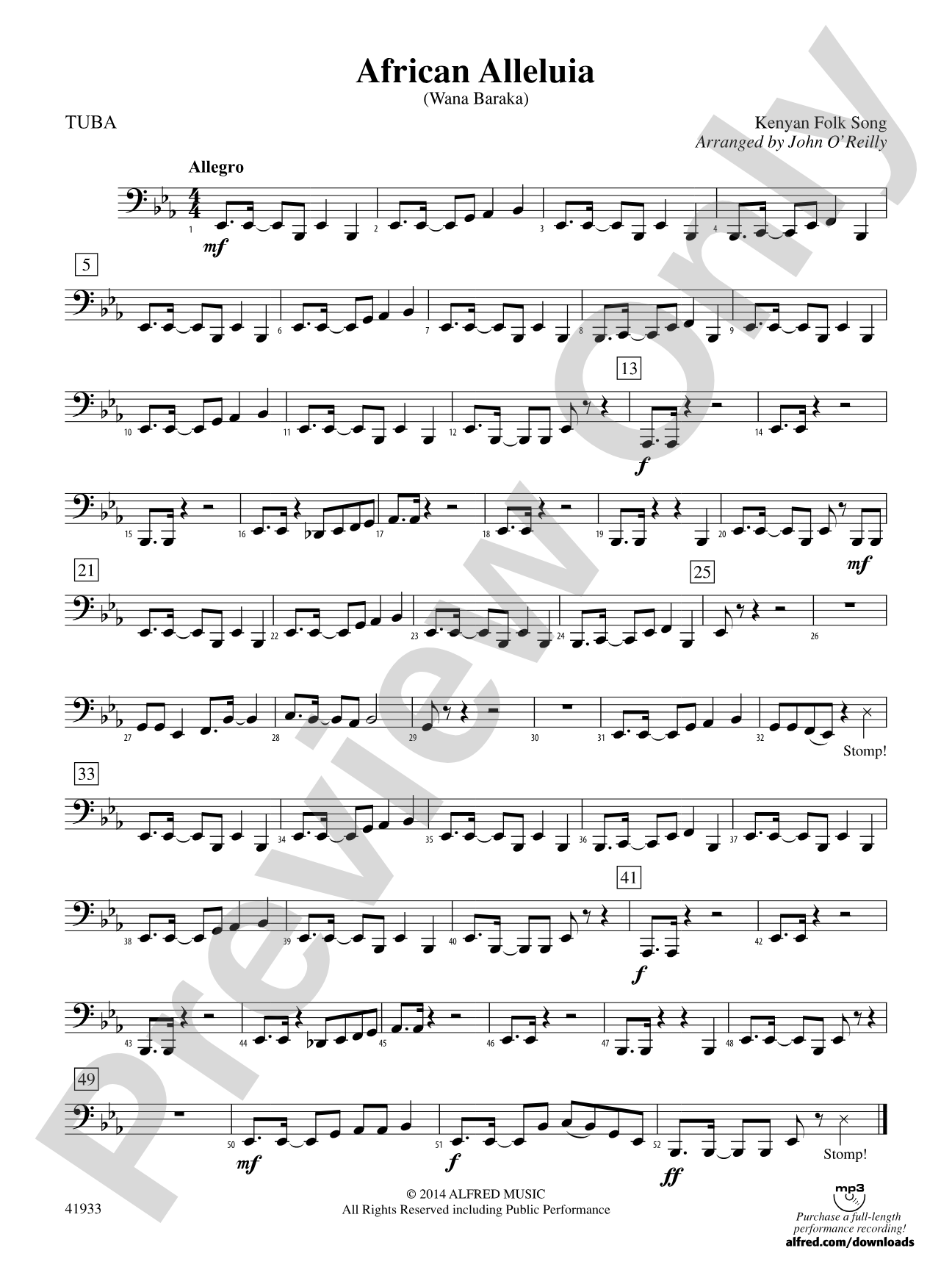
African Alleluia: Tuba

Wana Baraka

Traditional / arr. John O'Reilly

Grade: 1 (Very Easy)

Item: 00-PC-0016415_TB1

Digital Download
$3.00
Description
This piece is a joyous arrangement of the popular Kenyan song "Wana Baraka." Repeating percussion patterns utilizing cowbell, claves, tom tom, and bass drum provide a solid rhythmic foundation for the catchy syncopated melody. A typical call-and-response section gives this arrangement an authentic African feel. (2:00)

Don't just read it, hear it, play along with it, and watch your students grow with it. In MakeMusic Cloud, African Alleluia: Tuba comes alive with professional accompaniment, adjustable tempo, and built-in practice tools that turn solo practice into real progress.

Sample Audio
0:00
0:00
Sample Video
Additional Details
Series: Alfred Debut Series
Publisher: Alfred Music
Page Count: 118
SKU: 00-PC-0016415_TB1

More about this title

Why we love this

This arrangement brings immediate energy to a Grade 1 band without sacrificing musicality. The repeating percussion foundation lets younger players lock into a groove while the melody stays accessible, and the call-and-response structure gives students a real sense of participating in something collaborative rather than simply reading notes.

What to expect

Vibrant and celebratory. The Kenyan origin and call-and-response structure create an immediate sense of community and joy, while the steady percussion underpinning keeps the energy grounded and singable. It feels like music that wants to move you.

Who it's for

Grade 1 concert bands looking for engaging, culturally rooted material that doesn't condescend to young players. This works equally well for early-rehearsal-season programming when technical demands need to be light but musical interest needs to be high.

How to get the most out of it

  • Lock the percussion section first. The cowbell, claves, tom tom, and bass drum patterns are the heartbeat of this piece; once they're rock-solid, the melody players will find their place naturally.
  • Shape the call-and-response sections with clear dynamic contrast. Let the responding phrases breathe slightly to highlight the back-and-forth texture.
  • Keep the syncopated melody articulation crisp without being mechanical. These rhythms should feel playful and conversational, not rigid.

How to use it

Open a concert with this piece to set a bright, welcoming tone, or pair it with other folk-based or multicultural selections to build a thematic program. At two minutes, it's also an excellent choice for festival performances where time slots are tight and making a positive impression matters.

Skills your students will build

  • Reading and executing syncopated rhythms in a group setting
  • Maintaining a steady part while other sections carry the melody
  • Understanding call-and-response as a structural and musical concept
  • Coordinating articulation and phrasing across a full ensemble

You May Also Like