
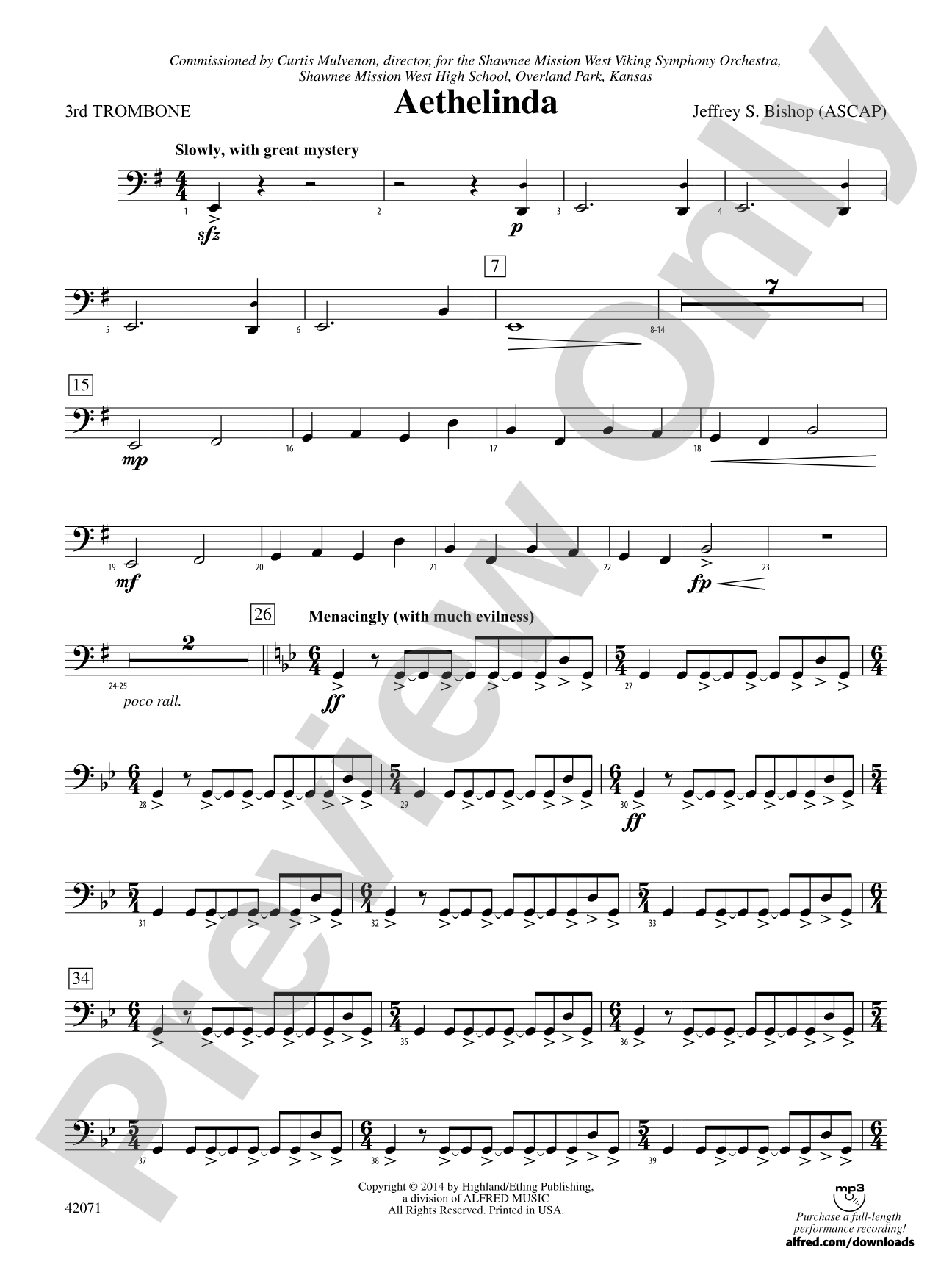

Aethelinda: 3rd Trombone
By Jeffrey S. Bishop
Grade: 4
Item: 00-PC-0016463_TN3
$3.00
Pickup currently not available
Description
"Aethelinda" is Welsh for dragon. This programmatic piece invokes the energy and power of a great winged beast as it awakens from its slumber to wreak havoc on the countryside. Opening with a low string choir, the piece builds to a rousing allegro section and then a soaring fanfare. (6:00) This title is available in MakeMusic Cloud.


Don't just read it, hear it, play along with it, and watch your students grow with it. In MakeMusic Cloud, Aethelinda: 3rd Trombone comes alive with professional accompaniment, adjustable tempo, and built-in practice tools that turn solo practice into real progress.
Open in the Player
Jump straight in and assign it today.
Start Your Free Trial
Open this title and explore the full library in minutes.
Sample Audio
1
Audio File
--:--
0:00
0:00
Sample Video
No sample videos found.
Additional Details
Series:
Highland/Etling Full Orchestra
Publisher:
Alfred Music
Page Count:
232
SKU:
00-PC-0016463_TN3
More about this title
About the Composer: Jeffrey S. Bishop

Jeffrey S. Bishop directs orchestras and coordinates fine arts at Shawnee Mission Northwest High School in Kansas, where his ensembles have earned top ratings at state festivals and regional competitions. He presents clinics and conducting sessions regularly across the country, with articles published in Teaching Orchestra through Performance, the Instrumentalist, and Orchestra News. His orchestras have performed at the Kansas Music Educators Association In-Service Workshop and the ASTA National Orchestra Festival.
Bishop's compositional voice reflects strong pedagogical thinking rooted in traditional forms, sometimes drawing on Renaissance influences. He has received nearly one hundred published works across string orchestra, full orchestra, band, and choral genres through Alfred, Kjos, Wingert-Jones, and C-Alan Publications. His 1997 National School Orchestra Association Composition Contest Award for Symphony for Strings No. 1 marks one of many commissions performed across the United States, Mexico, and Europe. He conducts with attention to detail and humor, recognizing that each ensemble brings unique strengths to the music.
Why we love this
Aethelinda captures the visceral drama of a mythological awakening without relying on gimmickry or overly complex writing. The journey from brooding strings to allegro excitement to a triumphant fanfare gives every section of the orchestra something vital to play, and the six-minute arc works beautifully on a concert program as either a standalone feature or paired with other Grade 4 repertoire. Bishop's melodic gift shines here; students won't just execute passages, they'll feel genuinely invested in bringing this beast to life.
What to expect
The piece awakens like a creature stirring in darkness, beginning with restless, low energy before exploding into fierce forward motion. It breathes mythological drama without pretension; the fanfare sweeps listeners and players alike into a moment of soaring triumph.
Who it's for
Orchestra directors at the Grade 4 level seeking substantial concert repertoire that engages and excites performers. This piece appeals to ensembles with developing musicianship and a desire to explore programmatic writing that builds dramatic tension and delivers genuine payoff.
How to get the most out of it
- Shape the opening low string choir with deliberate dynamic control. The piece's power depends on establishing that quiet, ominous foundation before the energy builds, so resist the urge to rush or play louder than written early on.
- Conduct the transition into the allegro section with a clear gesture to ensure the ensemble commits fully to the tempo shift. A hesitant or muddled tempo change will lose the dramatic momentum you've built.
- Balance the fanfare so the heroic melody sings above the accompaniment. With full orchestra texture, it's easy for the brass to overwhelm; mark parts where inner voices need to step back to let the primary line soar.
- Use the recorded accompaniment in MakeMusic Cloud during sectional rehearsals to help students lock into rhythm and tempo without depending on the full ensemble.
How to use it
Aethelinda works as a concert centerpiece that captures audience attention within the first minute. Its six-minute duration and dramatic arc make it ideal for opening a half of a program or bridging the energy between contrasting pieces.
Skills your students will build
- Shaping long-phrase crescendos from soft, sustained passages into driven allegro sections
- Balancing multiple orchestral textures and maintaining clarity of individual lines within full ensemble sound
- Responding to programmatic intent through dynamic contrast and articulation choices
- Sustaining focus through dramatic shifts in tempo and orchestral color
- Building ensemble unity across diverse instrumental sections during rapid transitions