Aeolian Winds: (wp) B-flat Tuba T.C. Sheet Music Preview

Aeolian Winds: (wp) B-flat Tuba T.C.

By John F. Edmunds

Grade: 2 (Medium Easy)

Item: 00-PC-0001259_wpTBBTC

Digital Download
$3.00
Description
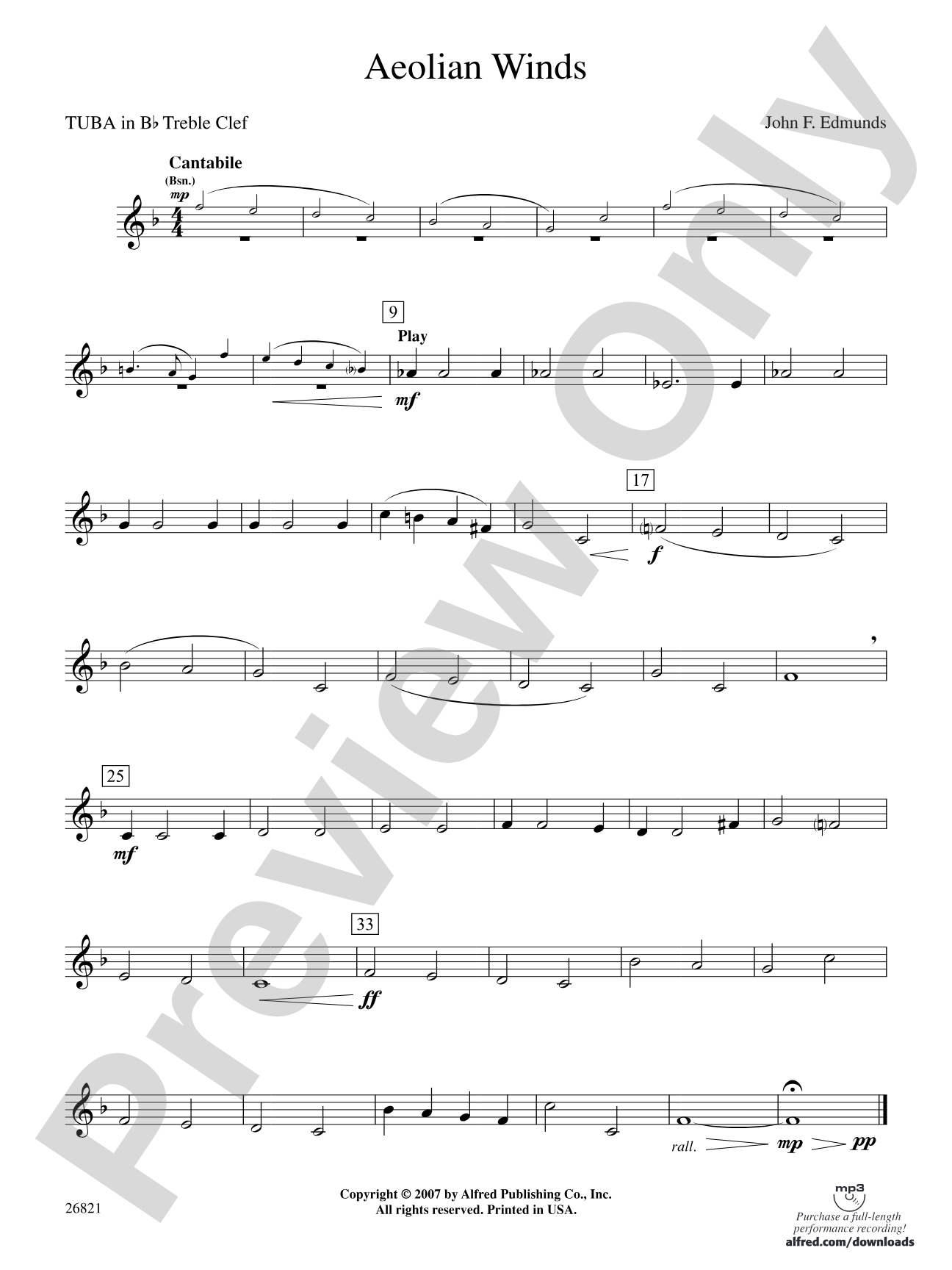
In Greek mythology Aeolus was called "god of the winds." Legend has it he was visited by Odysseus and his crew, and that he provided for a west wind to carry them home. The E-flat major scale is fully exploited in this skillfully composed and orchestrated melody, whose brief excursions into foreign tonal centers are clearly notated with accidentals rather than new key signatures. With grateful ranges and limited technical demands throughout, dramatic impact is achieved through a variety of dynamic levels and non-harmonic tones. This title is available in MakeMusic Cloud.

Don't just read it, hear it, play along with it, and watch your students grow with it. In MakeMusic Cloud, Aeolian Winds: (wp) B-flat Tuba T.C. comes alive with professional accompaniment, adjustable tempo, and built-in practice tools that turn solo practice into real progress.

Sample Audio
0:00
0:00
Sample Video
Additional Details
Series: Young Symphonic
Publisher: Alfred Music
Page Count: 64
SKU: 00-PC-0001259_wpTBBTC

More about this title

About the Composer: John F. Edmunds

John F. Edmunds

John F. Edmunds spent decades shaping young musicians at secondary and university levels while maintaining an active composing practice. He served as Assistant Director of Bands at the University of Texas at Austin and held a Professor of Music position at Louisiana State University before retiring, during which time he also worked as a staff arranger for the university bands.

With over 100 published works for band to his credit, Edmunds has earned multiple ASCAP special awards throughout his career. He holds degrees from Florida State University and the University of Florida and currently resides in Citrus County, Florida.

Why we love this

Edmunds demonstrates mastery of orchestration at an accessible level here. The piece delivers genuine dramatic arc through dynamic contrast and strategic use of non-harmonic tones rather than relying on technical fireworks, which means your band can sound substantial without requiring virtuosic players. The E-flat major tonality with carefully notated chromatic departures also creates a smart teaching opportunity around key awareness without overwhelming Grade 2 students.

What to expect

Aeolian Winds evokes the sweeping mythology of its title through a lyrical, soaring melody that feels unhurried and dignified. The E-flat major setting provides warmth and openness, while the strategic chromatic inflections hint at the mythological voyage without becoming unsettled or restless.

Who it's for

Concert bands at the high school or upper middle school level, or advanced middle school groups ready for Grade 2 repertoire. Directors seeking a piece that combines musical substance with reasonable range demands will find this particularly useful for players still building endurance and confidence.

How to get the most out of it

  • Shape the main melody with the dynamic variations Edmunds provides rather than playing it straight; these shifts between forte and piano passages create the dramatic interest the piece intends.
  • Balance the non-harmonic tones so they register clearly without stepping outside the overall harmonic framework. They should enhance rather than muddy the sound.
  • Keep the E-flat foundation steady in your low brass and woodwinds; this tonal anchor matters when the higher voices navigate those chromatic touches.

How to use it

This works well as a contrasting concert opener or mid-program moment that showcases melodic beauty rather than technical bravura. It pairs effectively alongside slightly more challenging pieces in the same program, serving as both a confidence builder for your ensemble and a rest point for your audience.

Skills your students will build

  • Reading and responding to dynamic variation as a primary expressive tool
  • Maintaining consistent tonality while navigating chromatic accidentals outside the home key
  • Balancing part independence when non-harmonic tones appear in one section while others sustain harmony
  • Phrasing longer melodic lines with natural breath and shape

You May Also Like