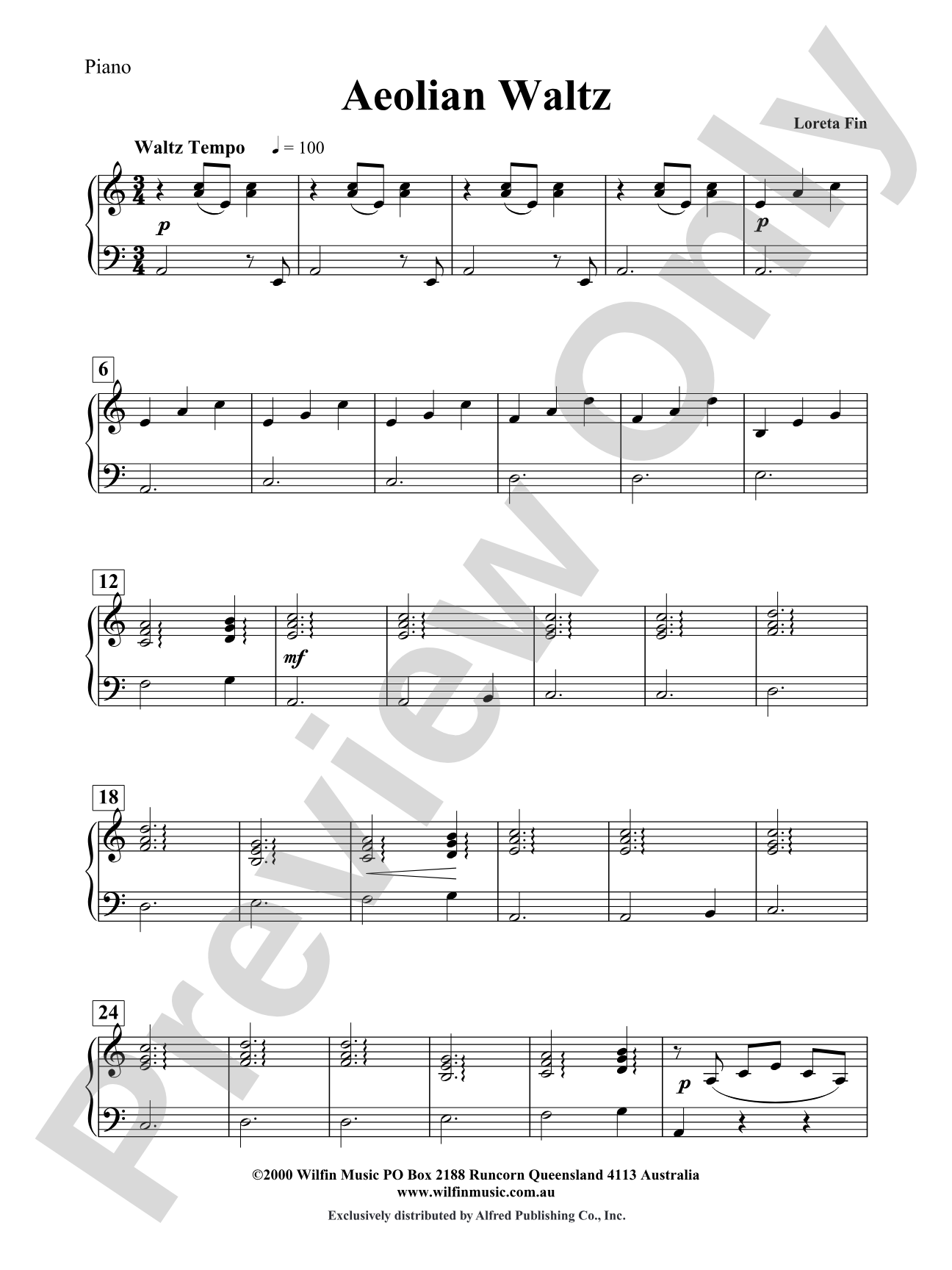
Aeolian Waltz: Piano Accompaniment Sheet Music Preview

Aeolian Waltz: Piano Accompaniment

By Loreta Fin

Grade: 2

Item: 76-PC-0000010_K

Digital Download
$5.99
Description
Charming tunes for celli and violas; very attractive, works very well; piano needed if no bass player.

Aeolian Waltz: Piano Accompaniment isn't in MakeMusic Cloud just yet...but it could be. Let us know you'd like to see it, and you'll help shape what comes next. In the meantime, start a free trial and dive into thousands of interactive titles your students can play along with today.

Sample Audio
No sample audio found.
Sample Video
Additional Details
Series: Wilfin String Orchestra: Young String Ensemble Series
Publisher: Wilfin Music
Page Count: 66
SKU: 76-PC-0000010_K

More about this title

About the Composer: Loreta Fin

Loreta Fin

Loreta Fin is an Australian violist, educator, and composer with deep roots in string pedagogy. After studying at the Sydney Conservatorium of Music and performing as a first violinist with the Sydney Youth Orchestra, she built a career spanning chamber music, orchestral performance, and over 25 years as Principal Viola player with the Queensland Pops Orchestra. She has worked alongside internationally renowned artists and served as Director of Strings at Somerville House School in Brisbane since 1993.

As an adjudicator and conference presenter at both Australian and American National String Teachers' Conferences, Fin has shaped string education across two continents. She has composed more than 100 works for string orchestra published worldwide by Alfred Music, served as State and National President of the Australian Strings Association, and was honored with the National Award for Services to Music and String Teaching in Australia. Her work conducting State and National Honours Ensembles Programs since 2015 reflects her ongoing commitment to developing young string musicians.

Why we love this

Fin writes for young ensembles with a conductor's instinct for what works on stage. The charming melodic writing sits beautifully in the middle voices of the string section, giving violas and cellos genuinely interesting material rather than accompaniment patterns. At Grade 2, this piece balances accessibility with musical substance, making it a strong choice for festivals where young orchestras need repertoire that sounds mature without overreaching.

What to expect

A graceful, flowing waltz with an old-world charm. The piece draws listeners in with warm, singing lines that move naturally across the string section, creating an inviting texture that feels both sophisticated and sincere.

Who it's for

String orchestra directors working with intermediate young ensembles who want approachable concert and festival repertoire with real musical substance. Players at Grade 2 level gain experience performing compositions that celebrate the warmth of violas and cellos while developing ensemble balance skills.

How to get the most out of it

  • Balance the viola and cello lines carefully during the opening sections. These voices carry the character of the piece, so they need room to breathe without drowning out the violins when they enter.
  • If you lack a bass player, the piano part provides harmonic support without dominating. Keep the keyboard texture light and transparent so the strings remain the focus.
  • Shape the phrasing in longer lines with gentle dynamic contours rather than sitting at one level. Young players often benefit from seeing exactly where the phrase peaks and where it relaxes.

How to use it

This works beautifully as a short concert opener or closer, and its accessible difficulty makes it ideal for competition or festival play. Pair it with other Grade 1-2 repertoire to showcase your ensemble's range, or slot it into a program of lighter classics to provide a moment of understated elegance.

Skills your students will build

  • Balancing inner voices (viola and cello melody writing)
  • Sustained tone production at moderate tempos
  • Playing melody in non-standard registers
  • Listening for blend and transparency across the ensemble
  • Basic accompaniment patterns that support without overwhelming

You May Also Like