Adios, Au Revoir, Auf Wiedersehn Sheet Music Preview

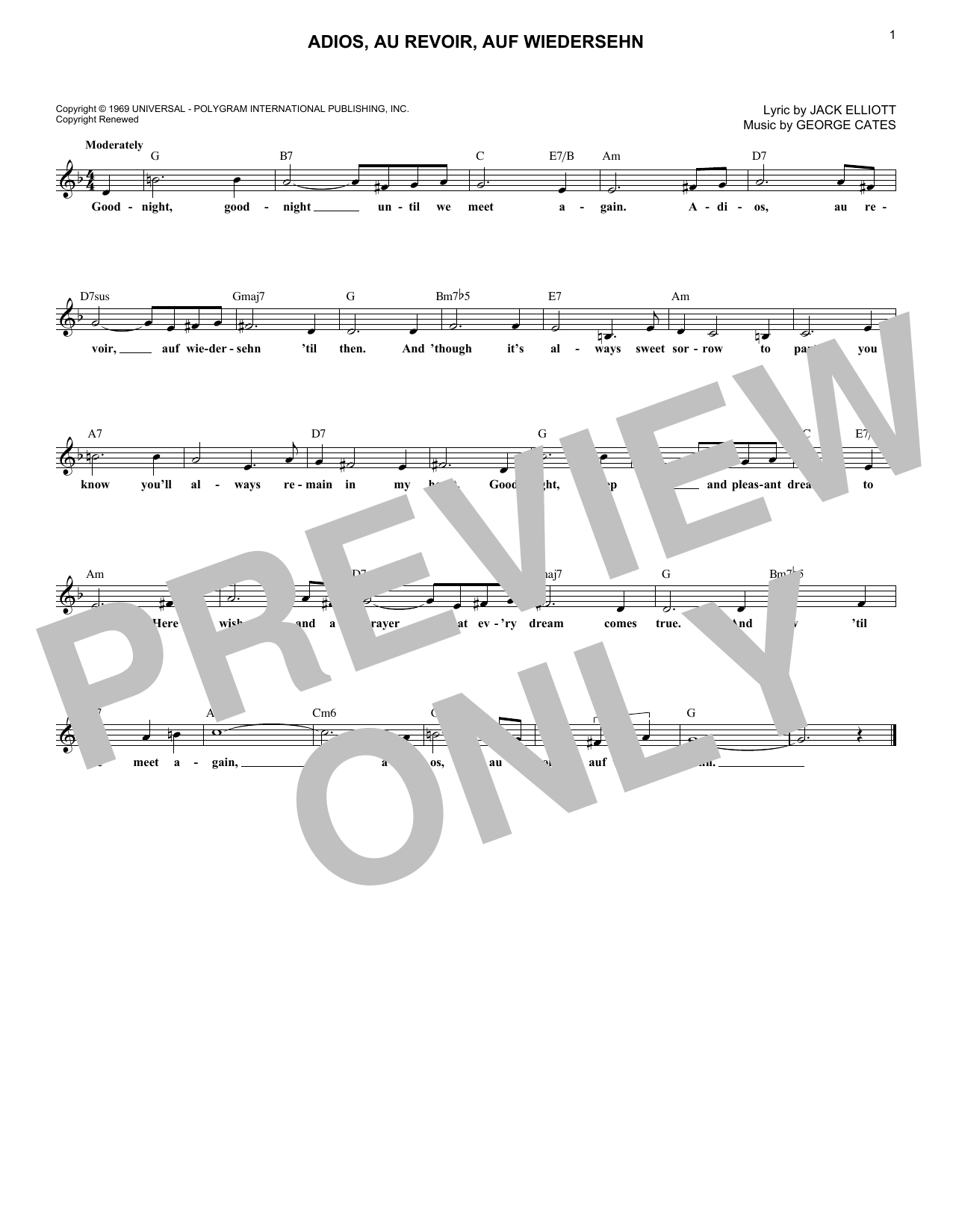
Adios, Au Revoir, Auf Wiedersehn: Lead Sheet / Fake Book

As performed by Lawrence Welk

Item: 35-DS00460996

Digital Download
$3.99
Description

Adios, Au Revoir, Auf Wiedersehn: Lead Sheet / Fake Book isn't in MakeMusic Cloud just yet...but it could be. Let us know you'd like to see it, and you'll help shape what comes next. In the meantime, start a free trial and dive into thousands of interactive titles your students can play along with today.

Sample Audio
No sample audio found.
Sample Video
Additional Details
Publisher: Hal Leonard
Page Count: 1
SKU: 35-DS00460996

More about this title

About the Artist: Lawrence Welk

Lawrence Welk (1903–1992) built his reputation as a bandleader and accordionist by making sophisticated popular music accessible to mainstream audiences. His nationally televised variety show ran for over two decades and became a cultural touchstone, introducing millions of viewers to dance music, pop standards, and novelty numbers performed with precision and warmth.

Why we love this

This lead sheet captures a piece that defined mid-century popular taste: bright, singable, and designed for ensemble performance. The straightforward melody and chord changes make it ideal for students learning to navigate fake books while giving pianists room to develop their own accompaniment textures.

What to expect

This farewell song carries the warmth of a hand wave from someone you genuinely like. The melody has an old-world lilt, the kind of gentle nostalgia that comes from a different broadcasting era when entertainment was built on sincerity and big band sensibilities.

Who it's for

Pianists and vocalists working through standards repertoire will find this a manageable introduction to lead sheet reading and interpretation. It works equally well for students learning to accompany singers and for those developing their improvisation skills within a simple harmonic framework.

How to get the most out of it

  • Keep the tempo steady and conversational; this piece trades in clarity and charm, not rushing. A slight lilt in the phrasing will serve you better than metronomic precision.
  • If performing with a vocalist, use the lead sheet as a template but leave space for breathing. The melody should feel natural, not constrained by the printed page.
  • Explore light comping around the melody line. The harmonic movement is predictable enough that you can play with texture without losing the song's identity.

How to use it

Pair this with other popular standards from the 1950s and 1960s for a concert celebrating mid-century American song, or use it as a seasonal closer in spring programs where a touching goodbye resonates with your audience. It also works well as a class example when teaching students how to read and interpret lead sheets in context.

Skills your students will build

  • Reading and interpreting lead sheet notation
  • Accompaniment textures and comping choices
  • Vocal coaching and supporting a singer's phrasing
  • Understanding harmonic progressions in popular standards

You May Also Like