
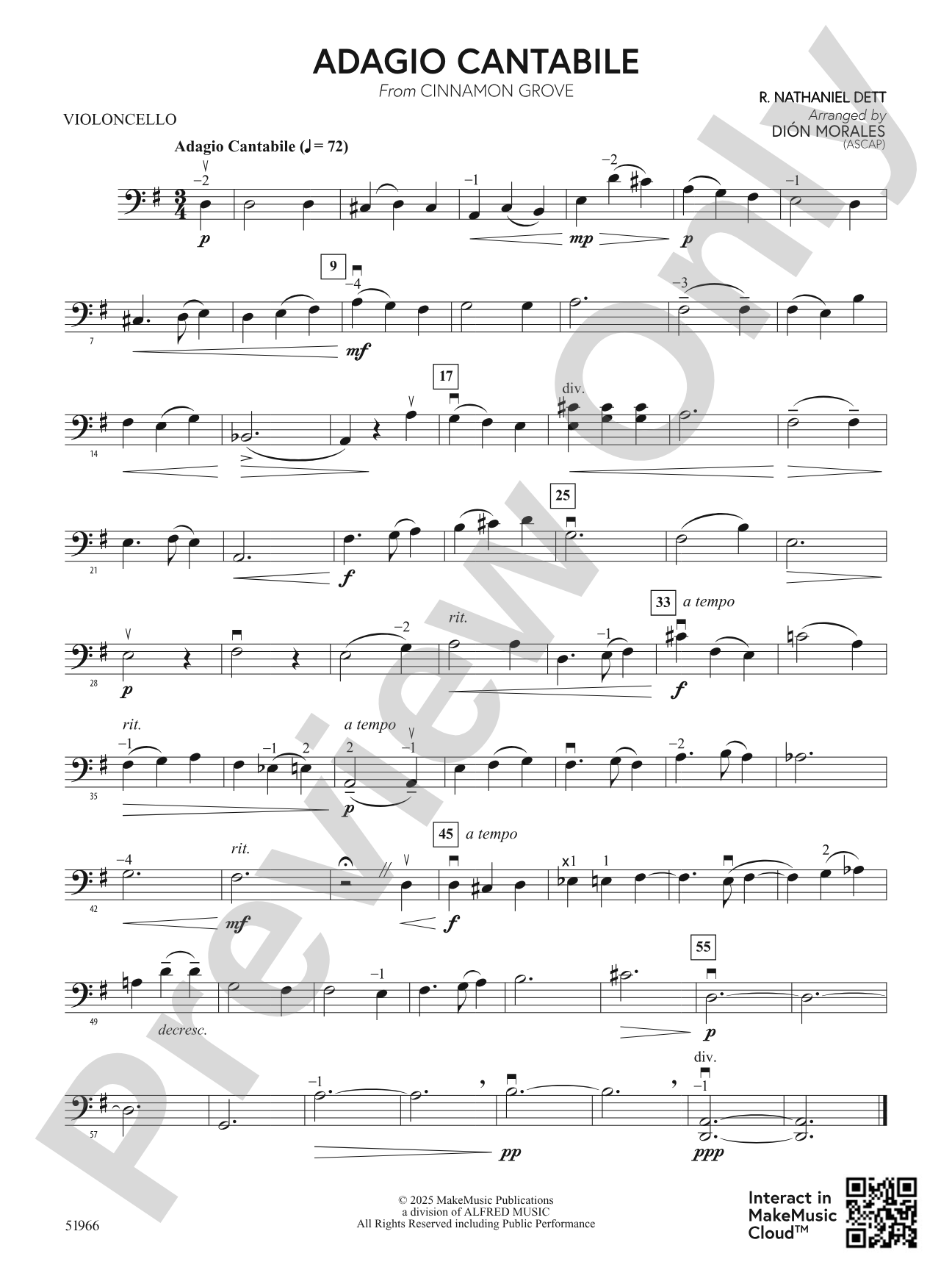

Adagio Cantabile: Cello
From Cinnamon Grove
By R. Nathaniel Dett / arr. Dión Morales
Grade: 2.5-3
Item: 00-PC-0019448_VC1
$3.00
Pickup currently not available
Description
This gorgeous arrangement features the Adagio Cantabile, the second movement of Cinnamon Grove by R. Nathaniel Dett, who was the first composer of African descent to graduate from Oberlin College in 1908. This setting by Dión Morales conjures powerful emotions as the stunning harmonies mesmerize listeners until they are left in tears. Beautiful. (2:45)


Don't just read it, hear it, play along with it, and watch your students grow with it. In MakeMusic Cloud, Adagio Cantabile: Cello comes alive with professional accompaniment, adjustable tempo, and built-in practice tools that turn solo practice into real progress.
Open in the Player
Jump straight in and assign it today.
Start Your Free Trial
Open this title and explore the full library in minutes.
Sample Audio
1
Audio File
--:--
0:00
0:00
Sample Video
Additional Details
Series:
MakeMusic Symphony Strings
Publisher:
MakeMusic Publications
SKU:
00-PC-0019448_VC1
More about this title
About the Composer: R. Nathaniel Dett
R. Nathaniel Dett (1882-1943) was a pioneering African American composer, pianist, and conductor whose work challenged the boundaries of concert music in early twentieth-century America. In 1908, he became the first composer of African descent to graduate from Oberlin College, a landmark achievement that opened doors for generations of Black musicians to follow. His compositions drew deeply from spirituals, folk traditions, and art song conventions, creating a distinctive voice that honored his heritage while engaging with the classical forms of his era.
Dett's career spanned teaching, performance, and composition. He held faculty positions at several institutions and led choral ensembles with distinction, but it is his concert works that endure. Cinnamon Grove, the suite from which Adagio Cantabile is drawn, showcases his gift for lyrical melody and harmonic sophistication. His music remains essential to any orchestra's engagement with the full history of American classical composition.
Why we love this
Dion Morales's arrangement captures Dett's gift for songful melody and warm harmony in a setting that lets string orchestras shine without excessive technical demand. At grade 2.5-3, it sits in that sweet spot where students can play musically without fighting the notes, making it ideal for conductors who want their ensemble to experience genuine artistry rather than just survival. Programming this movement introduces students to a voice that shaped American classical music and deserves to be as familiar as any European Romantic master.
What to expect
Serene and introspective, with rich harmonies that unfold like a conversation between old friends. The movement settles into a contemplative space where time feels suspended, drawing listeners into a deeply personal emotional landscape.
Who it's for
String orchestras at the intermediate level who are ready to tackle repertoire with real emotional weight. Directors seeking to diversify their programs with essential American composers will find this an accessible yet substantive choice.
How to get the most out of it
- Shape the phrasing through subtle dynamic swells rather than sudden volume changes; let the harmonic progressions guide where the line breathes and peaks.
- Balance the inner voices carefully so that passing harmonies color the melodic line without overshadowing it; this is where string section maturity shows.
- Use the full duration (2:45) to settle into a genuinely slow tempo; rushing this movement defeats its contemplative purpose and cheapens its emotional impact.
- Encourage violins to sing the principal melody with the same care a vocalist would give; Dett's writing asks for vocal warmth, not mere technical accuracy.
How to use it
This pairs beautifully on a concert focused on American voices, particularly when programmed with other spiritually inflected or folk-based works. Its relatively brief duration (2:45) makes it an excellent closer for a first half or a respite between more dramatic selections.
Skills your students will build
- Singing with warm, sustained tone across full bows
- Balancing lyrical melody against supporting harmonic voices
- Phrasing through harmonic function rather than rote dynamics
- Intonation precision in rich, chromatic harmony
- Listening for blend and homogeneity across the section