Adagio and Allegro (from Sonata No. 4 in D major, Op. 1, No. 13): Viola Sheet Music Preview

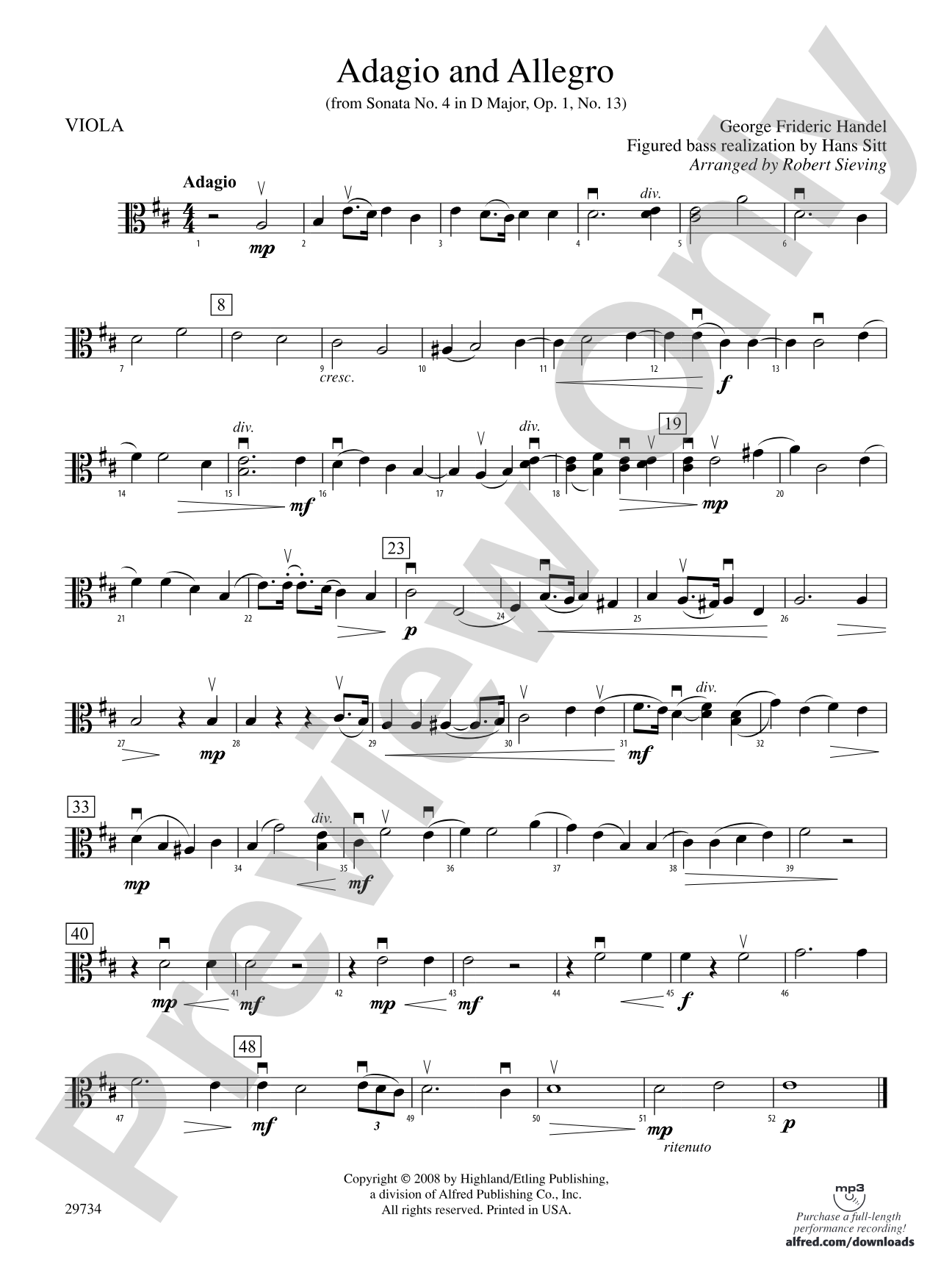
Adagio and Allegro (from Sonata No. 4 in D major, Op. 1, No. 13): Viola

By George Frideric Handel / arr. Robert Sieving

Grade: 4

Item: 00-PC-0001587_VA1

Digital Download
$5.99
Description
The hauntingly beautiful melody and lush voicing of the adagio followed by crisp polyphony in the allegro unite to form a welcome addition to the repertoire. Perfect for intermediate and advanced orchestras! (6:30) This title is available in MakeMusic Cloud.

Don't just read it, hear it, play along with it, and watch your students grow with it. In MakeMusic Cloud, Adagio and Allegro (from Sonata No. 4 in D major, Op. 1, No. 13): Viola comes alive with professional accompaniment, adjustable tempo, and built-in practice tools that turn solo practice into real progress.

Sample Audio
0:00
0:00
Sample Video
Additional Details
Series: Highland/Etling String Orchestra
Publisher: Alfred Music
Page Count: 124
SKU: 00-PC-0001587_VA1

More about this title

About the Composer: George Frideric Handel

George Frideric Handel (1685-1759) shaped the Baroque era as a master of both instrumental and vocal writing. Born in Halle, Germany, he spent much of his career in England, where he became known for his ability to write music of genuine emotional depth alongside brilliant technical display. His chamber sonatas, including the work from which this movement is drawn, reveal a composer equally comfortable writing for intimate gatherings and grand occasions.

Why we love this

Sieving's arrangement captures the architectural elegance of Handel's original while giving string players the chance to inhabit a major Baroque masterwork at a Grade 4 level. The arc from introspective adagio to energetic allegro provides satisfying character contrast, and the voicing rewards careful attention to balance and phrasing without overwhelming intermediate ensembles. This is genuine repertoire, not a simplified approximation.

What to expect

The adagio unfolds with the quiet introspection of a prayer or meditation, its gentle melody suspended over warm harmonic support. When the allegro enters, the texture brightens into crisp counterpoint, trading sentiment for intellectual clarity and forward motion, yet never losing the elegance that marks Handel's sensibility.

Who it's for

Intermediate and advanced string orchestras ready to engage with genuine Baroque literature at a manageable technical level. This work rewards ensembles with solid intonation, secure rhythmic foundation, and the maturity to handle both lyrical playing and independent voice parts. It also serves orchestras preparing for festival or contest performance.

How to get the most out of it

  • Shape the adagio's opening melody with careful dynamic control and subtle rubato; let the accompanying voices support without overwhelming the line.
  • Establish a clear harmonic foundation in the allegro's polyphonic texture; coordinate with your cellos and basses to anchor the faster passage work happening above.
  • Bring out the dialogue between voice groups in the allegro without sacrificing ensemble cohesion; mark individual parts with the specific phrase direction each section carries.
  • Balance the transition between the two movements intentionally; allow a moment for the energy shift to register with the audience.

How to use it

Program this as an intermission piece or as the opening work of a concert to establish a sophisticated tone. It pairs naturally with other Baroque orchestral works or as a contrasting centerpiece between a contemporary opening and a Romantic-era closer. At 6:30 in length, it fills concert programming needs without dominating the stage.

Skills your students will build

  • Baroque phrasing and articulation in both lyrical and energetic contexts
  • Independent voice part management within polyphonic texture
  • Balance and blend across string sections with multiple simultaneous lines
  • Dynamic control from intimate pp to clear mf without losing refinement
  • Secure rhythmic execution at varied tempos with period-appropriate style

You May Also Like