
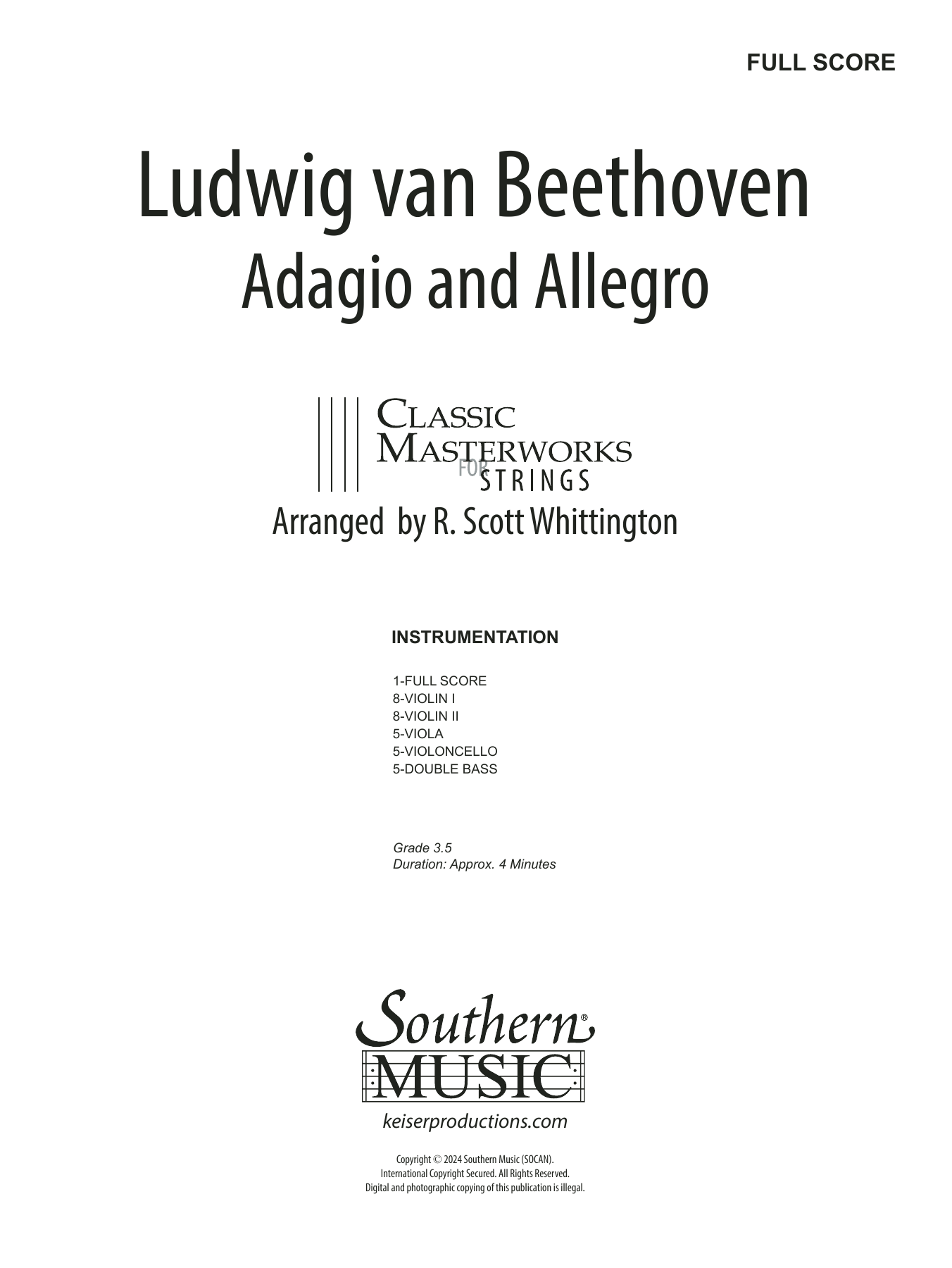

Adagio and Allegro (arr. R. Scott Whittington): String Orchestra Conductor Score & Parts
By Ludwig Van Beethoven / Arranged by R Scott Whittington
Grade: 3.5
Item: 35-PK01511453
$55.00
Pickup currently not available
Buy Extra Parts (Digital PDF Download)
Parts Added to Cart!
Description
Created for string ensembles working at a level 3.5, ADAGIO AND ALLEGRO offers a wonderful opportunity for developing players to discover the brilliant and dramatic composer that is Ludwig Van Beethoven. This arrangement has been edited and shortened to 4:20, and has been transposed from its original key of Eb major to the more string-friendly key of D major. ADAGIO AND ALLEGRO is scored so that it can be successfully performed if an ensemble is missing a bass section.


Adagio and Allegro (arr. R. Scott Whittington): String Orchestra Conductor Score & Parts isn't in MakeMusic Cloud just yet...but it could be. Let us know you'd like to see it, and you'll help shape what comes next. In the meantime, start a free trial and dive into thousands of interactive titles your students can play along with today.
Request This Title
Tell us you want it.
Start Your Free Trial
Explore everything that's ready to play right now.
Sample Audio
No sample audio found.
Sample Video
No sample videos found.
Additional Details
Publisher:
Hal Leonard
SKU:
35-PK01511453
More about this title
About the Composer: Ludwig Van Beethoven
Beethoven's dramatic instinct and formal mastery made him one of the most influential composers in Western music. He expanded the emotional and structural possibilities of every genre he touched, from symphonies to chamber works, creating music that demanded something new from performers and listeners alike.
For young musicians, his works offer an especially valuable lesson: how to build tension, shape phrases over longer spans, and use orchestration to create impact. Even in arrangement, Beethoven's architectural thinking comes through, showing developing players what purposeful composition sounds like.
Why we love this
This arrangement captures Beethoven's gift for dramatic contrast without overwhelming an intermediate ensemble. The transposition to D major sits naturally for strings, and the shortened format respects rehearsal reality while preserving the piece's essential architecture. Young musicians get to experience genuine Beethoven writing, not a diluted approximation.
What to expect
The Adagio unfolds like a conversation, introspective and deliberate. Then suddenly the Allegro arrives, all propulsive energy and purpose, with the kind of orchestral momentum that reminds players why they love ensemble playing.
Who it's for
String orchestras at the 3.5 level who want to program something substantial and musically honest. This works equally well for all-state audition preparation or a spring concert that needs backbone.
How to get the most out of it
- Shape the Adagio with a long, singing line. Young string players often play expressively at first but then lose momentum; work on maintaining phrase direction across the entire section.
- Balance the transition into the Allegro carefully. The shift in energy is dramatic, but it should feel inevitable rather than jarring.
- Use the D major key to your advantage. Encourage open string resonance and remind players that this key lets D and A speak naturally without excessive shifting.
- If you're missing violas or cellos, test the balance in rehearsal early. The arrangement's transparency means the missing voice will be noticeable, but it won't derail the performance.
How to use it
Place this as a centerpiece, not filler. Its four-and-a-half-minute arc and emotional weight earn it a solo spot on the program, or pair it with lighter contemporary works that offer tonal contrast. It's also ideal for demonstrating growth to audiences who return season to season.
Skills your students will build
- Sustaining long phrases with consistent tone and vibrato control
- Navigating transitions between contrasting tempos and characters
- Reading at a level that requires attention to dynamic detail and articulation clarity
- Ensemble balance in a transparent orchestration
- Understanding Beethoven's harmonic language and formal structure