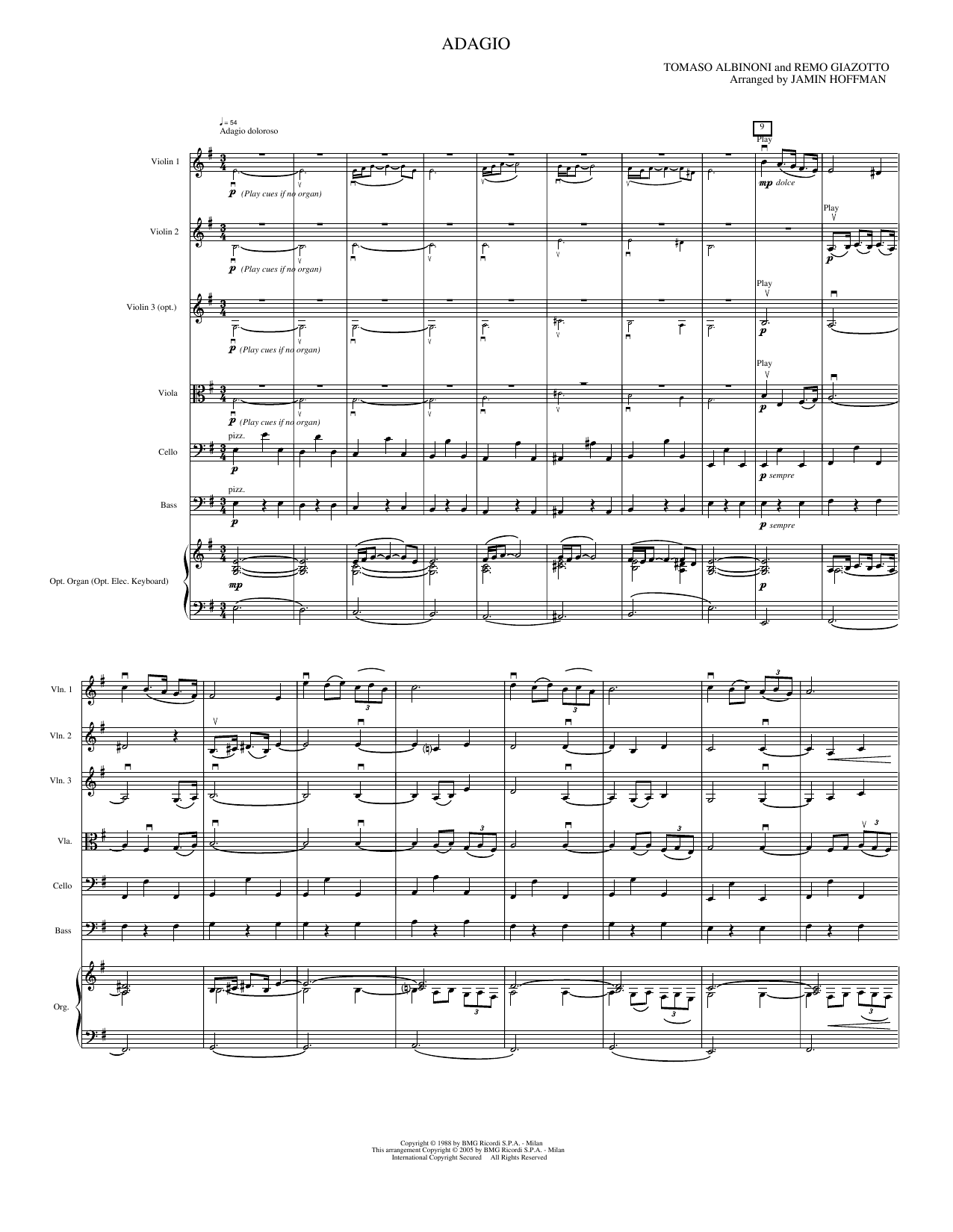
Tomaso Albinoni (1671-1751) was a Venetian composer whose output spanned opera, concertos, and chamber works. Though many of his compositions were lost, his surviving works reveal a gift for lyrical melody and harmonic clarity that made him influential across Europe. His music remains central to string orchestra curricula because it sits at the intersection of technical accessibility and genuine expressive depth.
Why we love this
This arrangement gives intermediate string orchestras access to one of classical music's most recognizable and emotionally resonant works. The Giazotto reconstruction has become the standard version, and Hoffman's orchestration sits comfortably in the middle grades, demanding real musicianship without overwhelming developing players. It's the kind of piece that teaches vulnerability and phrase architecture while delivering the satisfaction of playing something genuinely moving.
What to expect
Quiet dignity. The piece unfolds with a sense of inevitability, each phrase moving toward the next with unhurried purpose. There's melancholy here, but not drama; restraint rather than intensity. Players feel the piece as much through what they hold back as through what they play.
Who it's for
String orchestras in grades 3 and 4 ready to tackle a piece that requires mature phrasing and blend rather than technical fireworks. This works equally well for ensembles preparing their first spring concert or for groups looking to add repertoire that builds musicianship without requiring extensive transposition or difficult rhythmic concepts.
How to get the most out of it
Establish a warm, singing tone across all voices from the opening. The piece depends on the listener feeling sustained emotional presence rather than technical display.
Shape the dynamics with restraint. Resist the temptation to make the piece sound grander than it is; let the melody breathe and the supporting voices stay transparent.
Balance the inner lines carefully so the harmonic progression underneath the main theme remains audible. Second violins and violas often carry the voice leading that makes this work emotionally coherent.
Take tempo gradually. Many conductors rush this piece. Allow adequate space between phrases so the architecture reveals itself.
How to use it
This pairs naturally with other Baroque and early Classical works, making it ideal for concert programming around a thematic frame (composers of the Venetian tradition, for instance). It also serves as an excellent vehicle for teaching sustained tone and phrasing before tackling Romantic repertoire, or as a palate cleanser between faster, character-driven pieces.
Skills your students will build
Sustaining long lyrical lines with tonal consistency across phrase boundaries
Balancing multiple independent melodic lines within a homophonic texture
Responding to subtle dynamic shaping and expressive rubato from the conductor
Understanding harmonic movement and voice leading through listening and ensemble awareness
Maintaining rhythmic precision in slower tempos where pulse is felt rather than metered
You May Also Like
Scan to Complete Your Purchase
Use your phone's camera to scan the code below
You'll log in on your phone and the order will be added to your account