
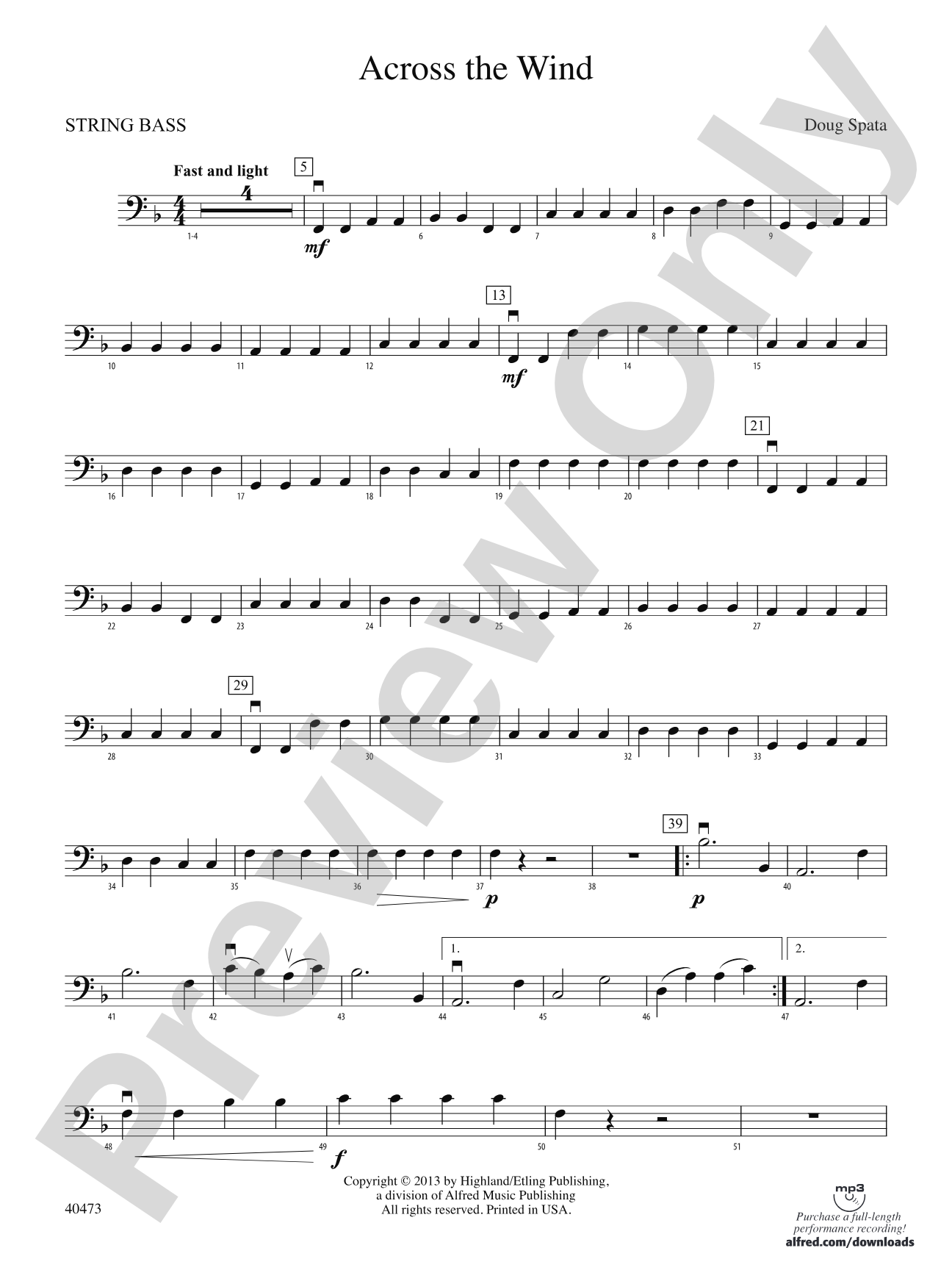

Across the Wind: String Bass
By Doug Spata
Grade: 2.5
Item: 00-PC-0016005_SB
$5.99
Pickup currently not available
Description
Thrilling melodies swoop and soar over bristling ostinatos in this exciting concert overture in F Major. With a triumphant style and dramatic range of emotions, players will enjoy performing this piece. Many musical and technical skills are reinforced, including 16th note patterns with slurs, part independence, and accidentals. The graceful middle section of the piece is an excellent place for players to experiment with vibrato. Truly an exhilarating, enriching journey that students will be excited to take again and again! (4:19) This title is available in MakeMusic Cloud.


Don't just read it, hear it, play along with it, and watch your students grow with it. In MakeMusic Cloud, Across the Wind: String Bass comes alive with professional accompaniment, adjustable tempo, and built-in practice tools that turn solo practice into real progress.
Open in the Player
Jump straight in and assign it today.
Start Your Free Trial
Open this title and explore the full library in minutes.
Sample Audio
1
Audio File
--:--
0:00
0:00
Sample Video
Additional Details
Series:
Highland/Etling String Orchestra
Publisher:
Alfred Music
Page Count:
124
SKU:
00-PC-0016005_SB
More about this title
About the Composer: Doug Spata

Doug Spata trained as a clarinetist but found his compositional voice through years spent teaching orchestra students. His experience in the rehearsal room directly shaped his approach to writing for strings, resulting in works that balance technical challenge with genuine musical satisfaction.
Spata's compositions have earned recognition across the U.S. and internationally, performed by student and professional ensembles alike. Beyond his prolific output for young musicians, he has composed operas, ballets, symphonies, and chamber works spanning a wide range of ensemble sizes and genres.
Why we love this
Spata understands what actually excites young string players. The piece opens with swooping melodies that feel genuinely soaring, not formulaic, and the rhythmic drive beneath them (those bristling ostinatos) gives every section something vital to play. The middle section's invitation to experiment with vibrato signals trust in your students' musicianship and offers a natural performance development opportunity.
What to expect
Energy and exhilaration propel this piece from its first soaring gesture. The drama comes not from darkness but from momentum and a genuine sense of triumph, punctuated by a quieter, more introspective middle where the music settles into graceful lyricism before building back to its original momentum.
Who it's for
String orchestras at the late intermediate level (Grade 2.5) looking for a substantial concert piece with real dramatic arc. Directors seeking repertoire that builds technical skills while genuinely engaging players will find this overture checks both boxes.
How to get the most out of it
- Work the 16th note patterns with slurs slowly at first, using consistent bow weight rather than rushing the articulation. Once the motion becomes smooth, you can bring the tempo closer to performance speed.
- Build independence between parts by isolating the ostinato sections in sectionals. Have one group lock their pattern while others play over it, then rotate roles.
- Shape the middle section by encouraging players to listen for the harmonic direction beneath their lines. Vibrato becomes more expressive when students understand where the phrase is moving.
- Balance the triumphant opening and closing sections by checking that lower strings aren't overwhelmed by the melody. A slight dynamic pull-back from the soaring voices will let the full texture breathe.
How to use it
This works beautifully as a concert opener or the first half of a program pair; its energy sets a confident tone. The 4-minute-19-second length and festival-ready quality also make it valuable for contest programming, where it can anchor a set alongside more lyrical selections.
Skills your students will build
- 16th note fluency with slurred articulation
- Part independence against sustained ostinatos
- Reading and intonating accidentals in F Major context
- Vibrato control and expression in slower passages
- Dynamic balance and phrase shaping across multiple voices