Across the Serengeti: B-flat Bass Clarinet Sheet Music Preview

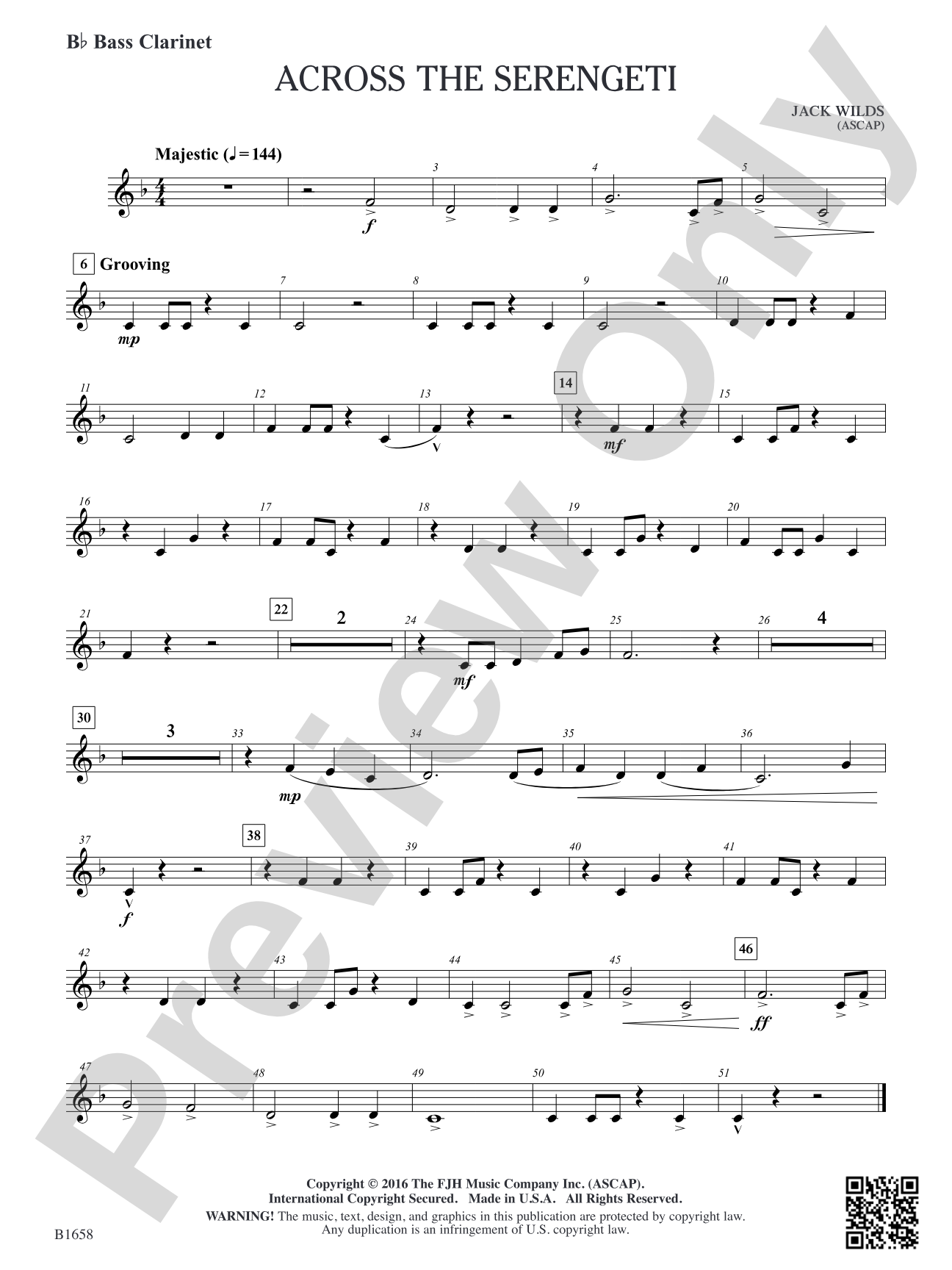
Across the Serengeti: B-flat Bass Clarinet

By Jack Wilds

Level:.5

Item: 98-PC-DB1658_BC

Digital Download
$7.00
Description
Across the Serengeti is a musical portrait of the grassy plains of Africa. Using only six notes, this piece establishes and sustains an infectious rhythm that students and audience will thoroughly enjoy. Percussionists have plenty to do and provide a vital component of the orchestration.

Don't just read it, hear it, play along with it, and watch your students grow with it. In MakeMusic Cloud, Across the Serengeti: B-flat Bass Clarinet comes alive with professional accompaniment, adjustable tempo, and built-in practice tools that turn solo practice into real progress.

Sample Audio
0:00
0:00
Sample Video
Additional Details
Series: FJH Starter Series
Publisher: The FJH Music Company, Inc.
SKU: 98-PC-DB1658_BC

More about this title

About the Composer: Jack Wilds

Jack Wilds

Jack Wilds composes across an unusually wide range of musical contexts, from children's ensembles to professional orchestras. His catalog spans chamber music performed by the Attacca Quartet and members of the New York Philharmonic, alongside over 40 works for developing band and choir musicians. His compositions draw deeply from visual art, literature, and spiritual traditions, creating pieces that balance artistic ambition with genuine accessibility.

Wilds spent years directing public school bands before moving into higher education, where he teaches composition, theory, and music technology at Texas State University. He serves as Co-Director of Music at First Presbyterian Church in San Marcos and maintains an active schedule as a clinician and festival adjudicator. His wind band works appear regularly on required contest repertoire lists internationally and have been featured at the Midwest Clinic and major educator conferences across North America.

Why we love this

Wilds crafts music for young ensembles with rare restraint and clarity. By limiting the melodic palette to six notes, he forces the band to focus on rhythm, ensemble balance, and percussion articulation rather than navigating complex harmony, making this an ideal opener for a program or an effective foundation piece early in the concert season. The percussion writing transforms what could be simplistic into something genuinely energetic and musical.

What to expect

The piece evokes the vast, windswept grasslands of the Serengeti through persistent rhythmic motion and a propulsive energy that feels both spacious and propelled. Despite its simplicity, there's an undeniable groove that carries the listener across the plains, with percussion textures creating movement and visual imagery.

Who it's for

This work suits beginning to early-intermediate concert bands, particularly ensembles looking for pieces that build strong rhythmic fundamentals and ensemble precision without overwhelming younger players. It works equally well for mixed-level programs needing an accessible opener that doesn't sacrifice musicality.

How to get the most out of it

  • Keep the rhythmic foundation rock solid throughout; the percussion section anchors everything, so establish that pulse clearly in early rehearsals and maintain it consistently.
  • Explore the timbral variety available within a limited pitch set. Different instrument families highlighting the same melodic material create color without adding complexity.
  • Build dynamic contrast gradually. With fewer notes to work with, shape the piece through volume, articulation, and rhythmic clarity rather than pitch variety.

How to use it

Open a concert with this piece to establish immediate energy and engagement with your audience. It also serves well as a transitional work between more technically demanding selections, or as a featured piece during a spring concert celebrating world music and cultural exploration themes.

Skills your students will build

  • Maintaining steady rhythmic pulse through repetitive melodic material
  • Ensemble balance and blend across instrument families
  • Percussion independence and ensemble collaboration
  • Dynamic shaping and articulation as primary expressive tools

You May Also Like