
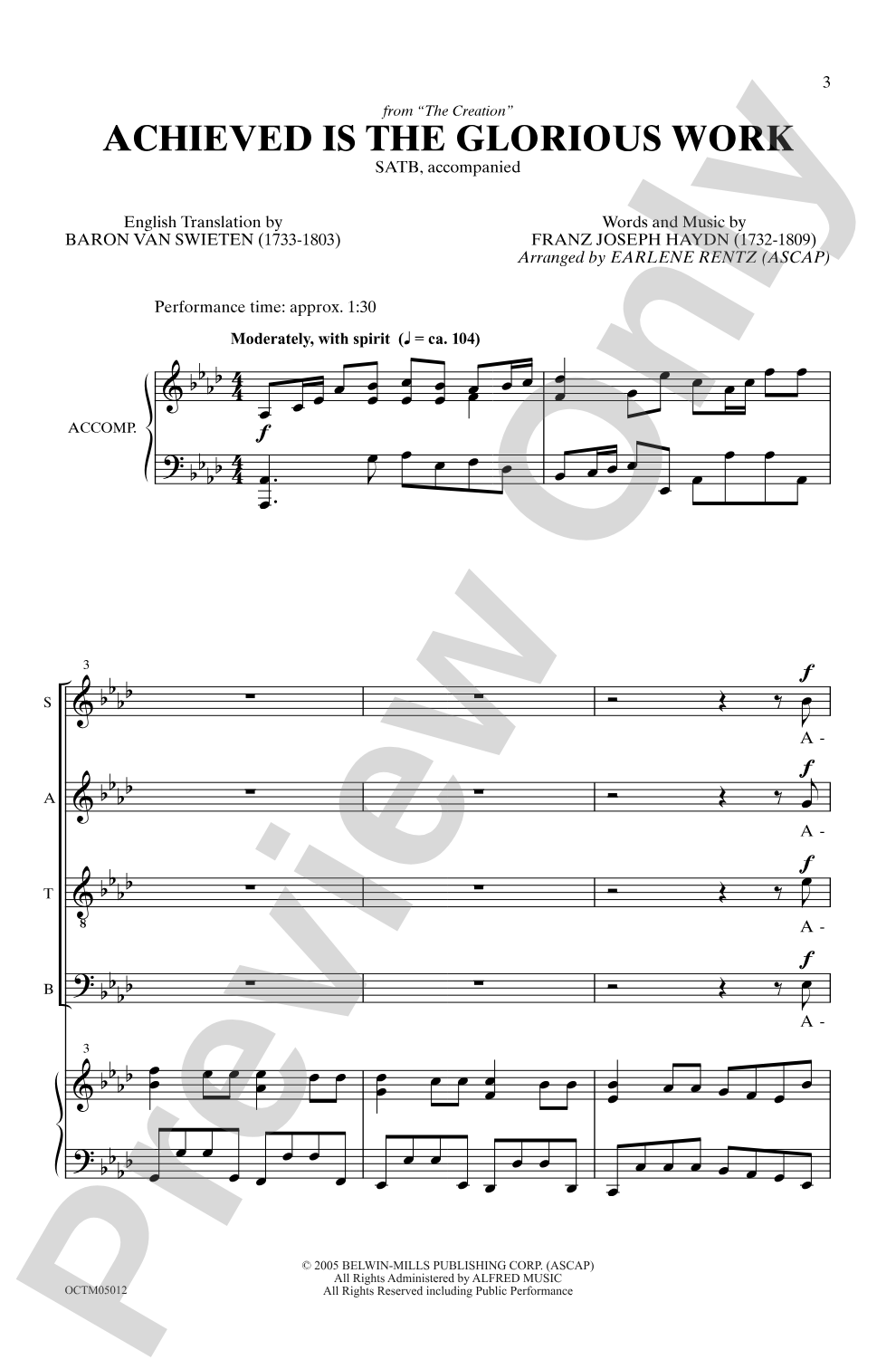
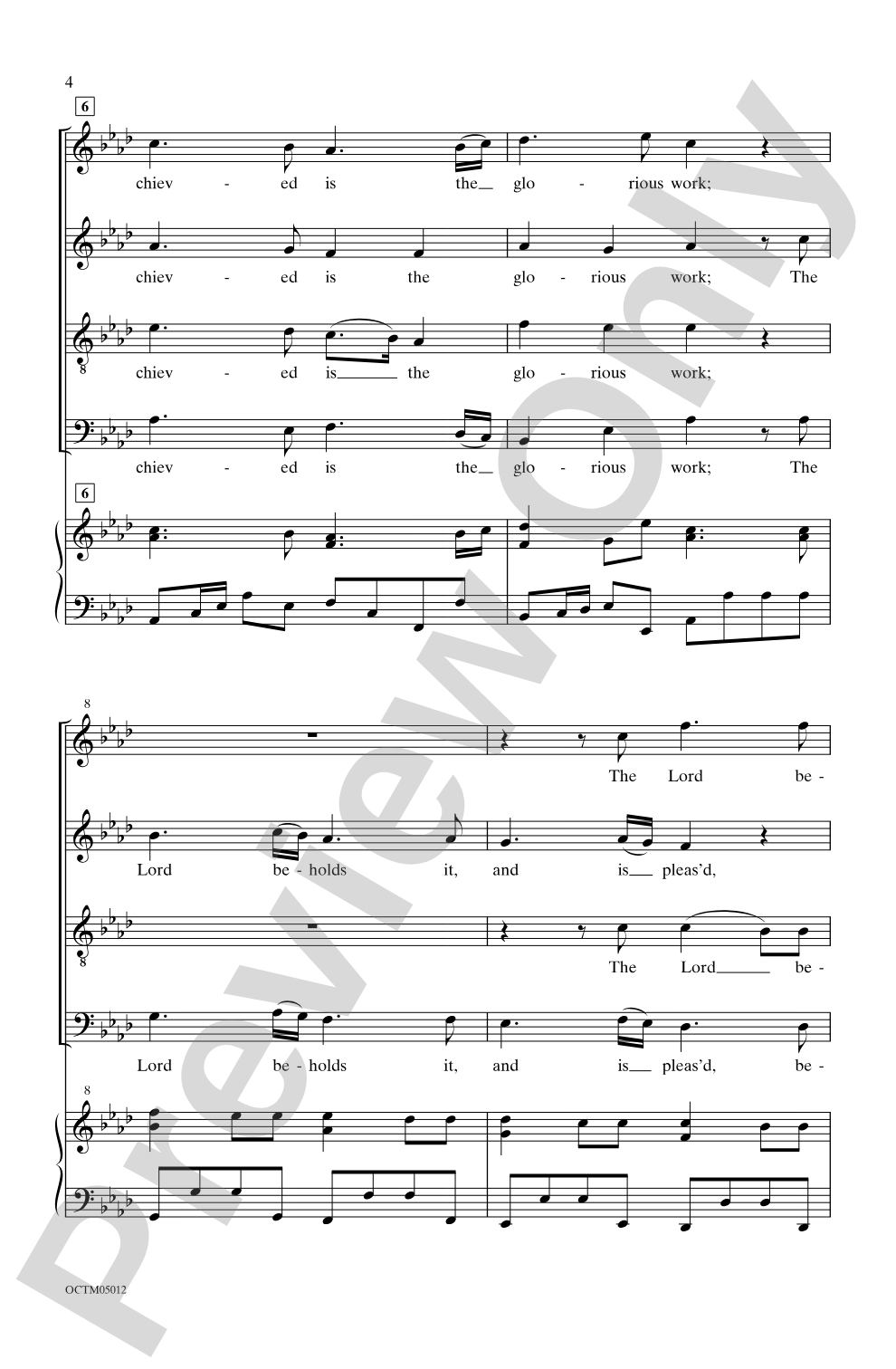

Achieved Is the Glorious Work: SATB Choral Octavo
From The Creation
Words and music by Franz Joseph Haydn, English translation by Baron van Swieten / arr. Earlene Rentz
Level: Moderate
Item: 00-PO-0006798
$2.25
Minimum order quantity: 20 copies
Pickup currently not available
Related Items
Achieved Is the Glorious Work: SATB Choral Octavo |
$2.25
|
View |
Description
Haydn's The Creation is one of his larger works that is performed by choruses the world over. This chorus from The Creation will make a superb addition to any concert or festival performance. Earlene Rentz has retained the original integrity of the work while bringing it within the performance skills of most choirs.


Achieved Is the Glorious Work: SATB Choral Octavo isn't in MakeMusic Cloud just yet...but it could be. Let us know you'd like to see it, and you'll help shape what comes next. In the meantime, start a free trial and dive into thousands of interactive titles your students can play along with today.
Request This Title
Tell us you want it.
Start Your Free Trial
Explore everything that's ready to play right now.
Sample Audio
1
Audio File
--:--
0:00
0:00
Sample Video
No sample videos found.
Additional Details
Series:
Alfred Archive Edition: Belwin Festival Series
Publisher:
Alfred Music
Page Count:
12
SKU:
00-PO-0006798
More about this title
About the Composer: Franz Joseph Haydn
Franz Joseph Haydn (1732-1809) was an Austrian composer whose prolific output defined the Classical era. As a master of large-scale forms, Haydn shaped the symphony and string quartet while also composing sacred vocal music of enduring power. The Creation, completed late in his life, stands as one of his most celebrated works and remains a cornerstone of choral repertoire.
Haydn's ability to write singable, structurally clear music made his works accessible to performers at every level while maintaining artistic substance. This balance between craftsmanship and approachability explains why his music continues to anchor choral festivals and concert seasons more than two centuries after his death.
Why we love this
Earlene Rentz's arrangement captures the grandeur of Haydn's original while meeting the abilities of a typical parish or school choir, meaning your singers perform authentic Classical repertoire without drowning in technical demands. The text setting and harmonic framework preserve what makes this movement so satisfying to sing, and the 12-page format fits naturally into a full concert without overwhelming rehearsal schedules.
What to expect
The movement radiates assurance and jubilation, with soaring melodic moments balanced against moments of intimate harmony. Haydn's gift for bright, clear textures means the piece feels buoyant rather than ponderous, even at a moderate tempo, and the text sets naturally to phrases that feel good under the voice.
Who it's for
This arrangement suits intermediate choirs that have solid intonation and basic four-part reading skills but may not have specialized classical training. It works equally well in high school, community, or church choir settings where singers want the satisfaction of performing a masterwork without needing soloistic technique.
How to get the most out of it
- Shape the longer melodic lines with gentle phrase arcs rather than aggressive dynamic contrasts; Haydn's Classical style favors elegance and proportion.
- Balance the four voice parts so the soprano line remains clear without the other voices fading into accompaniment texture.
- Maintain a steady, singing approach to the tempo; resist the urge to rush through faster passages, which undermines the work's dignity.
- Coordinate diction carefully in the full choir sections so consonants align without becoming harsh or cluttered.
How to use it
This works beautifully as a centerpiece for a program built around sacred or classical themes, or as the capstone to a concert mixing shorter sacred works. Its moderate difficulty and familiar classical credentials also make it an excellent piece to program when you want to feature your choir's growth without attempting the most demanding repertoire.
Skills your students will build
- Sustaining long phrases with steady breath support and line
- Maintaining four-part harmonic balance in block chord textures
- Interpreting Classical-era style conventions in phrasing and articulation
- Pronouncing Latin or English liturgical text with clarity and uniformity
- Reading and responding to conductor cues in ensemble sections