Acclamation of Praise (Words from Isaiah 12:1, 4-5) Sheet Music Preview

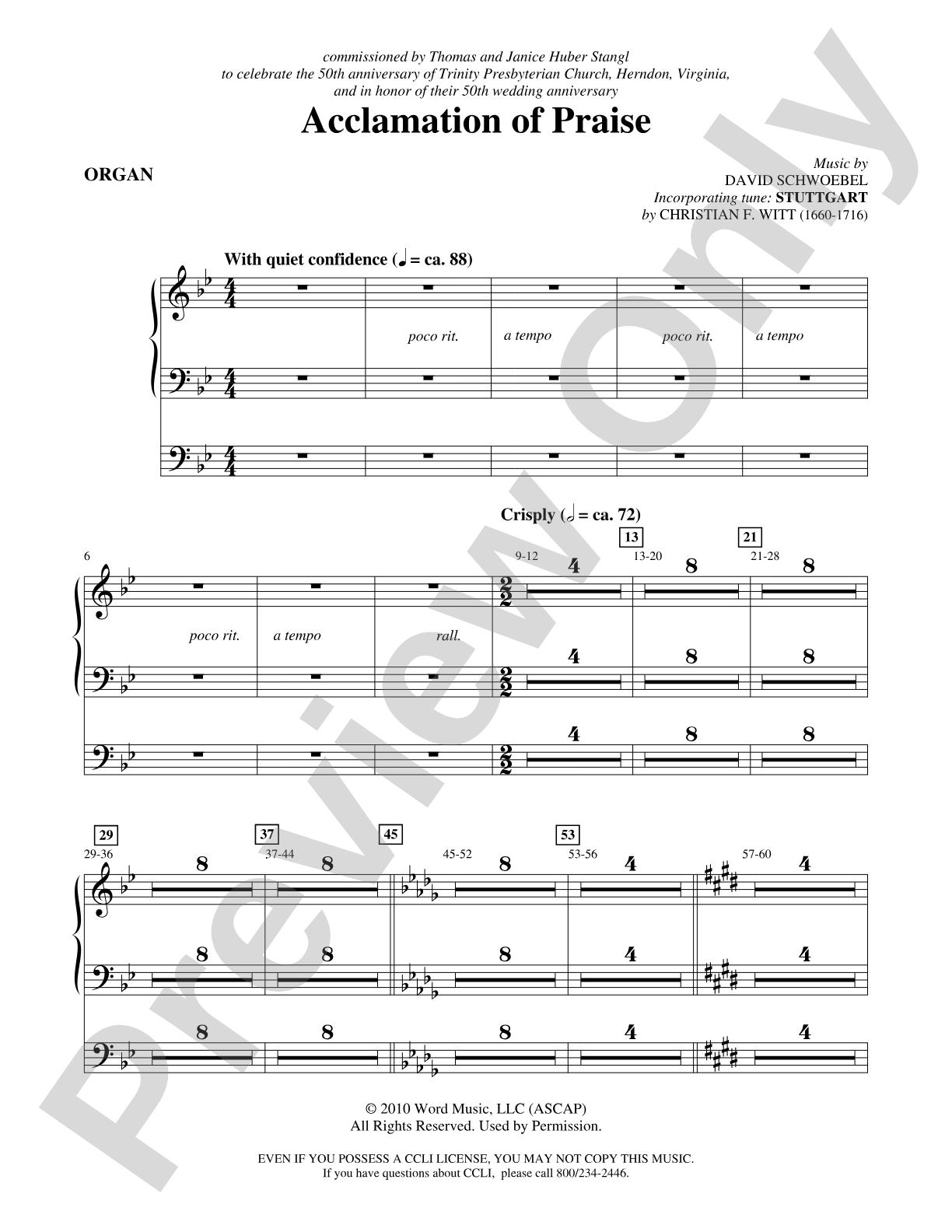
Acclamation of Praise (Words from Isaiah 12:1, 4-5): Organ

By David Schwoebel

Item: 31-PS-0012732

Digital Download
$3.99

One moment…

Description
The sturdy tune STUTTGART provides the framework for this strong anthem of praise scored for optional handbells, organ and congregational participation in addition to SATB voices and piano. Beginning with a quietly confident melody, both melody and accompaniment continue to grow and build into a grand hymn tune and text, which includes a soaring soprano descant.

Acclamation of Praise (Words from Isaiah 12:1, 4-5): Organ isn't in MakeMusic Cloud just yet...but it could be. Let us know you'd like to see it, and you'll help shape what comes next. In the meantime, start a free trial and dive into thousands of interactive titles your students can play along with today.

Sample Audio
No sample audio found.
Sample Video
Additional Details
Series: Jubilate Music
SKU: 31-PS-0012732
Instrumentation: Piano & Handbell

More about this title

About the Composer: David Schwoebel

David Schwoebel

David Schwoebel has spent his career bridging composition and congregational music ministry. A graduate of McKendree College and Southwestern Baptist Theological Seminary (where he earned degrees in Voice and Organ Performance and Church Music with a composition emphasis), Schwoebel has served churches across the South and currently holds the position of Minister of Music and Composer in Residence at Derbyshire Baptist Church in Richmond, Virginia, a post he has held since 1997.

Schwoebel's compositional voice emerges directly from his hands-on work with singers of all ages and abilities. He oversees a comprehensive music ministry that spans six choral ensembles, four handbell choirs, and a 32-piece orchestra, and his hymn tunes appear in major denominational hymnals including the Baptist Hymnal, Celebrating Grace Hymnal, and Glory to God: The Presbyterian Hymnal. His approach to writing reflects a deep understanding of how music functions in congregational worship and community music-making.

Why we love this

Schwoebel constructs this piece with real congregational worship in mind. The architecture is smart: beginning quietly so that singers find their footing, then systematically building toward the descant and full ensemble sound. The optional handbells and organ parts give you genuine flexibility for different Sunday mornings and sanctuary sizes, while the sturdy STUTTGART tune ensures the piece lands with confidence.

What to expect

This is music of genuine praise that feels earned rather than imposed. The opening has the contemplative clarity of hymn singing, but as verses develop, harmonic support and textural layers deepen until the soprano line soars in declaration. By the final cadence, the piece embodies the accumulation of voices joining in affirmation.

Who it's for

This piece serves directors programming worship services that blend choral leadership with congregational singing. It works equally well for churches with full handbell and organ programs and those with simpler instrumentation, since the optional parts allow you to scale the arrangement to your resources.

How to get the most out of it

  • Shape the opening phrases with restraint; the "quietly confident" melody needs space to breathe before the accompaniment intensifies, so resist the urge to push dynamic growth until the text and musical architecture clearly call for it.
  • Balance the soprano descant carefully during the climactic section so it crowns the texture without overwhelming the choir; rehearse the lower three parts to full voice independently before layering the descant in.
  • If using handbells, establish their entrance cue and rhythmic precision early in rehearsals since they anchor the building momentum in the middle section.
  • Consider a brief ritardando leading into the final cadence to honor the hymnic conclusion and allow the congregational participation to settle into the resolution.

How to use it

Place this as a climactic moment in a service structured around Isaiah's themes of thanksgiving and strength, or use it as a second-half anthem when you need music that builds corporate confidence in your congregation. The optional congregational participation makes it particularly effective for services designed to highlight and engage voices from the pews.

Skills your students will build

  • Singing sustained harmonic parts while accompanying instruments add rhythmic and textural complexity
  • Coordinating entrance and momentum with optional instrumental parts (handbells and organ)
  • Layering voice parts (including soprano descant) so each line has clarity and purpose within the ensemble sound
  • Interpreting dynamic growth across longer phrases without losing line integrity

You May Also Like