Academic Festival Overture: String Bass Sheet Music Preview

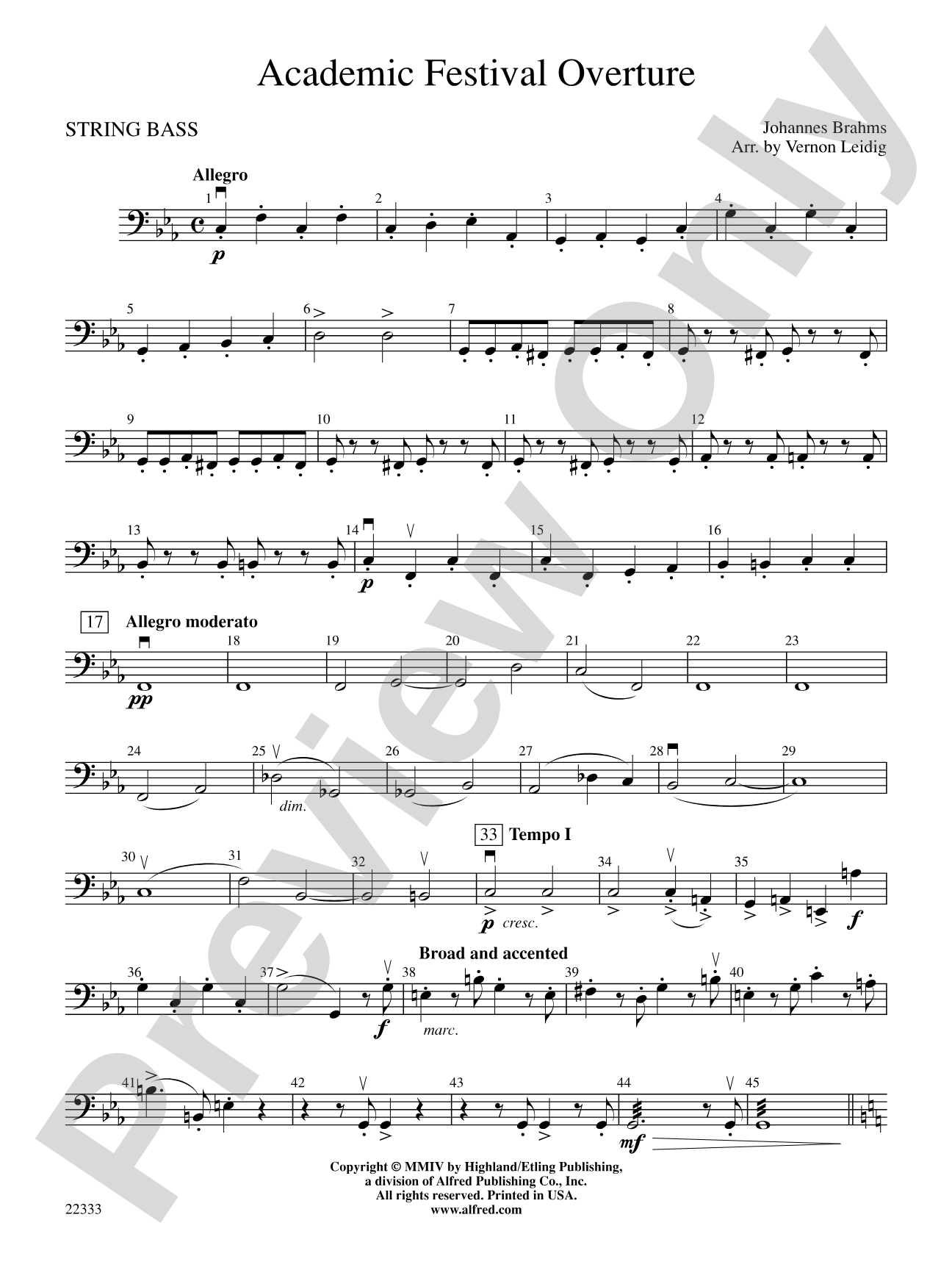
Academic Festival Overture: String Bass

By Johannes Brahms / arr. Vernon Leidig

Grade: 4

Item: 00-PC-0000582_SB

Digital Download
$3.00
Description
Academic Festival Overture was written in 1879 when Brahms was given a degree of doctor of philosophy by the University of Breslau. As a spirit of gratitude, Brahms composed the overture for the occasion. The whole overture is built on themes taken from a memorable collection of German student songs; the songs are developed in a variety of tempos, styles and moods. In the closing section, the melody is presented in a stately and dramatic manner, and the orchestra plays with full force, bringing the overture to a triumphant conclusion.

Don't just read it, hear it, play along with it, and watch your students grow with it. In MakeMusic Cloud, Academic Festival Overture: String Bass comes alive with professional accompaniment, adjustable tempo, and built-in practice tools that turn solo practice into real progress.

Sample Audio
No sample audio found.
Sample Video
Additional Details
Series: Highland/Etling Full Orchestra
Publisher: Alfred Music
Page Count: 100
SKU: 00-PC-0000582_SB

More about this title

About the Composer: Johannes Brahms

Johannes Brahms (1833-1897) stands as one of the nineteenth century's most significant composers, bridging Romantic expression with Classical form. His mastery of orchestration and structural clarity made him a dominant figure in concert halls across Europe, and his works remain central to the orchestral repertoire that music students encounter and study.

Why we love this

This arrangement captures the Academic Festival Overture's infectious energy and clever integration of student songs without overwhelming younger orchestras. The Grade 4 setting preserves Brahms's structural brilliance and celebratory sweep while keeping the technical demands manageable, making it genuinely rewarding to conduct and play rather than merely an abbreviated version.

What to expect

Charming and spirited, with the warmth of familiar folk melodies woven through clever orchestral textures. The piece moves from lighthearted, almost rollicking student song treatments into increasingly grand restatements, culminating in a powerful, confident finish that leaves audiences and players alike satisfied and energized.

Who it's for

Full orchestras at the Grade 4 level seeking repertoire that combines recognized classical mastery with practical accessibility. This arrangement works for advanced middle school ensembles, younger high school orchestras, or community groups comfortable with moderate technical demands and looking for material with genuine concert appeal.

How to get the most out of it

  • Balance the student song themes across different sections of the orchestra; each melody should sing clearly even when surrounded by supporting harmonies and countermelody.
  • Shape the tempo transitions between the various song treatments with intention. Brahms moves through distinct character shifts, so use conductor preparation and sectional rehearsal to clarify when the ensemble should breathe or surge forward.
  • Let the final triumphant section build naturally from the accumulation of themes rather than rushing the climax. The power comes from orchestral weight and unified articulation, not faster tempo.

How to use it

Perfect for graduation ceremonies, academic celebrations, or spring concerts where you want music that connects to education and achievement without feeling solemn. This arrangement also serves well as a festival or contest piece, offering judges the chance to hear a genuine Brahms masterwork realized by an orchestra at an appropriate technical level.

Skills your students will build

  • Balancing transparent orchestration across multiple instrumental choirs
  • Conducting and executing tempo transitions between distinct musical sections
  • Sustaining and shaping long melodic lines at varying dynamic levels
  • Reading and executing articulation changes that shift character within a single theme
  • Ensemble unity in climactic, full-orchestra passages requiring coordinated intensity

You May Also Like