
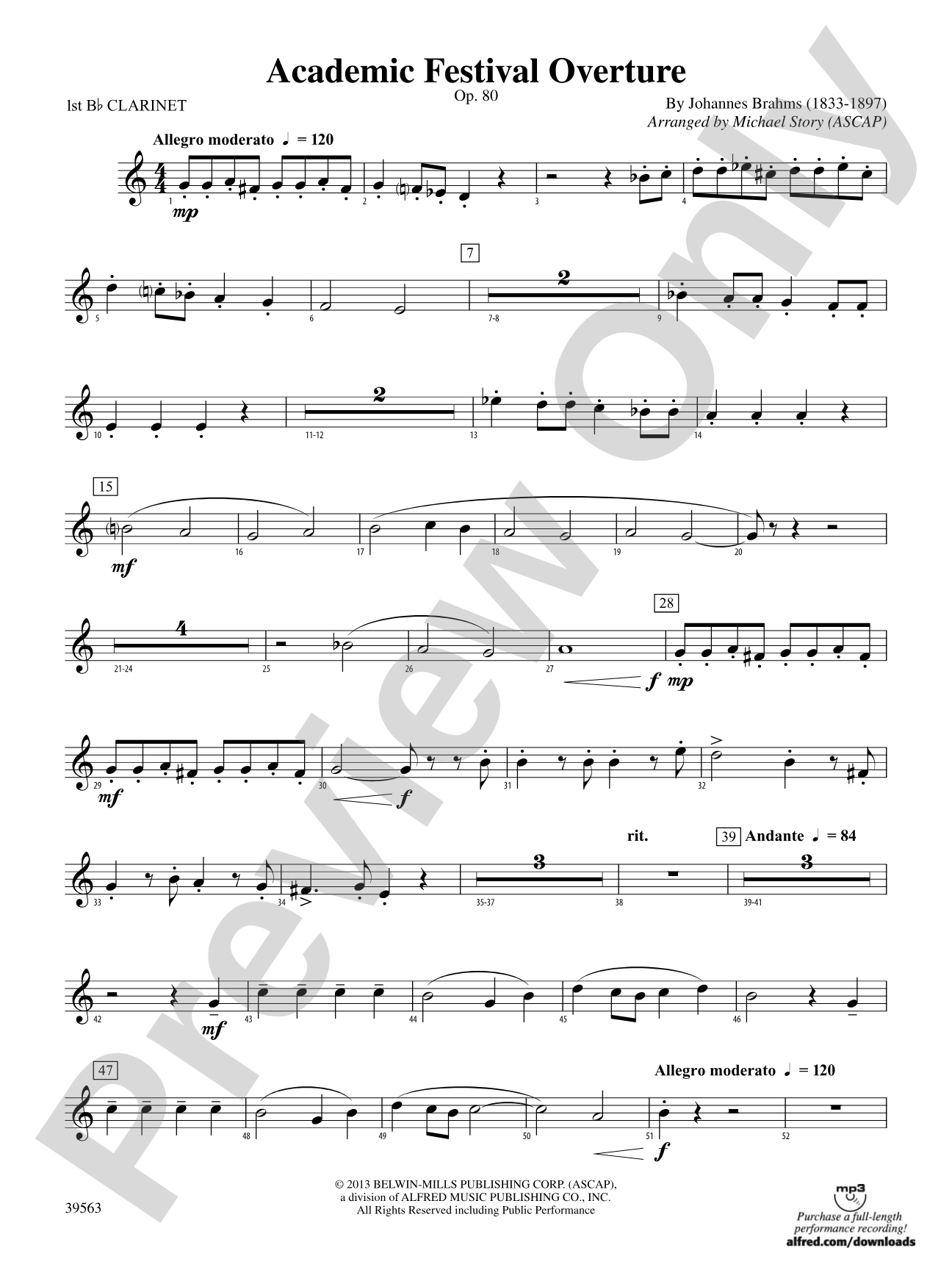

Academic Festival Overture: 1st B-flat Clarinet
Op. 80
By Johannes Brahms / arr. Michael Story
Grade: 2 (Easy)
Item: 00-PC-0015872_C1
$3.00
Pickup currently not available
Description
Although conceived as a comical academic musical representation by its renowned composer, this overture is lyrical and exciting. There are opportunities for your students to present sudden stylistic changes and tempo shifts which permit for both performance and teaching. It is still used in a variety of settings (even in its comedic intent) in films and on the more serious concert stage. This arrangement includes generous cuing to accommodate incomplete instrumentations. Classic, familiar and even humorous, it is a sure winner for your developing band. (3:45) This title is available in MakeMusic Cloud.


Don't just read it, hear it, play along with it, and watch your students grow with it. In MakeMusic Cloud, Academic Festival Overture: 1st B-flat Clarinet comes alive with professional accompaniment, adjustable tempo, and built-in practice tools that turn solo practice into real progress.
Open in the Player
Jump straight in and assign it today.
Start Your Free Trial
Open this title and explore the full library in minutes.
Sample Audio
1
Audio File
--:--
0:00
0:00
Sample Video
No sample videos found.
Additional Details
Series:
Belwin Young Band
Publisher:
Alfred Music
Page Count:
238
SKU:
00-PC-0015872_C1
More about this title
About the Composer: Johannes Brahms
Johannes Brahms (1833-1897) was a German composer whose symphonies, concertos, and chamber works established him as a central figure of Romantic music. Though trained in the German classical tradition, Brahms expanded it with richer orchestration, harmonic language, and emotional depth. His Academic Festival Overture, written in 1880 as a lighthearted response to an honorary doctorate from the University of Breslau, became one of his most performed works and demonstrates his gift for blending wit with musical substance.
Brahms' music remains foundational to music education because it bridges classical structure with romantic expressivity. His orchestral works reward careful listening and offer arrangers rich material for developing ensembles. The Academic Festival Overture, in particular, has proven enduringly popular in band and orchestral settings, valued equally by educators seeking teaching moments and by audiences seeking genuine musical pleasure.
Why we love this
Michael Story's arrangement preserves the overture's infectious humor and lyrical moments while making it accessible to Grade 2 bands through thoughtful cuing and balanced orchestration. The stylistic contrasts and tempo shifts built into the score create natural teaching opportunities about dramatic interpretation and ensemble control. Your students will recognize themselves in a genuine masterwork, not a dumbed-down version.
What to expect
A gleeful parade of musical ideas, by turns spirited and tender. The overture bubbles with the composer's affection for student life and university tradition, wrapped in memorable melodies and harmonies that feel both familiar and freshly alive.
Who it's for
Grade 2 concert bands seeking a masterwork with genuine musical substance and built-in ensemble challenges. This arrangement suits bands that are ready to move beyond simple march or chorale fare but still need accessible orchestration and conducting clarity.
How to get the most out of it
- Clarify the character shift between the rapid figuration and the lyrical, song-like sections by adjusting ensemble dynamics and articulation accordingly. The contrast makes the piece memorable.
- Lock the rhythmic unison passages in the low reeds and brass to anchor the band's foundation during the faster material. Cleanness here prevents muddiness elsewhere.
- Balance the cued parts carefully so that missing instruments don't create obvious holes. Story's cuing is generous; use it to reinforce lines that carry harmonic weight.
- Shape the Academic Festival theme (the famous student song that anchors the finale) with clear phrasing rather than driving relentlessly forward. Let it sing.
How to use it
Program this as a concert centerpiece or opening number where you want the audience to hear your band's range of expression. The 3:45 duration fits well between shorter items, and the piece's popularity means your community may recognize it from films or other contexts, creating an immediate connection.
Skills your students will build
- Sudden stylistic and tempo shifts (lively material alternating with lyrical passages)
- Dynamic contrast and phrasing in song-like sections
- Reading cued parts and understanding orchestration intent
- Rhythmic precision and clarity in rapid ensemble passages
- Identifying and executing a theme (the student song) in its various iterations