Absoludicrous: 3rd Baritone T.C. Sheet Music Preview

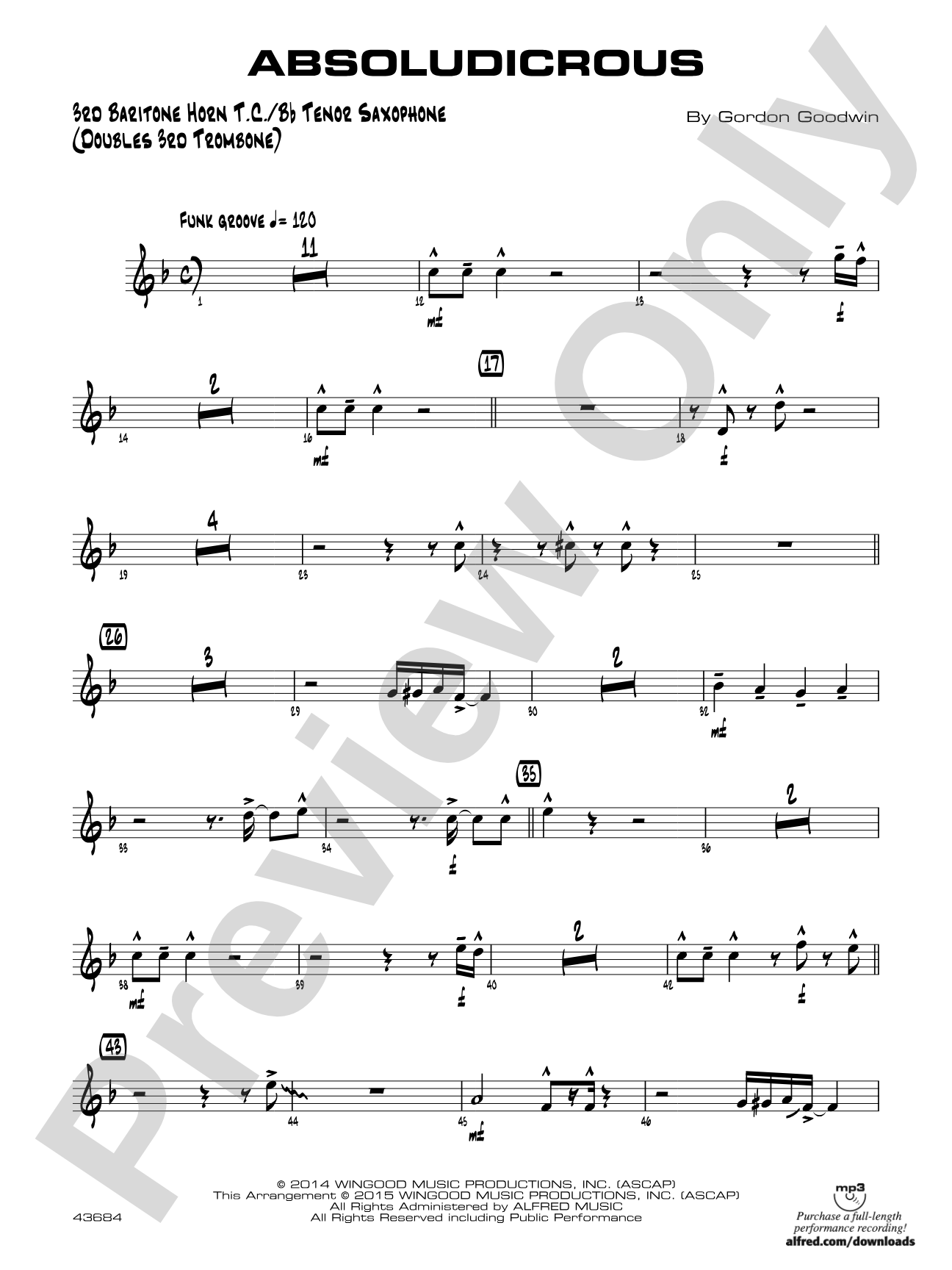
Absoludicrous: 3rd Baritone T.C.

By Gordon Goodwin

Grade: 3.5 (Medium)

Item: 00-PC-0016820_BTC3

Digital Download
$3.00
Description
Gordon Goodwin's Absoludicrous is a totally hip and fun chart played at 120 BPM. The electric piano will sound great on the funky piano introduction. Written solos are provided for alto / bari, tenor, trumpet, and trombone. The lead trumpet range is up to written high C. Auxiliary percussion, flute, and vibes part provided. A hit for any show! (6:04) This title is available in MakeMusic Cloud.

Don't just read it, hear it, play along with it, and watch your students grow with it. In MakeMusic Cloud, Absoludicrous: 3rd Baritone T.C. comes alive with professional accompaniment, adjustable tempo, and built-in practice tools that turn solo practice into real progress.

Sample Audio
0:00
0:00
Sample Video
Additional Details
Series: Jazz Band Series
Publisher: Alfred Music
Page Count: 114
SKU: 00-PC-0016820_BTC3

More about this title

About the Composer: Gordon Goodwin

Gordon Goodwin

Gordon Goodwin heard entire compositions in his head as a young child and had already written his first big band chart by age 13. His gift for orchestration caught the attention of film and television producers, leading to three Emmy Awards and multiple Grammy nominations for his work on films including Bad Boys II, Con Air, Remember the Titans, and Star Trek: Nemesis.

Beyond his success in scoring, Goodwin has written for and performed alongside some of jazz and popular music's greatest voices, including Quincy Jones, Christina Aguilera, Ray Charles, and Sarah Vaughn. Since 2000, he has led Gordon Goodwin's Big Phat Band, one of Los Angeles' premier big band ensembles, and continues to conduct major symphony orchestras while maintaining an active composing and arranging career.

Why we love this

Goodwin writes with a director's ear for what works on stage. The funky electric piano intro grabs attention immediately, the solo section keeps your soloists engaged with genuinely musical charts rather than bare-bones changes, and the overall energy is contagious without sacrificing ensemble balance. This is the kind of chart that gets real applause.

What to expect

Pure, unironic fun. The groove is tight and modern, the horn lines swing with attitude, and the rhythm section sits in a pocket that makes everyone want to move. This is the kind of chart that reminds students why they love playing jazz.

Who it's for

Jazz ensemble directors programming festival shows or concerts where energy and audience engagement matter. Players at the 3.5 level will find solos that challenge them without requiring virtuosic chops, and the ensemble scoring is accessible while sounding sophisticated.

How to get the most out of it

  • Lock the rhythm section into the pocket at 120 BPM before adding horns. The electric piano intro sets the groove, so piano and bass must anchor it together.
  • Give your soloists time to breathe in rehearsal. Written solos are provided, but they'll land with more impact if players understand the underlying harmonic movement and can voice their own interpretations within the framework.
  • Balance the high trumpet writing carefully. Lead trumpet reaches written high C; make sure this doesn't overshadow the ensemble or strain your section.
  • Use the auxiliary percussion and vibes parts to deepen the funk aesthetic. These aren't decorative; they're essential to the chart's groove.

How to use it

Program this as a set-closer or early encore. The six-minute length and upbeat character make it perfect for winning back an audience after a ballad or more serious piece, or for ending a concert on an undeniably positive note.

Skills your students will build

  • Comping and ensemble swing feel at a moderate tempo
  • Reading and executing written jazz solos with harmonic integrity
  • Balancing lead trumpet range (written high C) without sacrificing tone
  • Rhythm section pocket playing and interaction between piano, bass, and drums
  • Reading auxiliary percussion and vibes parts within a jazz context

You May Also Like