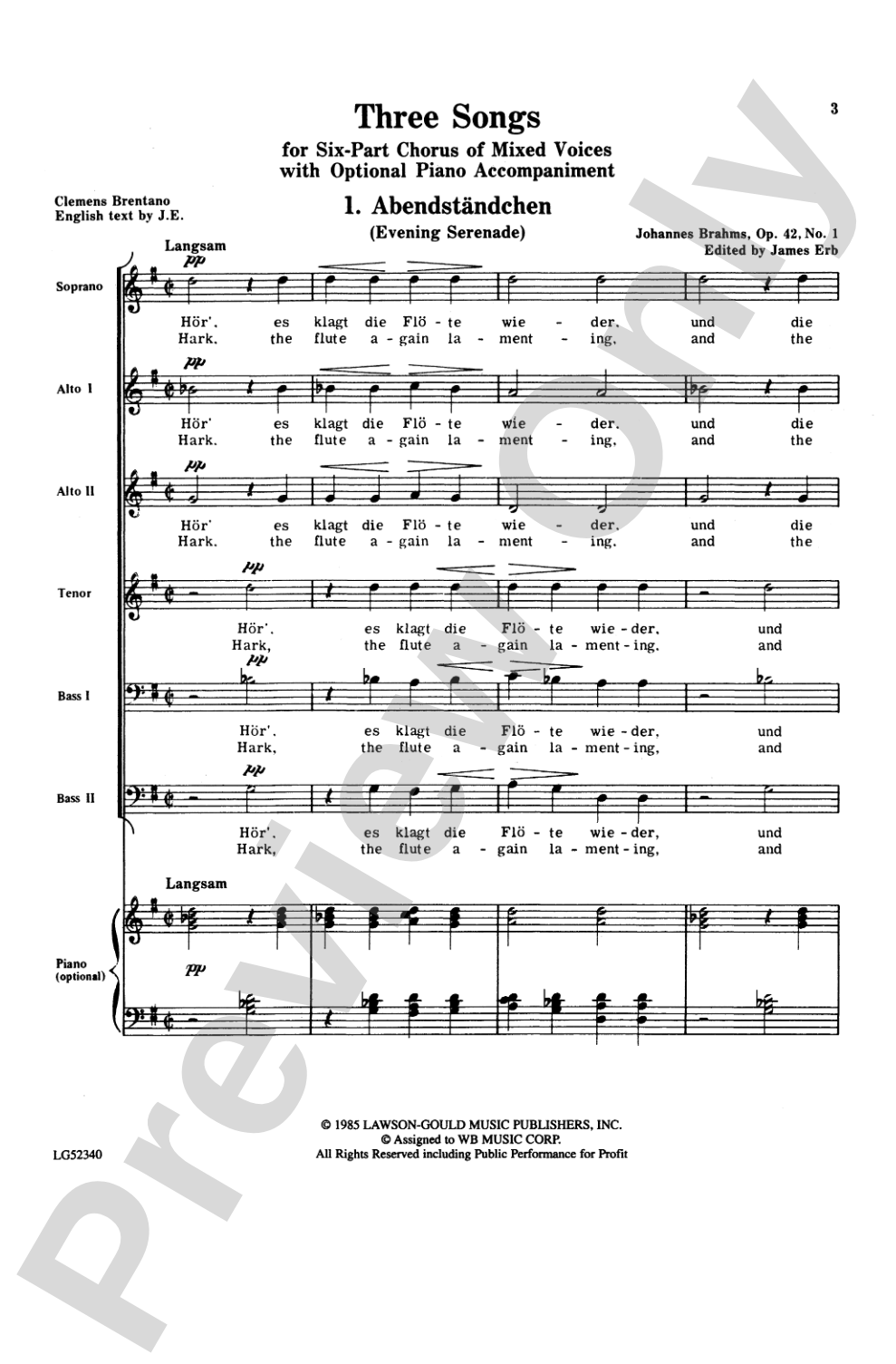
Abendständchen (Evening Serenade) Sheet Music Preview

Abendständchen (Evening Serenade): SAATBB Choral Octavo

By Johannes Brahms / arr. James Erb

Item: 00-PO-0006785

Digital Download
$2.25

Minimum order quantity: 20 copies

Description

Abendständchen (Evening Serenade): SAATBB Choral Octavo isn't in MakeMusic Cloud just yet...but it could be. Let us know you'd like to see it, and you'll help shape what comes next. In the meantime, start a free trial and dive into thousands of interactive titles your students can play along with today.

Sample Audio
No sample audio found.
Sample Video
Additional Details
Series: Alfred Archive Edition: Lawson-Gould Music Publishers
Publisher: Alfred Music
Page Count: 12
SKU: 00-PO-0006785

More about this title

About the Composer: Johannes Brahms

Johannes Brahms (1833-1897) stands as one of the most consequential composers of the Romantic era, bridging the structural rigor of Classical masters with the emotional depth and harmonic innovation of his time. His choral works span intimate chamber settings to large-scale symphonic forces, and his lieder and secular vocal music reveal a keen understanding of text, voice, and accompaniment that made him a defining voice in German musical culture.

Brahms' approach to composition was deliberate and fastidious. He revised extensively, destroyed works he deemed unfinished, and treated every detail of orchestration and voice leading as essential to his artistic vision. This care extended to his choral writing, where he balanced accessibility with sophistication, creating works that reward both singers and listeners with musical substance.

Why we love this

The SAATBB voicing gives this Brahms arrangement unusual warmth and texture, with the doubled upper voices creating richness while maintaining clarity of line. Directors appreciate that this piece sits at the intersection of repertoire depth and practical rehearsability; it sounds far more complex than it is to prepare, making it an excellent choice when you need substance without overextending your singers.

What to expect

Brahms brings a tender, intimate quality to this evening serenade, with warm harmonies that drift gently between major and minor. The texture feels unhurried and contemplative, evoking twilight and romantic longing without sentimentality. The addition of a sixth voice creates a lush, almost orchestral sonority in a setting that remains chamber-like in scale.

Who it's for

This arrangement works well for adult choirs, collegiate ensembles, and advanced high school singers with solid ensemble experience. The six-part writing demands singers who can hear and maintain their line independently, but the moderate range and lyrical character make it accessible to singers without extensive classical training.

How to get the most out of it

  • Attend carefully to the text declamation across six different voice parts. Each line should sing naturally within its range rather than forcing unison rhythms that feel awkward.
  • Balance the inner voices (alto and tenor) so that harmonic movement doesn't disappear behind the sopranos. Brahms often hides important material in the middle of the texture.
  • Shape phrases by the text rather than by bar lines alone. Listen for where Brahms places cadences and natural breathing points within his harmonic language.
  • Use the recorded accompaniment as a rehearsal aid to lock ensemble intonation, particularly in passages where the six-part writing creates chromatic voice leading.

How to use it

This piece fits naturally into a concert exploring Romantic choral literature or a program centered on German Lied and vocal tradition. It pairs well with other secular Brahms settings or with lighter fare from Mendelssohn and Schumann, offering a moment of lyrical repose without demanding dramatic intensity from your singers or audience.

Skills your students will build

  • Six-part voice independence and part security
  • Reading chromatic voice leading and non-functional harmony
  • Balanced blend across multiple voice parts with varying ranges
  • Subtle dynamic shaping within a lyrical, song-like framework
  • Text expression in German with attention to natural declamation

You May Also Like