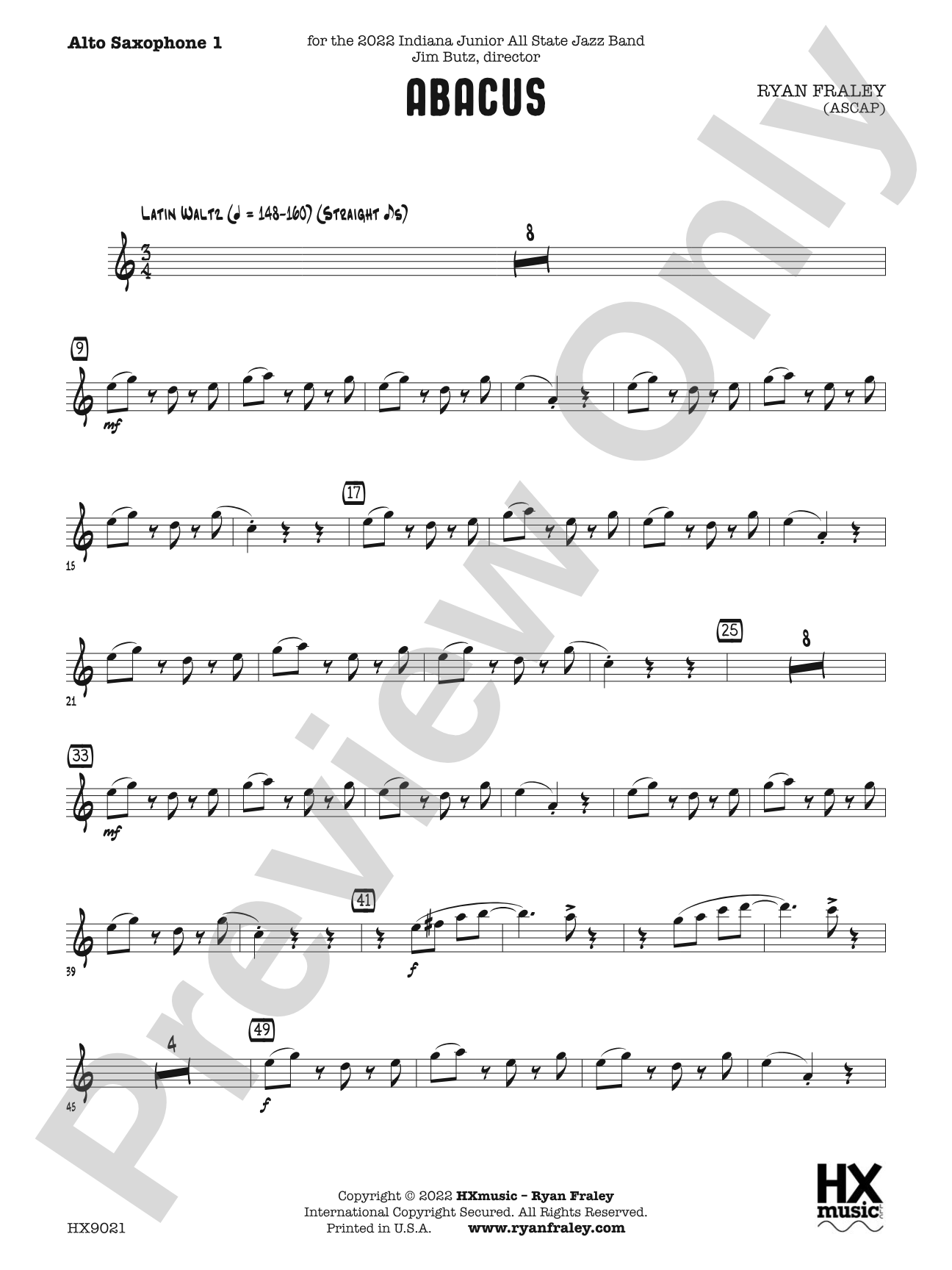
A cheerful Latin waltz with a pseudo-6/8 syncopation throughout, Abacus was written for the 2022 Indiana Junior All-State Jazz Ensemble. Optional vibes and auxiliary percussion round out a fully-orchestrated rhythm section while supporting solos on any instrument. Younger players will benefit from the provided transcriptions for alto and trumpet that match the recording note-for-note. An 8-bar drum solo over a vamp brings the band back in. Top trumpet note: G5 (2:30)
Discover MakeMusic Cloud: thousands of interactive titles your students can play along with today.
Ryan Fraley has established himself as a composer and arranger deeply connected to jazz education, with particular expertise in writing for student ensembles at the highest levels of competition. His work for the Indiana Junior All-State Jazz Ensemble demonstrates his understanding of what young musicians need: accessible challenge, rhythmic clarity beneath surface complexity, and room for genuine improvisation.
Why we love this
Fraley threads a genuine pedagogical insight through Abacus: he knows that syncopation and Latin feel can intimidate younger players, so he anchors everything in a waltz structure that your ensemble already understands. The provided trumpet and alto transcriptions are lifesavers for sections still building confidence in their reading, yet the piece never feels like it's talking down to anyone. It's exactly the kind of smart writing that makes contest preparation feel like actual musicmaking.
What to expect
Abacus bounces with the warmth of a Latin waltz, but the syncopation keeps it moving off the beat in unexpected ways, creating an infectious groove that feels both sophisticated and joyful. When the ensemble locks in together, there's an effortless lilt to it, like the piece is gently swinging even while everyone's minds are working overtime.
Who it's for
Grade 2.5 to 3 jazz ensembles ready to tackle Latin feel with confidence. This works equally well for younger high school groups or advanced middle school programs looking for festival-ready material that doesn't rely on bebop chops alone.
How to get the most out of it
Lock the pseudo-6/8 feel early in rehearsal by having the rhythm section play through the head without the horns first. This syncopation lives in the pocket, not in the counting.
Work the drum solo as a conversation, not a showpiece. The 8-bar vamp is the band's responsibility to keep steady while the drummer explores; ensemble entrances after the solo need that rock-solid foundation.
Let your soloists take liberties with the swing feel over the vamp, but keep the written head tight and synchronized. The chart will sound freshest when that contrast is clear.
Check the top trumpet line carefully in the final section (watch for that G5 at 2:30). Younger lead players often need a rehearsal dedicated just to phrasing and breath placement at that altitude.
How to use it
This is a natural fit for spring festivals and competitions where you want something cheerful but substantive. Pair it alongside a classic swing head arrangement and a ballad to show your ensemble's range without demanding extreme virtuosity from your soloists. It also works beautifully as a finale on a concert when you want to send the audience out smiling.
Skills your students will build
Latin rhythmic feel and clave sensibility in a waltz meter
Reading syncopation against a steady pulse without losing harmonic awareness
Trading solos while maintaining ensemble cohesion
Interpreting drum solo cues and re-entering cleanly as a group
Balancing written precision with the flexibility that jazz phrasing demands
You May Also Like
Scan to Complete Your Purchase
Use your phone's camera to scan the code below
You'll log in on your phone and the order will be added to your account