
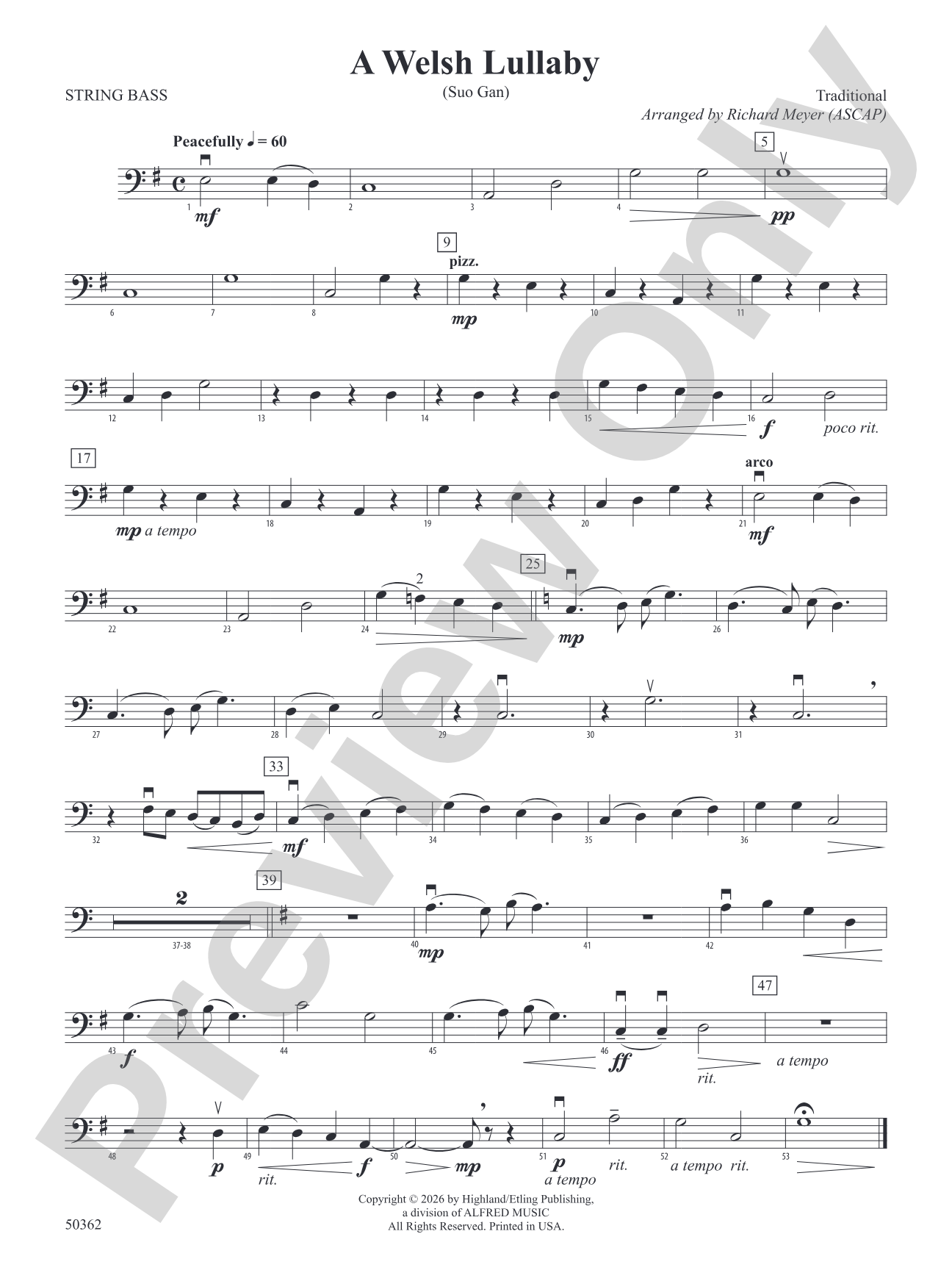

A Welsh Lullaby: String Bass
(Suo Gan)
Traditional / arr. Richard Meyer
Grade: 2
Item: 00-PC-0019706_SB
$3.00
Pickup currently not available
Description
Suo Gan is a traditional Welsh lullaby written by an anonymous composer in the early 1800s and arranged by Richard Meyer. The title (pronounced "see-oh-gan" with "gan" rhyming with "can") simply means "lullaby." This compellingly beautiful melody has been set in a lovely arrangement that is perfect for developing your students' sensitivity and legato playing style. Changes of tempo (ritardandos and a tempos), changes of key (G major to C major and back), and a wide variety of slurs that cross strings will challenge orchestras of all levels. A perfect "middle selection" for any concert or contest.


Don't just read it, hear it, play along with it, and watch your students grow with it. In MakeMusic Cloud, A Welsh Lullaby: String Bass comes alive with professional accompaniment, adjustable tempo, and built-in practice tools that turn solo practice into real progress.
Open in the Player
Jump straight in and assign it today.
Start Your Free Trial
Open this title and explore the full library in minutes.
Sample Audio
1
Audio File
--:--
0:00
0:00
Sample Video
Additional Details
Series:
Sound Innovations Series for Strings
Publisher:
Alfred Music
SKU:
00-PC-0019706_SB
More about this title
About the Arranger: Richard Meyer

Richard Meyer spent 35 years teaching strings across elementary, middle, and high school settings in California public schools. At Oak Avenue Intermediate School in Temple City, he directed orchestras for 22 years, expanding the program from 29 students to 200 while also overseeing the district's elementary string initiative. Beyond the classroom, he led the Pasadena Youth Symphony Orchestra for 16 years, taking students on concert tours to New York, Washington D.C., Vienna, Australia, and Canada.
Meyer's impact extends across the profession as a guest conductor, clinician at major conferences including the A.S.T.A. National Conference, and conductor of All-State and Honor Orchestras nationwide. He founded the "Giving Bach" program in 2009, which has become nationally recognized for using interactive concerts to serve special needs and underserved students throughout Southern California. As a composer and arranger, Meyer has over 190 works in print and served for 16 years as string editor for Alfred Publishing Company. He is also co-author of widely used string resources, including the String Explorer Series and Sight-read It for Strings.
Why we love this
This arrangement preserves the emotional warmth of a beloved Welsh melody while offering genuine musical challenges that engage orchestras beyond the surface. The interplay of tempo changes, key shifts between G major and C major, and slurs that deliberately cross string boundaries transforms a simple folk tune into a piece that teaches musicianship, not just note-reading. It reads as a lyrical concert selection rather than a study piece, giving students the satisfaction of performing something beautiful.
What to expect
Intimate and gently rocking, like watching over someone asleep. The melody unfolds with unhurried grace, supported by warm harmonies that shift quietly beneath. There's a quality of quiet attention here, where every note matters not because it's difficult to play, but because it's cradling the listener.
Who it's for
String orchestras at the Grade 2 level looking for repertoire that develops legato technique and phrase awareness without requiring advanced technical skills. Directors seeking a contest or festival piece that showcases musicality and restraint rather than technical fireworks will find this especially valuable.
How to get the most out of it
- Shape the legato playing through the long phrases by thinking of the lullaby's natural breathing patterns rather than mechanical bow changes. Allow the melody to breathe at the text-indicated ritardandos without rushing back to tempo.
- Balance the transition between G major and C major by ensuring the tutti maintains tonal consistency across the key change. The shift should feel inevitable, not jarring.
- Rehearse string crossings in isolation, particularly measures where slurs deliberately move between instruments. Have first and second violins practice the same passages separately to build confidence before combining.
- Use the fermatas and a tempos as opportunities to reset ensemble alignment. Brief moments of silence or stillness between sections help younger orchestras refocus before the next phrase.
How to use it
Program this as a concert anchor piece that follows something more energetic, allowing audiences to settle into a moment of reflection. It pairs well with other folk arrangements or world music selections and works equally effectively in contest settings where judges value interpretive control and tonal beauty. Consider pairing it with pieces that explore different cultural traditions to create a thematic program around traditional melodies.
Skills your students will build
- Sustaining legato lines across string transitions and bow changes
- Managing tempo variations (ritardandos and a tempos) as an ensemble
- Navigating key changes while maintaining tonal consistency
- Reading and executing slurs that cross multiple string parts
- Shaping musical phrases with attention to phrasing and breathing