

A Very Merry Fa La La: 3-Part Mixed, a cappella Choral Octavo
Words and music by Sally K. Albrecht
Item: 00-PO-0001620
$1.85
Minimum order quantity: 20 copies
Pickup currently not available
Related Items
A Very Merry Fa La La: 3-Part Mixed, a cappella Choral Octavo |
$1.85
|
View |
Description
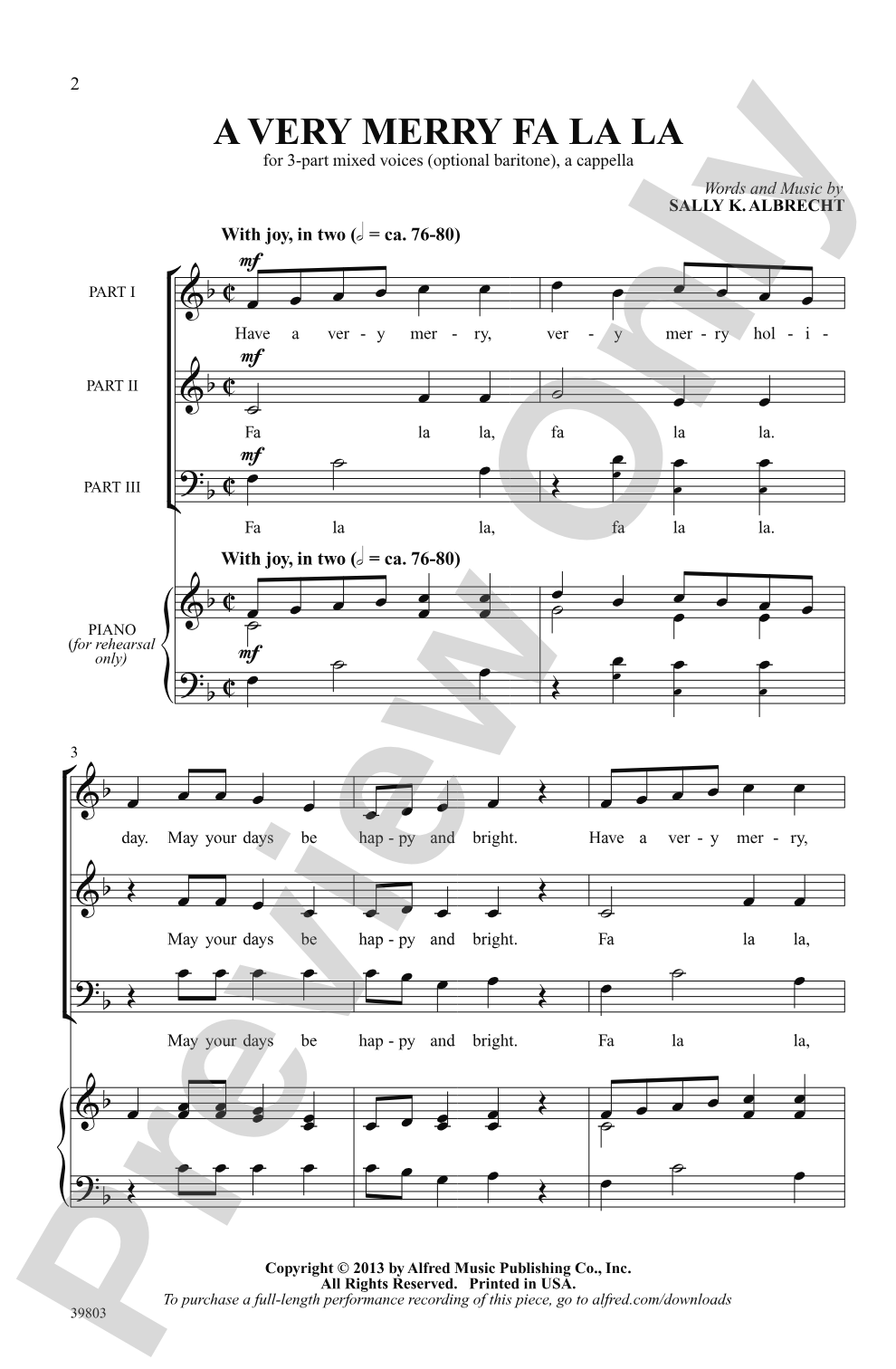
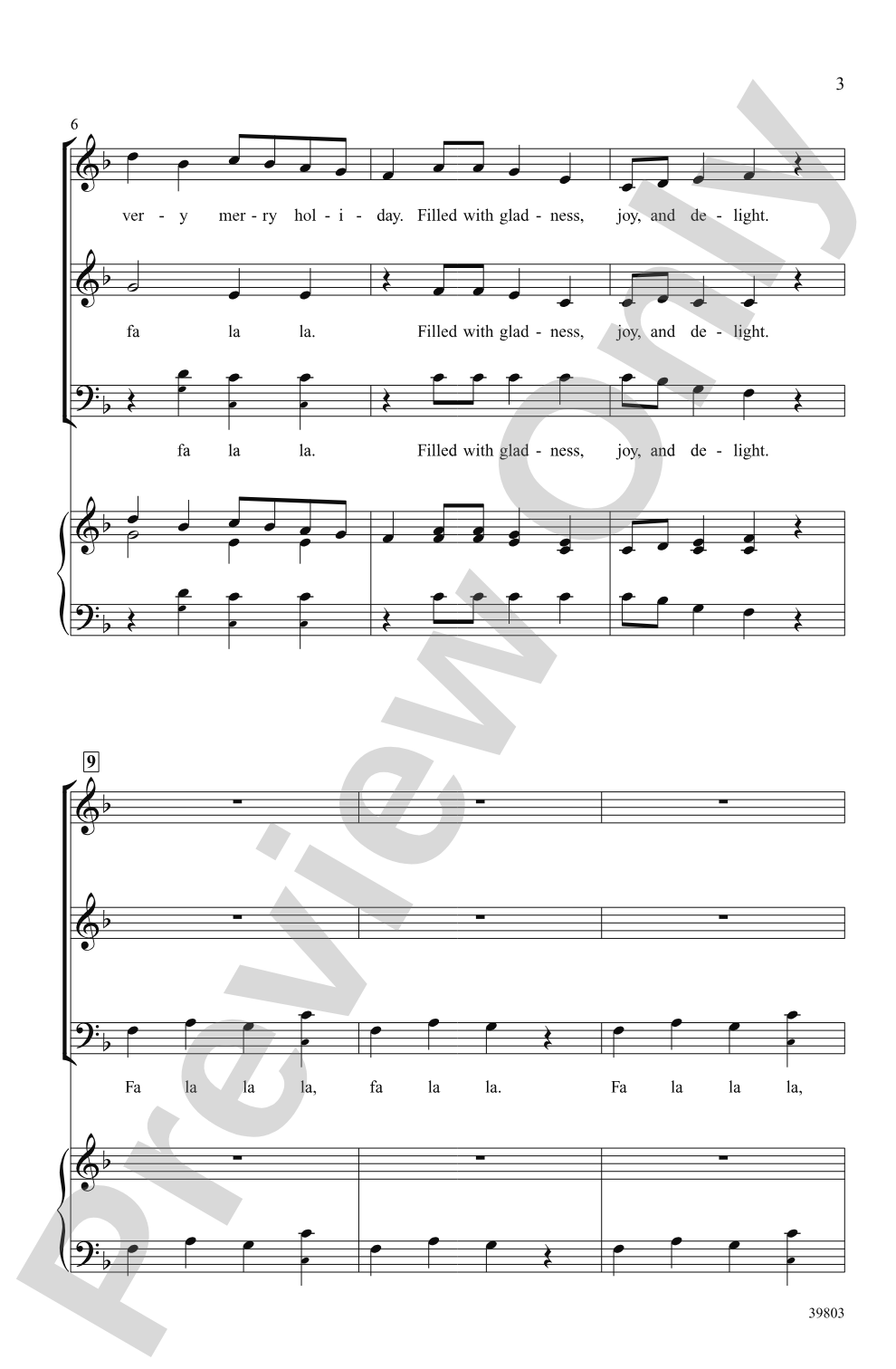
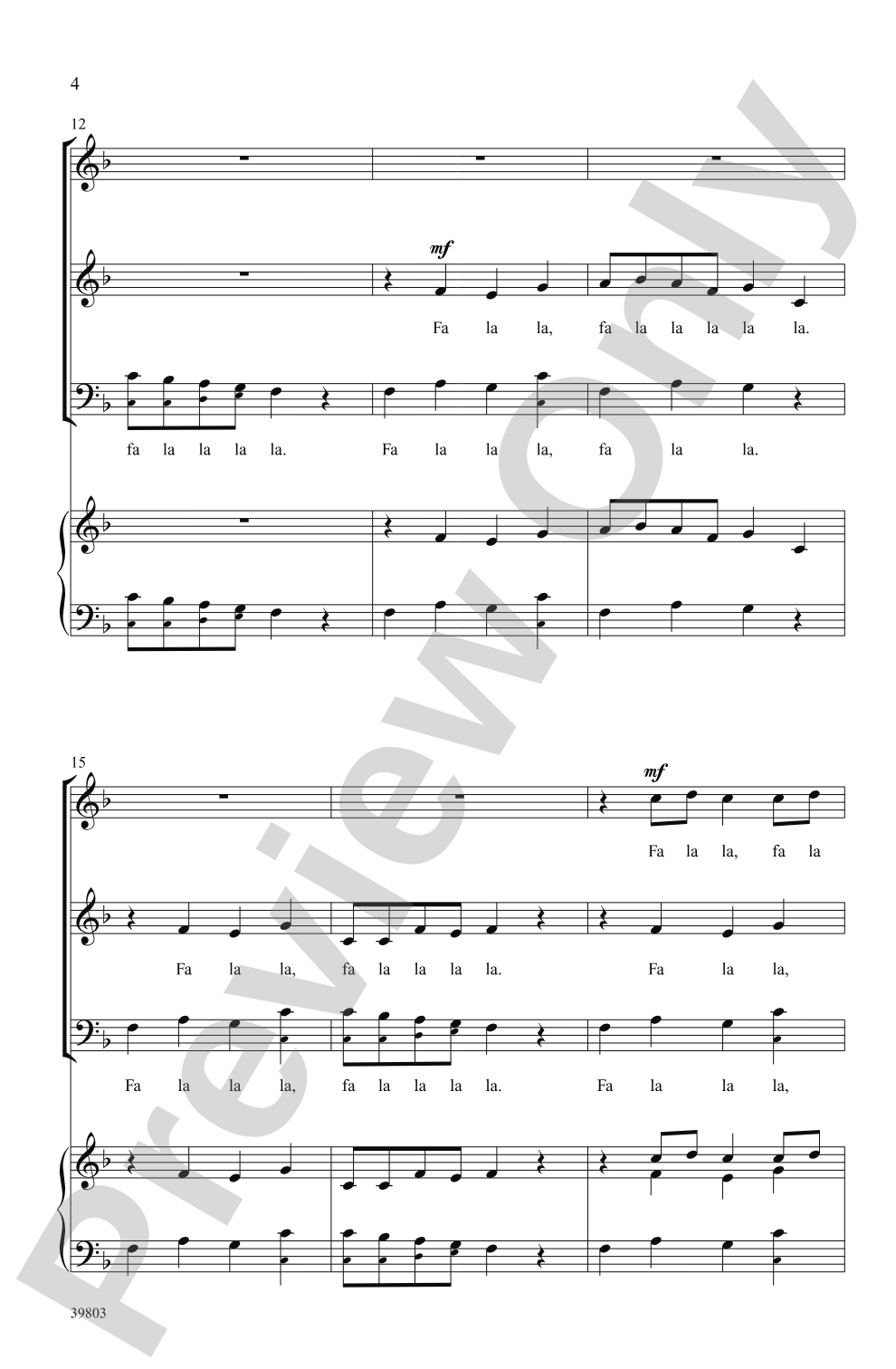
Developing 3-part mixed choirs will enjoy learning and performing the independent "fa la la" melodies in this joyous original a cappella madrigal. Each voice part gets a chance to lead the add-on refrain. Offers an optional baritone part, too!


A Very Merry Fa La La: 3-Part Mixed, a cappella Choral Octavo isn't in MakeMusic Cloud just yet...but it could be. Let us know you'd like to see it, and you'll help shape what comes next. In the meantime, start a free trial and dive into thousands of interactive titles your students can play along with today.
Request This Title
Tell us you want it.
Start Your Free Trial
Explore everything that's ready to play right now.
Sample Audio
1
Audio File
--:--
0:00
0:00
Sample Video
No sample videos found.
Additional Details
Series:
Alfred Choral Designs
Publisher:
Alfred Music
Page Count:
12
SKU:
00-PO-0001620
More about this title
About the Composer: Sally K. Albrecht

Sally K. Albrecht brings three decades of experience in choral publishing and education to every piece she writes. As former Director of School Choral, Vocal, and Elementary Publications for Alfred Music, she shaped how thousands of choirs learn and perform. She has conducted honor choirs at Lincoln Center, Carnegie Hall, and The Kennedy Center, and her work has earned her continuous ASCAP Special Music Awards since 1987. With more than 600 published choral works and 75 musicals and songbooks in print, she remains one of the most performed choral composers in American schools.
Albrecht holds degrees from Rollins College (B.A. in Music and Theater, 1976) and the University of Miami (M.A. in Drama, 1977; M.M. in Accompanying, 1979). She has taught at Oakland University, Jersey City State College, and Meredith College. Her distinctive approach centers on making choral music accessible, engaging, and movement-friendly for developing singers. She and composer/arranger Jay Althouse live in Wake Forest, North Carolina.
Why we love this
Albrecht crafts the kind of a cappella piece that makes early three-part mixed singers feel genuinely accomplished. The rotating "fa la la" refrains give each voice part the spotlight, building confidence and independence across soprano, alto, and baritone lines. It's the seasonal closer that rehearses like a sophisticated madrigal but performs with infectious joy.
What to expect
Joyous and infectious, full of the playful spirit that makes madrigals irresistible. The interlocking "fa la la" passages create layers of sound that feel both intricate and singable, with enough rhythmic vitality to keep the energy buoyant from start to finish.
Who it's for
This piece works beautifully with SAB choirs that are ready to juggle independent lines but still building confidence with three-part harmony. Any director seeking an original a cappella madrigal (rather than an arrangement) with built-in success will find it here.
How to get the most out of it
- Separate the "fa la la" refrain from the main melody in early rehearsals so singers hear the independence they're creating rather than blending into unison
- Encourage singers to think of the overlapping refrains as a conversation between parts; each voice answers or echoes the one before
- Work the optional baritone part as a bridge if your alto section is strong enough to handle two parts
- Let the a cappella texture stand without instrumental reinforcement; this piece gains energy from pure vocal blend
How to use it
Slot this into your winter concert as a contrasting lighter moment between heavier repertoire, or let it anchor a set of secular holiday pieces. It also stands alone beautifully as an opener, setting an upbeat tone immediately.
Skills your students will build
- Singing independent melodic lines in three-part mixed voicing without instrumental support
- Managing overlapping entrances and staggered phrase beginnings
- Balancing refrain melodies across multiple voice parts while maintaining harmonic integrity
- Building textural awareness through the interaction of "fa la la" counterlines