
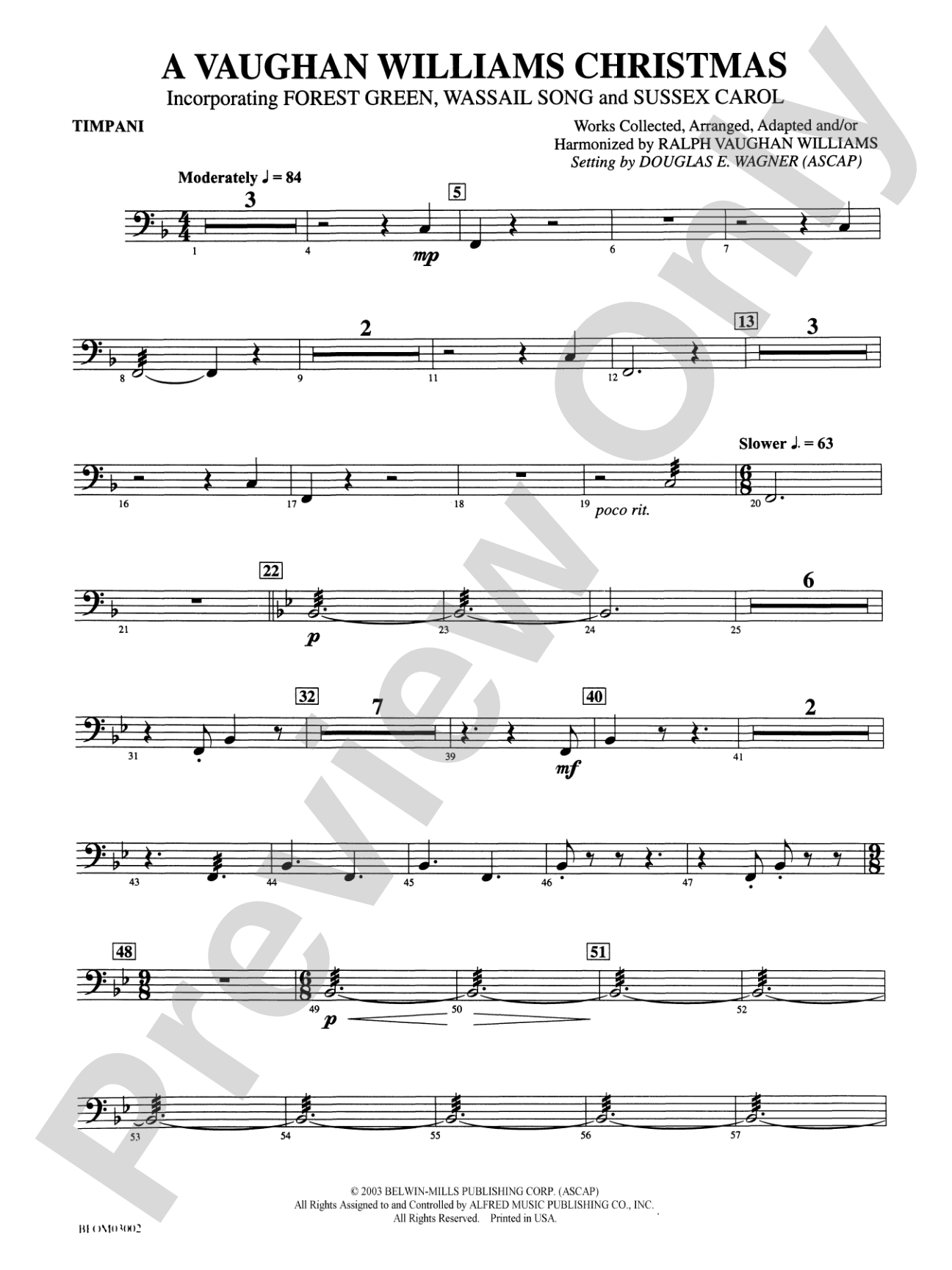

A Vaughan Williams Christmas: Timpani
Featuring: Forest Green / Wassail Song / Sussex Carol
Works collected, arr., adapted and/or harmonized by Ralph Vaughan Williams / setting by Douglas E. Wagner
Grade: 2.5
Item: 00-PC-0014688_TMP
$3.00
Pickup currently not available
Description
Three cherished Ralph Vaughan Williams carols are incorporated into this lovely medley. The works include "Forest Green," "Wassail Song" and "Sussex Carol." The joyous carols are all from Vaughan Williams' native England. A very moving addition for your holiday program. (3:59)


Don't just read it, hear it, play along with it, and watch your students grow with it. In MakeMusic Cloud, A Vaughan Williams Christmas: Timpani comes alive with professional accompaniment, adjustable tempo, and built-in practice tools that turn solo practice into real progress.
Open in the Player
Jump straight in and assign it today.
Start Your Free Trial
Open this title and explore the full library in minutes.
Sample Audio
1
Audio File
--:--
0:00
0:00
Sample Video
Additional Details
Series:
Belwin Intermediate String/Full Orchestra
Publisher:
Alfred Music
Page Count:
240
SKU:
00-PC-0014688_TMP
More about this title
About the Composer: Ralph Vaughan Williams
Ralph Vaughan Williams (1872-1958) stands as one of the most significant British composers of the 20th century. His deep engagement with English folk music and hymn traditions shaped a compositional voice that felt both modern and rooted in cultural heritage. These three carols reflect his lifelong fascination with preserving and elevating the musical legacy of his country.
Vaughan Williams' choral and orchestral works remain cornerstones of English music education. His ability to craft melodies of immediate appeal while maintaining sophisticated harmonic language makes his work ideal for developing musicians who are ready to engage with music of genuine artistic substance.
Why we love this
Douglas E. Wagner's arrangement captures the warmth and directness of these three carols without sacrificing their character. Grade 2.5 orchestration means your ensemble can execute the piece with confidence while still engaging with work by a major composer. The medley structure lets you deliver substantial musical content in less than four minutes, making it a smart fit for programs where rehearsal time or stage minutes are limited.
What to expect
These three carols together create a journey through English seasonal tradition: "Forest Green" carries the quiet dignity of a winter processional, "Wassail Song" brings convivial warmth and community spirit, and "Sussex Carol" radiates joy with an almost dancing brightness. The medley unfolds as a celebration of place and heritage, inviting your audience into a world where folk melody and orchestral color speak in concert.
Who it's for
Conductors programming full orchestra at the intermediate level who want to include meaningful repertoire by a major composer without extending rehearsal demands. This works well for orchestras that have developed solid fundamental playing skills and are ready to explore music with real compositional substance. Holiday concerts become an opportunity to introduce students to Vaughan Williams' voice.
How to get the most out of it
- Balance the melody across your orchestra. In passages where the main tune shifts between sections, ensure one part always sings clearly without others obscuring it.
- Shape the phrasing in phrases rather than measure-by-measure; these carols have roots in folk melody, and even at this level, the lines need gentle shape and breath.
- Let the tempo breathe slightly at phrase endings. Carols live at the intersection of dance and hymn, so rhythmic flexibility adds character without losing precision.
- Maintain consistent dynamic control through tempo changes between the three pieces. The contrast works best when each carol retains its own character while the overall arc feels coherent.
How to use it
Open a holiday concert with this medley to set a sophisticated but accessible tone for the evening. It pairs naturally with newer carols, holiday pops arrangements, or other 20th-century orchestral pieces if your program is themed around British music. At under four minutes, it also serves well as a transition piece or a palate-cleanser between longer works.
Skills your students will build
- Balancing ensemble texture when melody moves between instrumental families
- Phrasing lyrical material with appropriate shape and breathing
- Executing smooth dynamic transitions between distinct musical sections
- Playing with historical awareness of folk melody and its orchestral adaptation
- Managing tempo nuance in celebratory choral-style material