
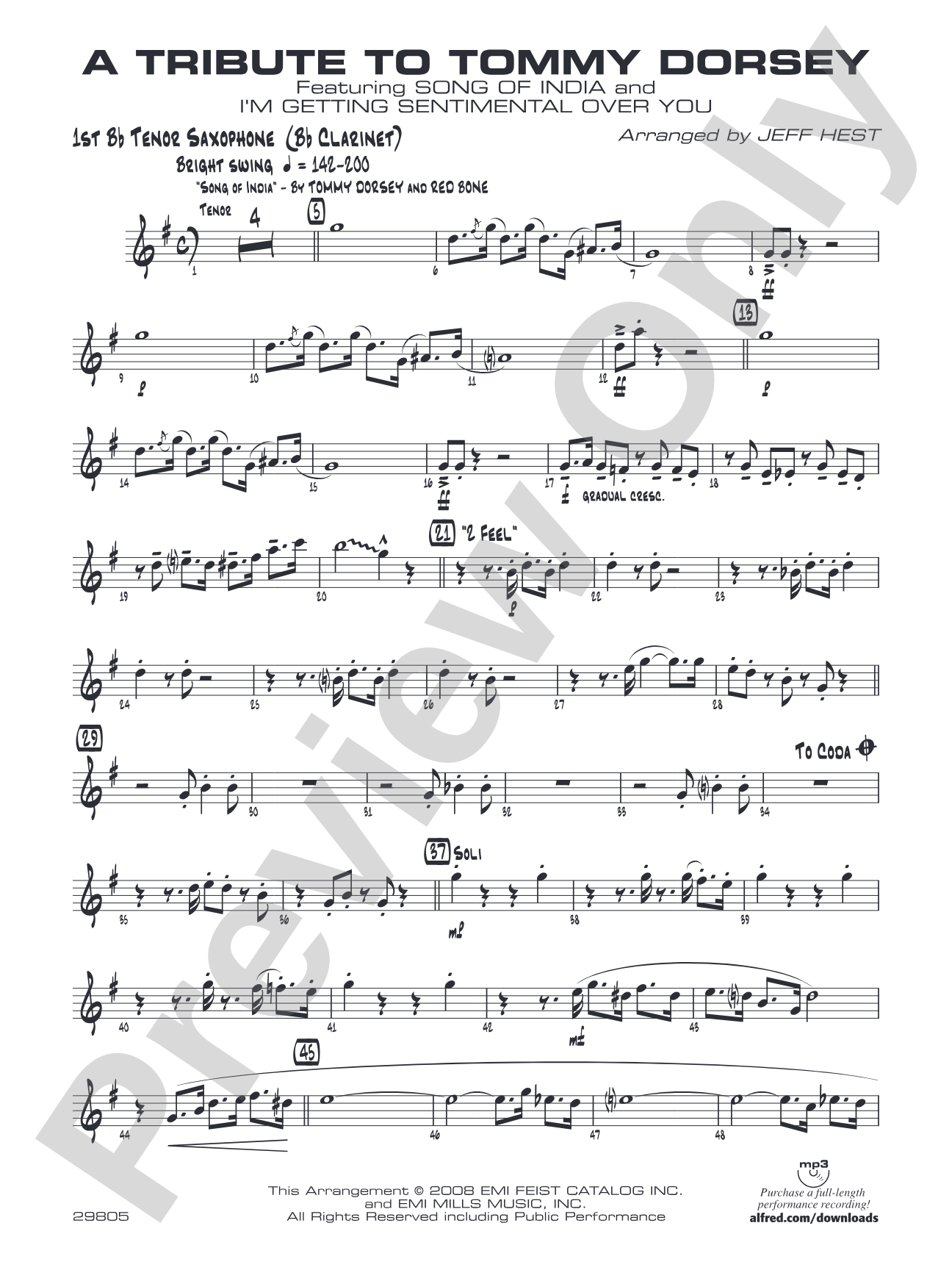

A Tribute to Tommy Dorsey: 3rd B-flat Clarinet
Featuring: Song of India / I'm Getting Sentimental Over You
Arr. Jeff Hest
Grade: 4 (Medium Advanced / Difficult)
Item: 00-PC-0017139_C3
$3.00
Pickup currently not available
Description
This tribute by arranger Jeff Hest brings two classics to you with Dorsey's famous hits, "Song of India" and "I'm Getting Sentimental Over You." If you have a lead 'bone with range and a sweet sound, then this will be the perfect showcase. Includes standard sax parts plus optional parts for saxes with clarinet doubles. This is the real deal for Tommy Dorsey. (8:33)


Don't just read it, hear it, play along with it, and watch your students grow with it. In MakeMusic Cloud, A Tribute to Tommy Dorsey: 3rd B-flat Clarinet comes alive with professional accompaniment, adjustable tempo, and built-in practice tools that turn solo practice into real progress.
Open in the Player
Jump straight in and assign it today.
Start Your Free Trial
Open this title and explore the full library in minutes.
Sample Audio
1
Audio File
--:--
0:00
0:00
Sample Video
Additional Details
Series:
Premier Jazz Series
Publisher:
Alfred Music
Page Count:
140
SKU:
00-PC-0017139_C3
More about this title
About the Composer: Tommy Dorsey
Tommy Dorsey (1905–1956) was one of the most influential trombonists and bandleaders of the swing era. His "Sentimental Gentleman of Swing" persona defined an entire sound: lush, sophisticated, and technically brilliant. Dorsey's orchestrations and his own playing set the standard for big band jazz, and his recordings remain essential listening for understanding American popular music of the 1930s and 1940s.
As an educator's touchstone, Dorsey's work showcases what's possible when technical mastery meets genuine musicality. His arrangements reveal how to balance solo brilliance with ensemble sophistication, making his music invaluable for teaching students about voice leading, dynamics, and the interplay between sections.
Why we love this
Jeff Hest's arrangement respects Dorsey's voice while making these standards accessible to skilled community and college ensembles. The pairing of "Song of India" and "I'm Getting Sentimental Over You" gives you genuine swing repertoire with real harmonic substance, not diluted hits. This is the kind of chart that sounds professional on the bandstand and teaches musicians what it means to swing with integrity.
What to expect
Warm, sophisticated, and genuinely swinging. These melodies have survived decades because they're beautiful; the arrangement honors that beauty while giving your band room to play with energy and nuance. You'll hear the elegance of 1930s–1940s ballroom and radio broadcast aesthetics, but filtered through a modern jazz ensemble sound that feels vital rather than historical.
Who it's for
Jazz ensemble directors with a lead trombonist who has solid range, consistent tone, and the confidence to carry a feature. This arrangement works for college ensembles, advanced high school programs, and community big bands looking for authentic swing repertoire with depth. The Grade 4 difficulty sits squarely in the medium-advanced category, requiring capable section players and a rhythm section that understands swing fundamentals.
How to get the most out of it
- Balance the lead trombone feature against ensemble support. The soloist needs room to breathe and showcase range, but the saxes and rhythm section must lock in tightly to give that solo the foundation it needs.
- Shape the dynamics across the full arrangement rather than playing at one level. Dorsey's writing depends on contrast between sections to create momentum and maintain interest across the 8.5 minutes.
- Pay attention to the optional clarinet doubles in the sax section. These add color and authenticity to the period sound; commit to them or remove them entirely rather than playing them tentatively.
- Let the rhythm section drive the swing feel. The drummer and bass player set the groove; front line instruments should serve that pocket rather than fighting it.
How to use it
Program this as a centerpiece for a swing-era set or an entire concert devoted to American standards. The two-part structure also allows you to program "Song of India" and "I'm Getting Sentimental Over You" separately if your concert pacing calls for shorter features. This is ideal material for demonstrating to your ensemble what it means to serve a melody rather than overwhelm it.
Skills your students will build
- Lead voice projection and sustaining consistent tone over extended phrases
- Swing feel and rhythmic precision in an ensemble setting
- Listening across the ensemble for balance and blend during a featured solo
- Interpretation of dynamics and articulation from a pre-swing era score
- Reading and performing with optional parts (clarinet doubles) without disrupting section cohesion