A Tribute to Kurt Weill: 2nd B-flat Clarinet Sheet Music Preview

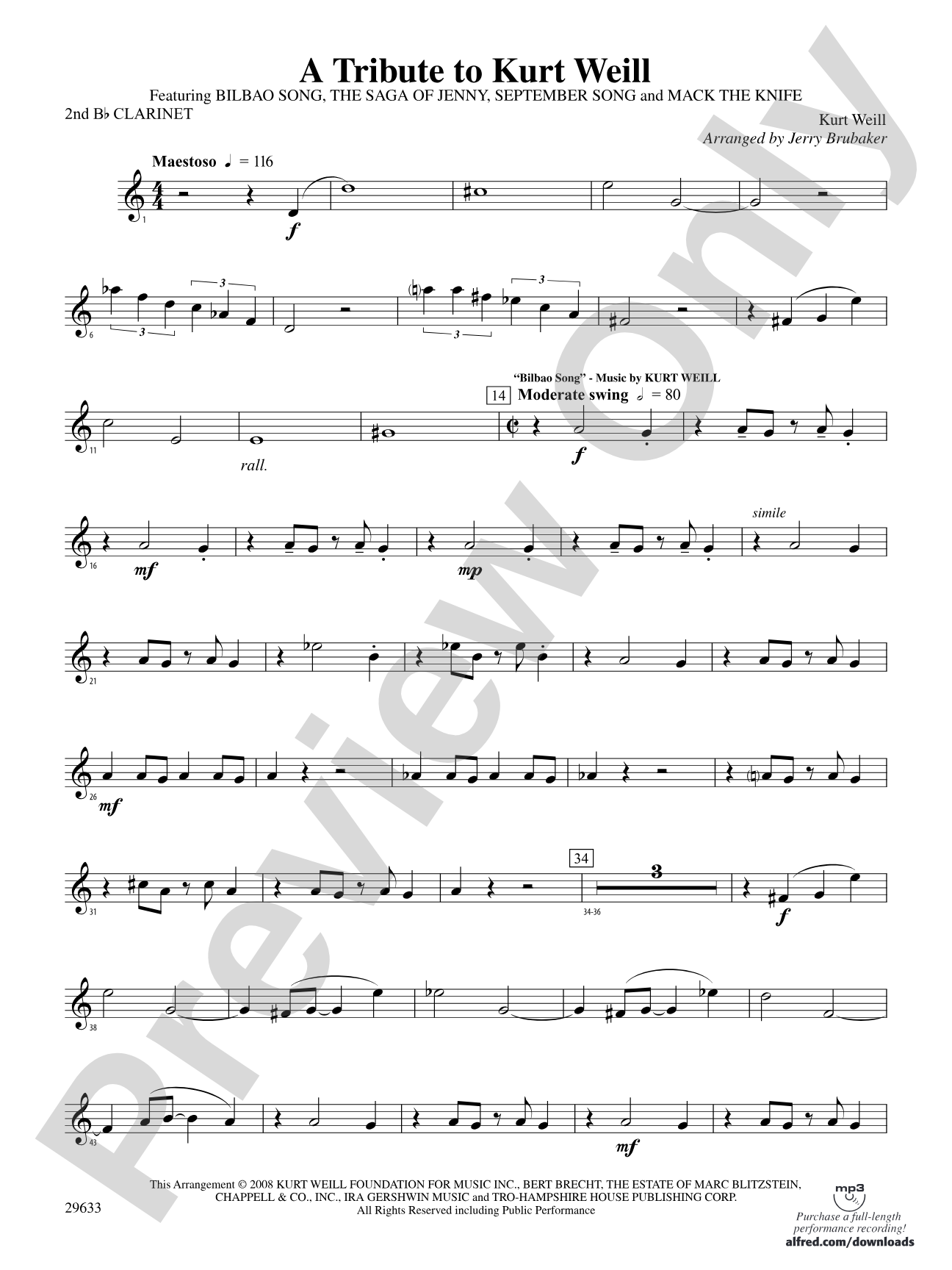
A Tribute to Kurt Weill: 2nd B-flat Clarinet

Featuring: Bilbao Song / September Song / The Saga of Jenny / Mack the Knife

The music of Kurt Weill / arr. Jerry Brubaker

Grade: 4 (Medium)

Item: 00-PC-0015705_C2

Digital Download
$3.00
Description
Charming melodies skillfully crafted into one medley of tribute. The themes included are "Bilbao Song," "September Song," "The Saga of Jenny" and of course "Mack the Knife." Great pop music with a variety of styles. You just can't go wrong with a dynamic composer joined with the craftsmanship of Jerry Brubaker. A real winner! (8:13)

Don't just read it, hear it, play along with it, and watch your students grow with it. In MakeMusic Cloud, A Tribute to Kurt Weill: 2nd B-flat Clarinet comes alive with professional accompaniment, adjustable tempo, and built-in practice tools that turn solo practice into real progress.

Sample Audio
0:00
0:00
Sample Video
Additional Details
Series: Pop Symphonic Band
Publisher: Alfred Music
Page Count: 244
SKU: 00-PC-0015705_C2

More about this title

About the Composer: Kurt Weill

Kurt Weill (1900-1950) was a German-American composer who revolutionized musical theater by blending classical training with popular song forms, jazz idioms, and socially conscious storytelling. His collaborations with lyricist Bertolt Brecht produced some of the 20th century's most enduring works, including The Threepenny Opera, while his later American compositions brought operatic sophistication to Broadway and film.

Weill's gift for memorable melody combined with harmonic innovation made his music immediately accessible yet musically substantial. His theatrical works have become standard repertoire in concert halls and educational settings worldwide, prized for their emotional directness and structural clarity.

Why we love this

Brubaker's medley distills Weill's most iconic melodies into a single, cohesive concert experience without sacrificing the composer's distinctive harmonic voice or dramatic flair. The arrangement balances accessibility with musical substance, making it engaging for both players and audiences while requiring solid musicianship at the Grade 4 level.

What to expect

Urbane and wistful, with the sophisticated charm of 1930s Berlin cabarets filtered through a modern concert band sound. The melodies carry a bittersweet elegance; even the most lively moments retain an underlying sense of yearning that makes Weill's music both immediately appealing and subtly complex.

Who it's for

Concert bands at the intermediate level who want to program recognizable, sophisticated pop music with genuine compositional substance. Bands seeking to build connection with audiences through music that bridges classical training and popular culture will find strong material here.

How to get the most out of it

  • Shape each theme as a self-contained story before connecting them as a medley; this prevents the arrangement from feeling like a mere potpourri and honors Weill's theatrical intentions.
  • Attend to the harmonic colors particular to Weill's style, especially the blues inflections and unexpected chord progressions that distinguish these melodies from standard popular music.
  • Balance the varying styles within the medley by adjusting articulation and dynamic nuance between sections; use the transitions as opportunities to shift ensemble character.
  • Ensure the rhythm section maintains groove and precision throughout, as Weill's melodies depend on strong harmonic and rhythmic support to land their emotional impact.

How to use it

Position this as a centerpiece in a pops or light classics concert where it can anchor the first half and demonstrate your band's versatility across styles. The 8:13 duration and familiar themes make it particularly effective as a bridge between traditional wind band repertoire and contemporary programming.

Skills your students will build

  • Phrasing and lyrical shaping across extended melodic lines
  • Harmonic listening and intonation in chromatic and jazz-influenced chord progressions
  • Stylistic flexibility, moving between contrasting moods and tempos
  • Ensemble balance with featured sections and accompaniment roles
  • Connecting notation to theatrical intent and emotional narrative

You May Also Like