
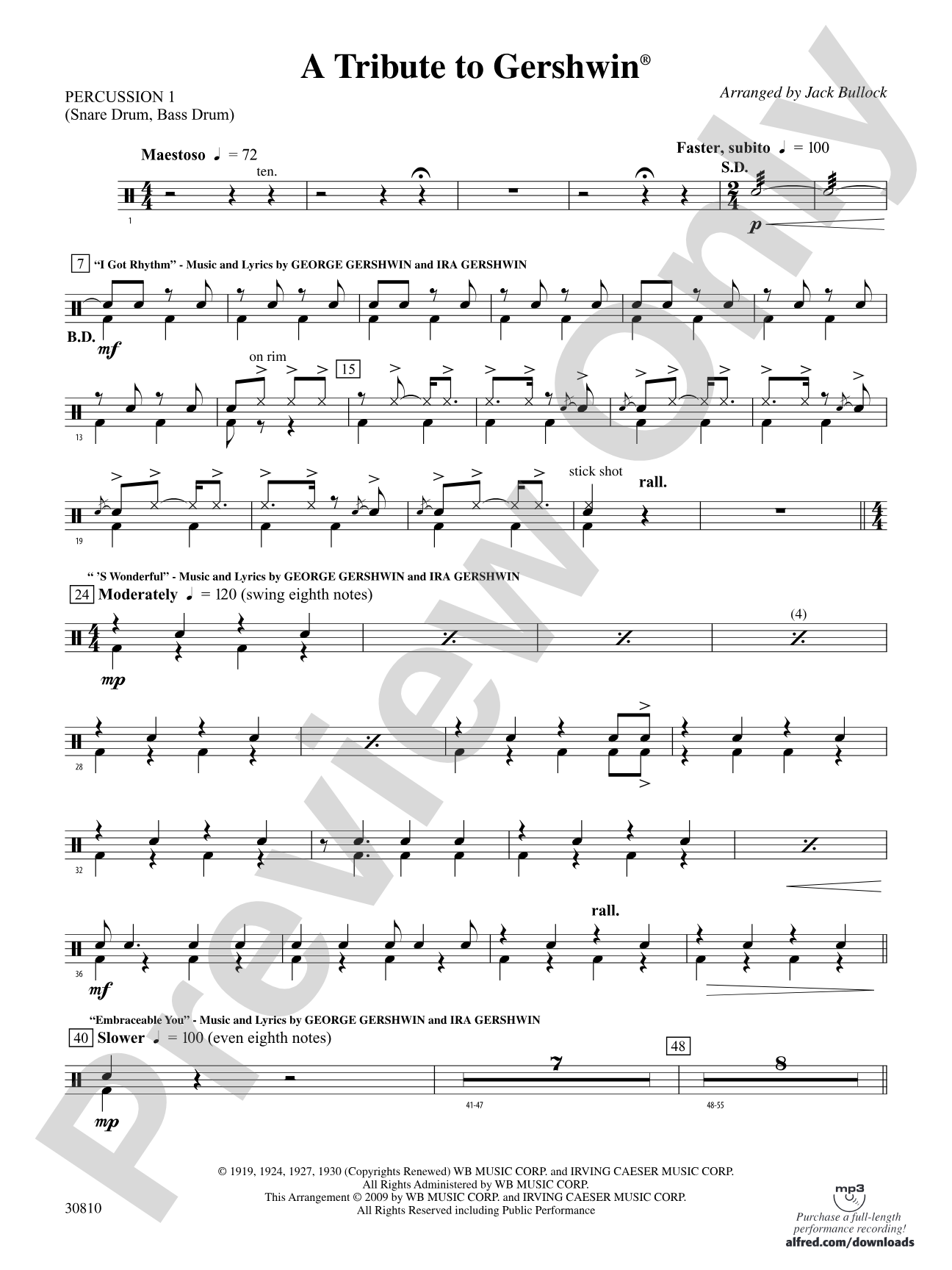

A Tribute to Gershwin: 1st Percussion
By George Gershwin / arr. Jack Bullock
Grade: 3 (Medium Easy)
Item: 00-PC-0015728_PC1
$5.99
Pickup currently not available
Description
There's not a composer recognized or performed in the classic pop genre more than Gershwin. In his tribute, Jack Bullock acknowledges this musical genius with eleven charming, yet distinctive, melodies that are all Gershwin. The fast-paced medley opens with "I Got Rhythm" and, in quick succession, threads through ten more tunes closing with the immortal "Rhapsody in Blue." I'll bet you find one or two that you didn't realize were Gershwin melodies! This one's a real champion. (6:51) This title is available in MakeMusic Cloud.


Don't just read it, hear it, play along with it, and watch your students grow with it. In MakeMusic Cloud, A Tribute to Gershwin: 1st Percussion comes alive with professional accompaniment, adjustable tempo, and built-in practice tools that turn solo practice into real progress.
Open in the Player
Jump straight in and assign it today.
Start Your Free Trial
Open this title and explore the full library in minutes.
Sample Audio
1
Audio File
--:--
0:00
0:00
Sample Video
Additional Details
Series:
Pop Concert Band
Publisher:
Alfred Music
Page Count:
244
SKU:
00-PC-0015728_PC1
More about this title
About the Composer: George Gershwin
George Gershwin (1898-1937) bridged the worlds of concert music and popular song with a fluency few composers have matched. Born in Brooklyn, he absorbed jazz idioms, Broadway vernacular, and European classical forms, then synthesized them into works that felt both sophisticated and immediate. His melodies became the soundtrack to American optimism in the early 20th century, and his harmonic language influenced generations of composers working across every genre.
Gershwin's output spanned Broadway musicals, orchestral works, and concert pieces, yet he maintained an almost conversational directness in his writing. Rhapsody in Blue remains his most celebrated work, but the breadth of his catalog reveals a composer equally at home with a witty comedic song or a full orchestral tableau. For school musicians, his music offers an accessible gateway to understanding how American vernacular idioms can anchor serious musical thought.
Why we love this
Jack Bullock's arrangement respects Gershwin's distinctive voice while building energy across eleven melodies that band students genuinely recognize and respond to. The Grade 3 difficulty sits in that sweet spot where students feel the sophistication of the source material without struggling through technical walls, making this an ideal choice when you want your program to sparkle without excessive rehearsal overhead. The closing payoff with Rhapsody in Blue gives the whole medley real dramatic weight.
What to expect
Bright, propulsive, and playful, with the energy of a well-paced revue. Each melody arrives with personality, and the orchestration keeps textures nimble enough that the tunes breathe. The final arrival at Rhapsody in Blue carries real grandeur, rewarding both players and listeners for the journey through the earlier tunes.
Who it's for
Concert band directors programming a pop or American classics concert, or teachers seeking a substantial opening number that holds audience attention without demanding extraordinary technical facility. Upper middle school or high school bands will find the material comfortable enough to execute cleanly while still offering genuine musical satisfaction. Any ensemble that wants to showcase Gershwin's melodic gift will connect with this arrangement.
How to get the most out of it
- Keep the opening "I Got Rhythm" snappy and conversational; the piece's momentum depends on crisp articulation and alert tempo choices rather than aggressive dynamics.
- Balance solo voices against the ensemble texture; Bullock likely featured individual sections to highlight the songwriting, so resist the urge to fill every bar with full sound.
- Shape each transition cleanly so the listener hears the seams between tunes as intentional moments rather than stumbles.
- Build the final approach to Rhapsody in Blue with steady intensity; the payoff works because you've paced the medley to arrive there with purpose.
How to use it
Open a concert with this to set an energetic, audience-friendly tone, or close the first half to send audiences into intermission humming. It pairs naturally with other standard band repertoire and requires no special programming context; the arrangement stands on its own. The 6:51 runtime gives you a substantial feature without dominating the evening.
Skills your students will build
- Maintaining consistent tempo across multiple stylistic sections
- Balancing melody and accompaniment within a medley format
- Articulation control in fast-moving musical phrases
- Following a conductor through rapid harmonic changes and section transitions
- Blending ensemble sound while preserving individual melodic clarity