A-Tisket, A-Tasket: Piano/Vocal/Chords Digital Sheet Music

A-Tisket, A-Tasket: Piano/Vocal/Chords Digital Sheet Music

Ella Fitzgerald, Van Alexander

Item: 00-PS-0007038

Digital Download
$3.99
Description

A-Tisket, A-Tasket: Piano/Vocal/Chords Digital Sheet Music isn't in MakeMusic Cloud just yet...but it could be. Let us know you'd like to see it, and you'll help shape what comes next. In the meantime, start a free trial and dive into thousands of interactive titles your students can play along with today.

Sample Audio
No sample audio found.
Sample Video
Additional Details
SKU: 00-PS-0007038

More about this title

About the Artist: Ella Fitzgerald

Ella Fitzgerald (1917-1996) was an American jazz vocalist whose technical precision, tonal warmth, and interpretive intelligence set the standard for generations of singers. Her mastery of scat singing, impeccable intonation, and ability to inhabit a lyric with complete naturalness made her one of the most recorded artists in history and earned her the title "First Lady of Song."

Fitzgerald's recorded legacy spans nearly seven decades and includes standards, swing, bebop, and novelty songs alike. Her gift for making any melody swing naturally while maintaining vocal clarity and phrasing integrity offers essential lessons for any singer studying jazz interpretation and ensemble collaboration with accompaniment.

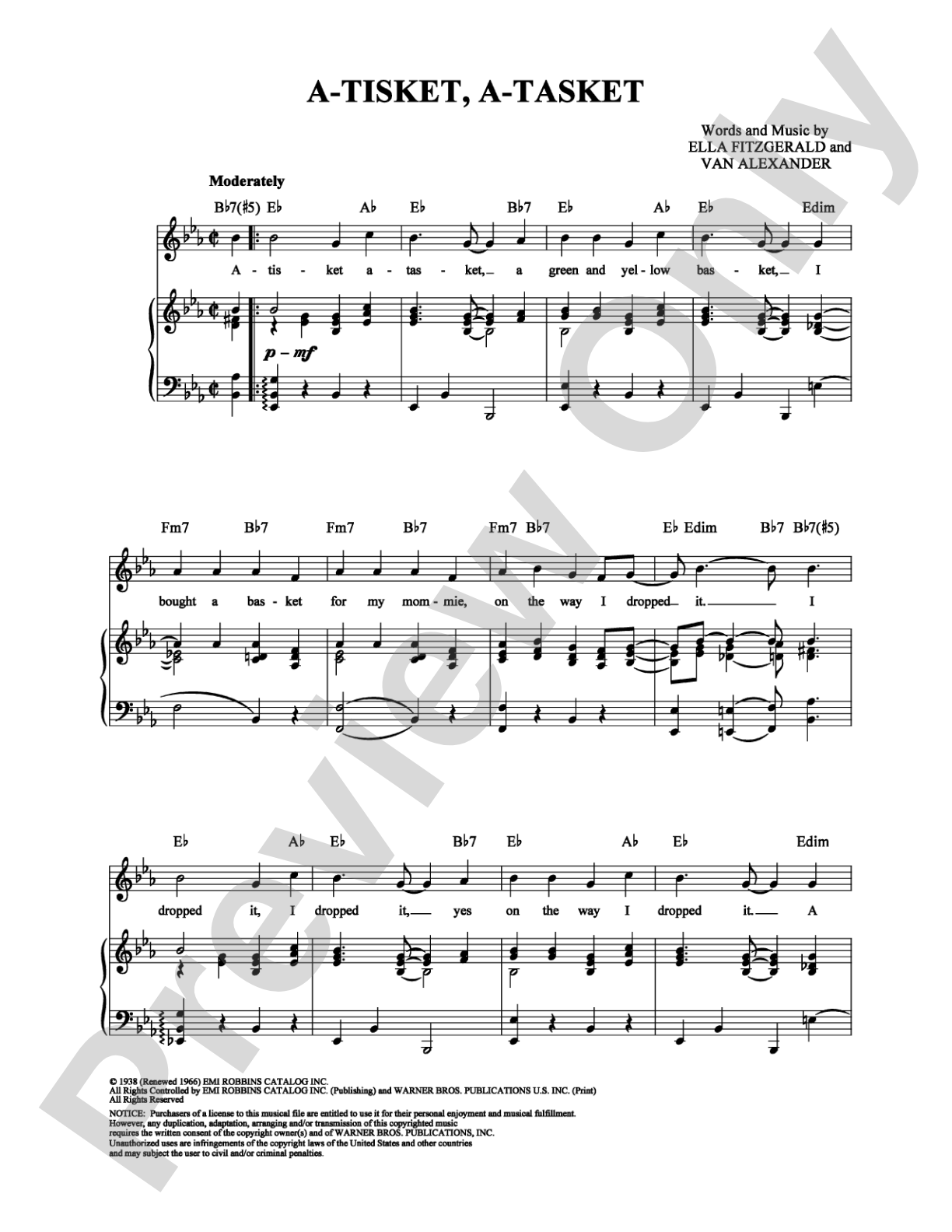
Why we love this

This arrangement captures the playful charm and rhythmic vitality that made Fitzgerald's recording a classic, while the piano/vocal/chords format gives singers a flexible tool for learning her phrasing and timing choices. The piece balances accessibility with authentic jazz language, letting singers experience how a master interpreter handles a simple melody with swing, wit, and confidence.

What to expect

Bright, bouncy, and thoroughly charming. The melody has a nursery-rhyme innocence, but Fitzgerald's interpretation infuses it with jazz savvy and playful swing rhythms that prevent it from ever sounding precious. There's warmth and humor in every phrase, with an underlying ease that makes the whole performance sound effortless even as it demonstrates complete technical control.

Who it's for

Jazz singers and pianists studying authentic interpretation of swing-era standards and seeking a model for how to balance lyrical simplicity with sophisticated rhythmic and harmonic awareness. Upper-level high school and college vocalists looking to expand their jazz repertoire with a recorded standard that demonstrates genuine artistry within an accessible song.

How to get the most out of it

  • Pay close attention to where Fitzgerald's phrasing lands relative to the piano comping; her rhythmic placement often sits behind or ahead of the beat in ways that create swing feel rather than strictness.
  • Shape the melody with gentle dynamic contours rather than sing-song inflection; let the lyrical humor emerge from natural speech patterns and jazz articulation.
  • Use the chord symbols to explore how the harmonic movement supports the vocal line; pianists should voice chords in ways that complement the singer's tone rather than compete with it.
  • Approach the faster sections with rhythmic flexibility; lock in on major downbeats but allow breathing space and stylistic give-and-take within phrases.

How to use it

Program this as a jazz vocal feature that appeals to audiences beyond traditional jazz settings; its playful nature and Fitzgerald's historic popularity make it ideal for pops concerts, variety shows, or programs exploring American popular music across decades. It works equally well as a teaching model in a vocal jazz ensemble or private lesson to illustrate period-authentic swing interpretation.

Skills your students will build

  • Jazz articulation and swing feel in a melody-driven context
  • Phrasing and rhythmic flexibility within jazz idiom
  • Reading and interpreting chord symbols for improvisation and reharmonization options
  • Balance between lyrical shape and rhythmic precision in ensemble singing with piano
  • Understanding how vocal placement against the beat creates swing rather than straight rhythm

You May Also Like