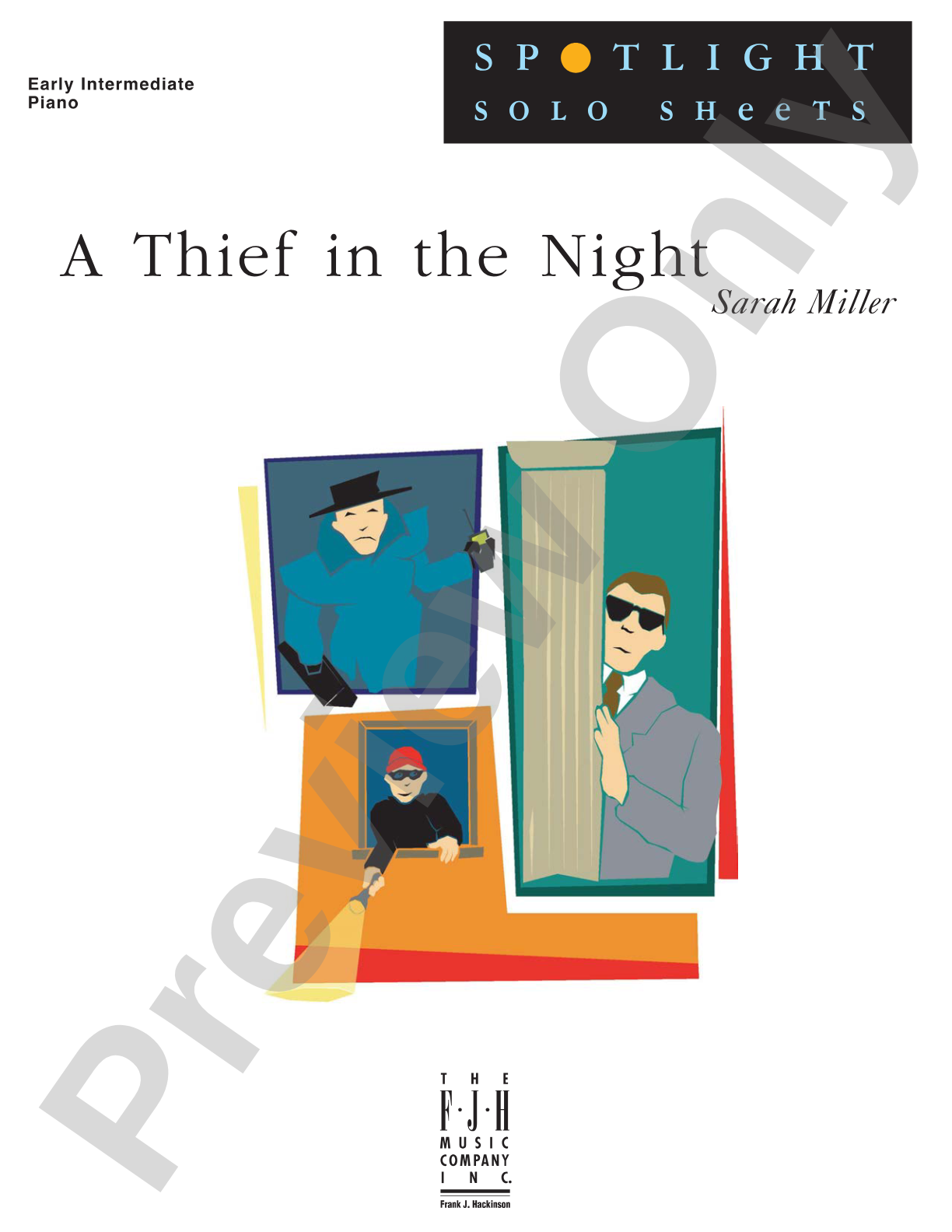
Your early intermediate students will enjoy this delightful swing piece that features a coda section, utilizing D.S. & al Coda. The R.H., which makes use of alternating staccato and slurs, plays on ledger lines below the Middle C and the L.H. plays a walking bass.
Discover MakeMusic Cloud: thousands of interactive titles your students can play along with today.
Sarah Miller captures the swagger and energy of swing idiom in a form that respects early intermediate pianists' technical limits. The alternating staccato and slur articulation in the right hand keeps students engaged with texture work beyond simple legato playing, while the walking bass gives them a genuine sense of accompaniment independence.
What to expect
A cool, nimble character study in swing. The piece bounces along with confidence, its playful title hinting at something sneaking quietly through the musical landscape. Energy and wit live in the details of how the hands move independently.
Who it's for
Early intermediate pianists who are ready to explore jazz vocabulary and swing style without overwhelming technical demands. Students working on articulation control and rhythmic independence between hands will find real value here.
How to get the most out of it
Lock in the walking bass pattern early. The left hand drives the swing feel, so establish a steady pulse there before layering in the right-hand articulation.
Shape the staccato and slur contrasts in the right hand with dynamic intention. Staccato notes benefit from a lighter touch; slurred passages can bloom slightly.
Mark the D.S. al Coda clearly in your score so you don't miss the navigation. Rehearse the repeat and coda transition separately before running the full piece.
How to use it
Include this in a recital or studio showcase to represent jazz-inflected classical music and give audiences a taste of contemporary swing writing for young pianists. It also works beautifully as a palette cleanser between heavier Romantic-era repertoire.
Skills your students will build
Articulation contrasts (staccato vs. slur) in a single melodic line
Walking bass patterns and left-hand independence
Navigating D.S. al Coda form and repeat structures
Swing rhythmic feel and jazz vocabulary
You May Also Like
Scan to Complete Your Purchase
Use your phone's camera to scan the code below
You'll log in on your phone and the order will be added to your account