
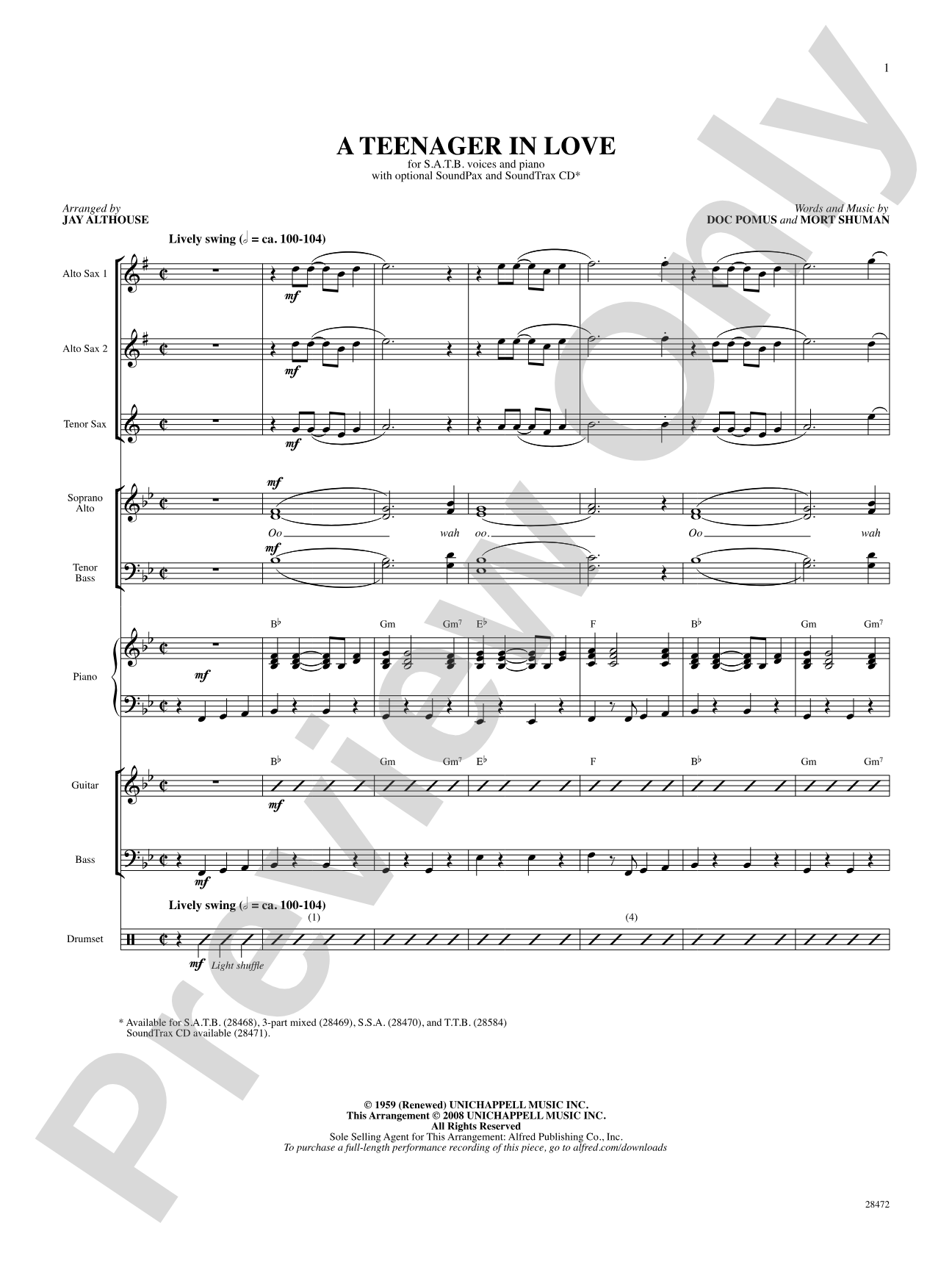
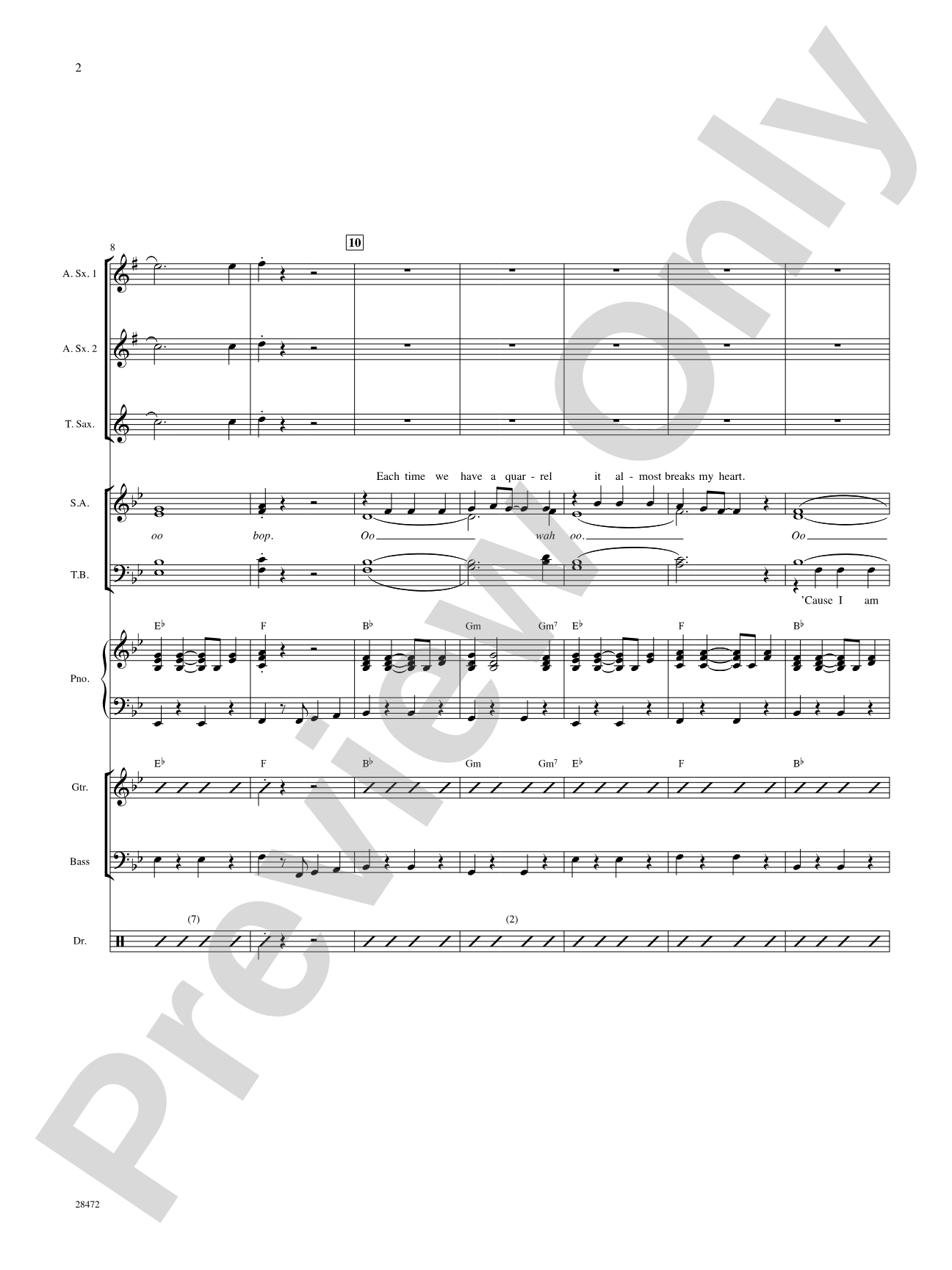
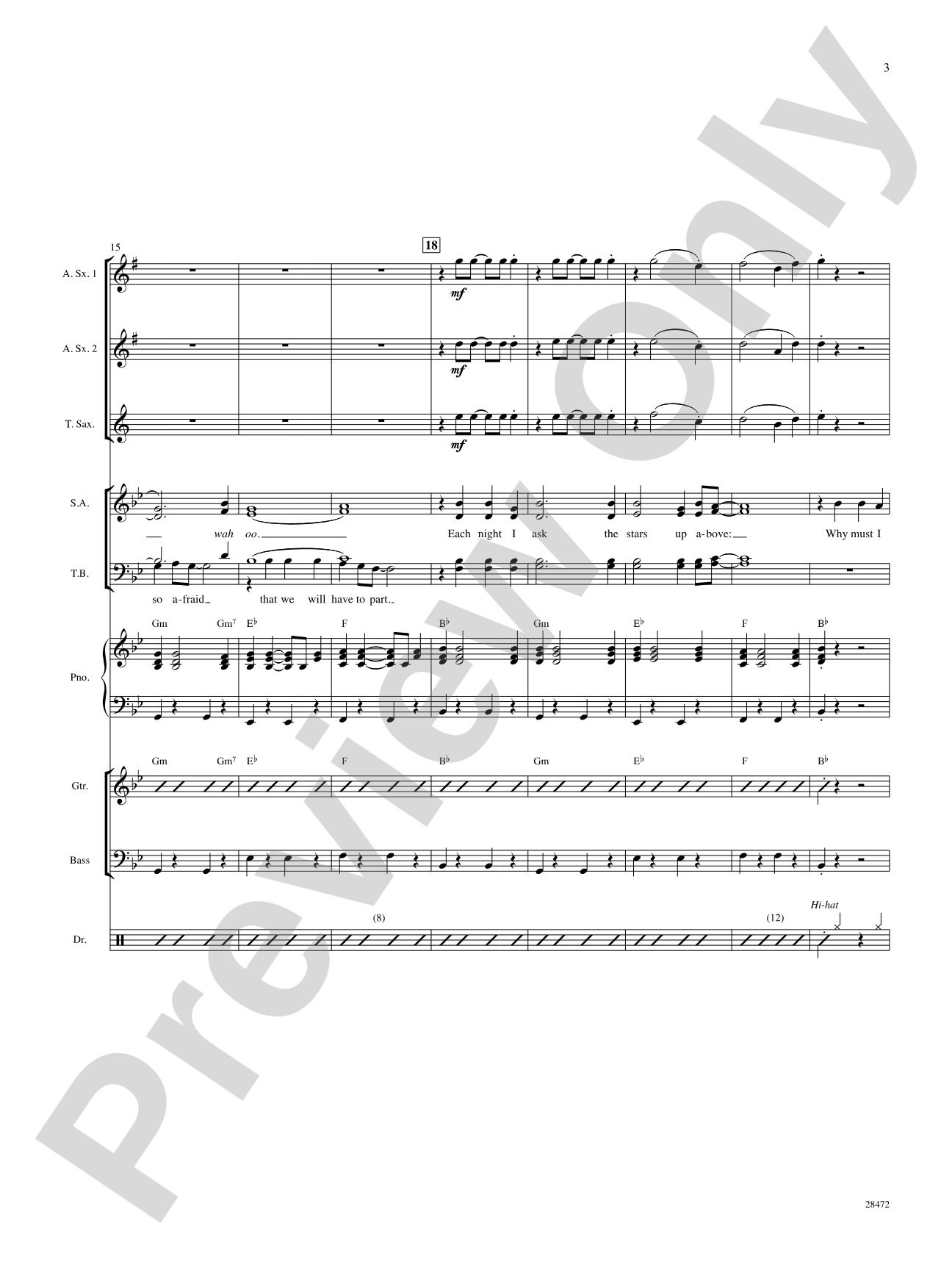
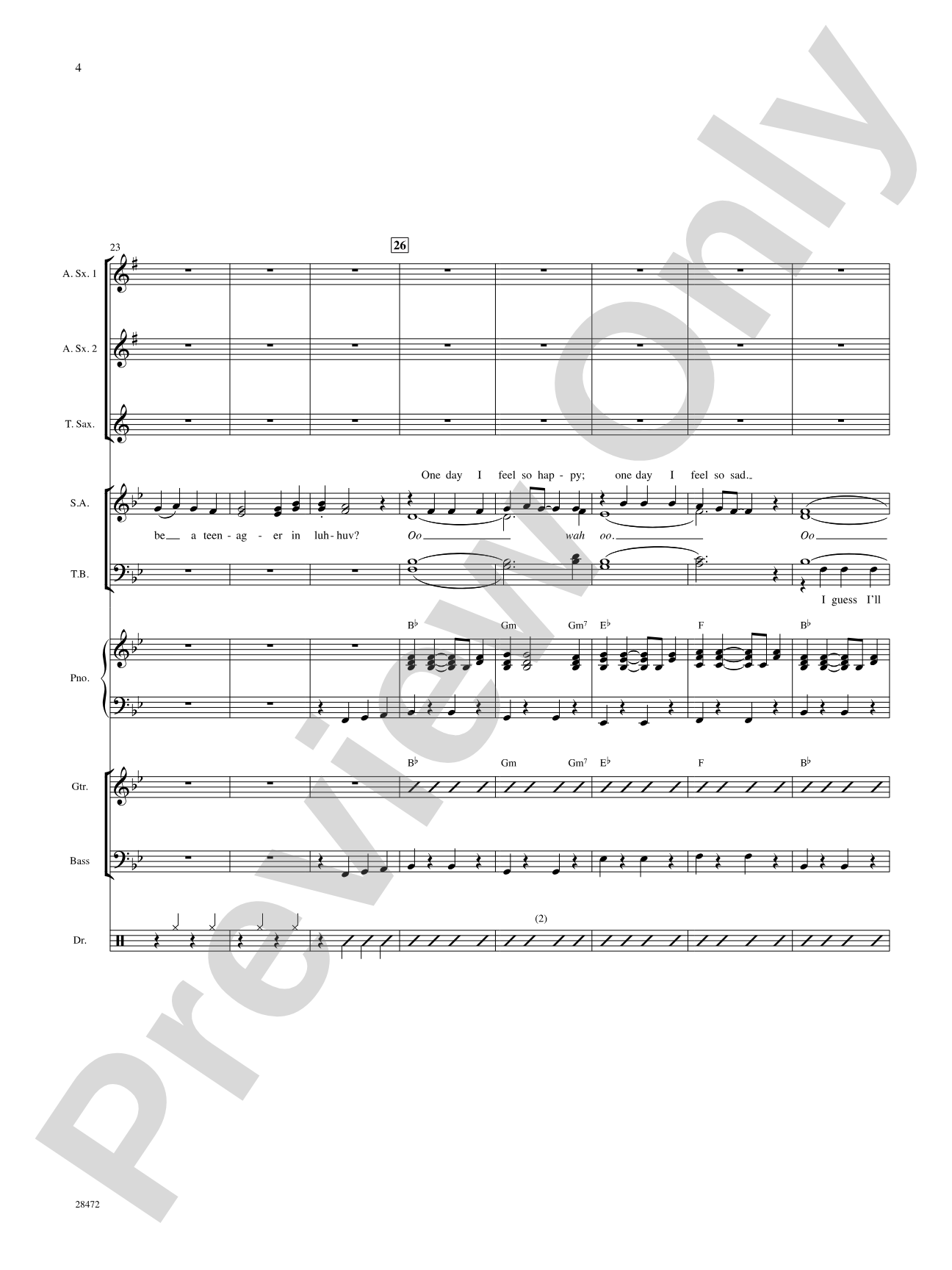
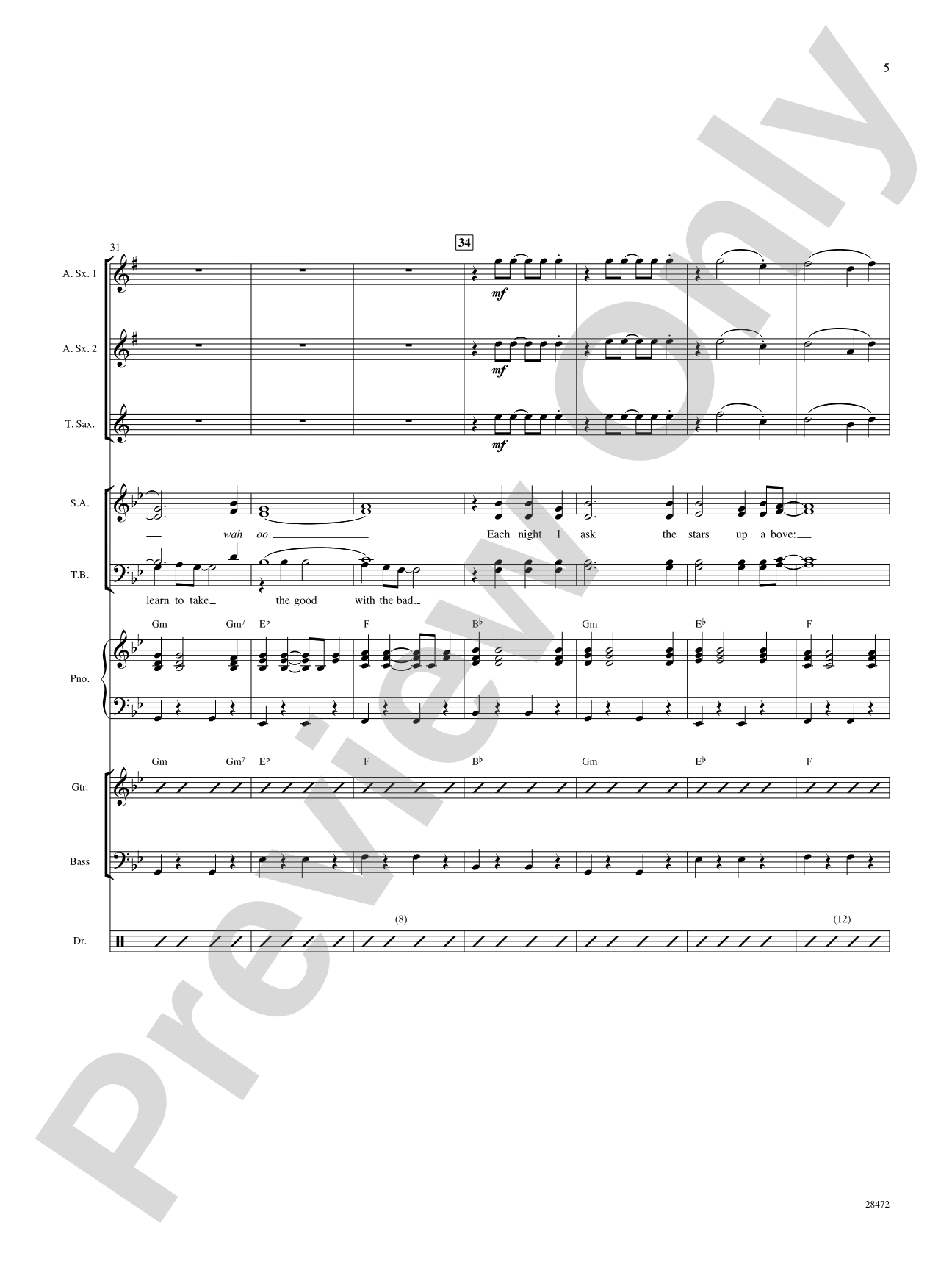
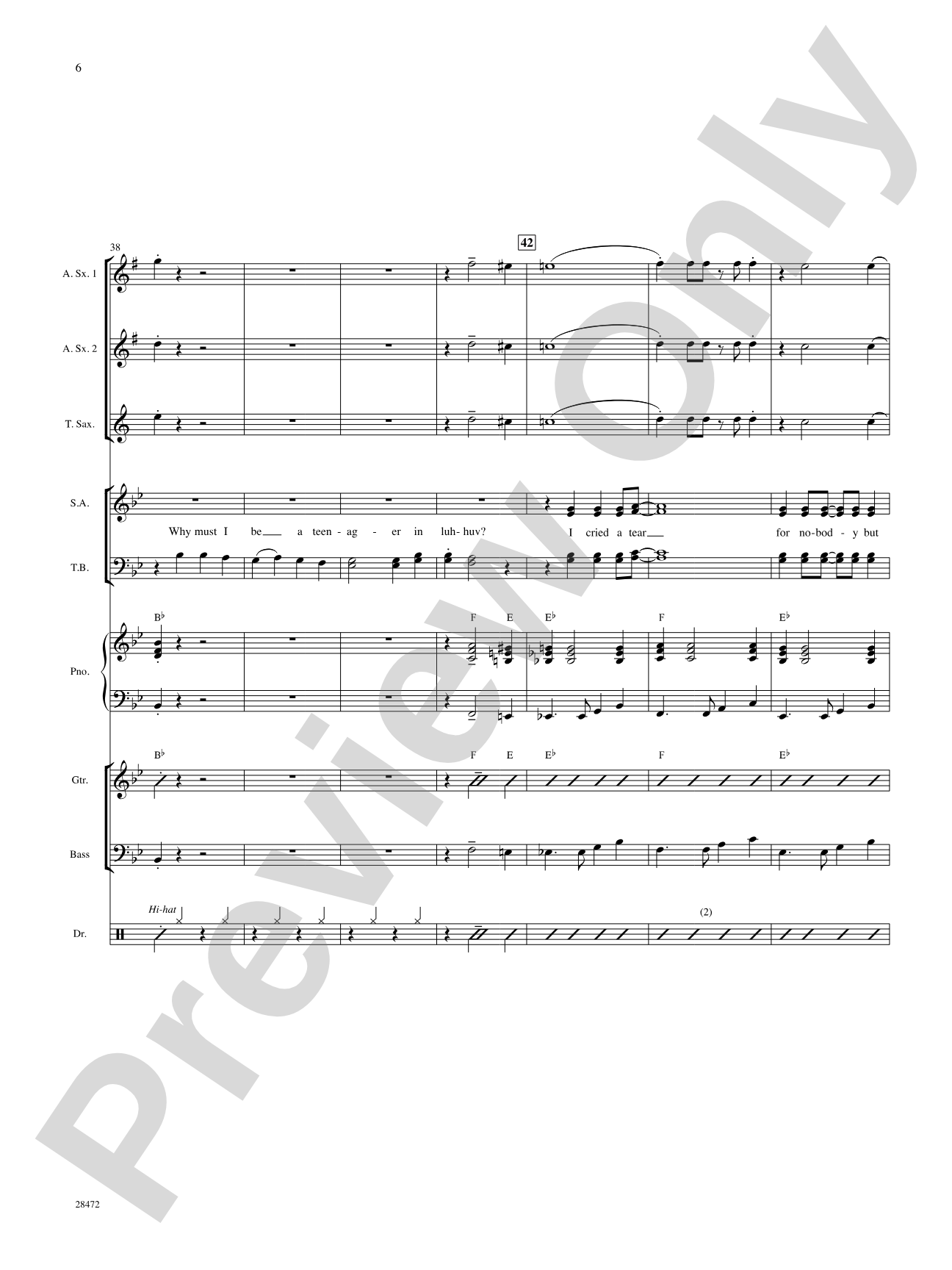
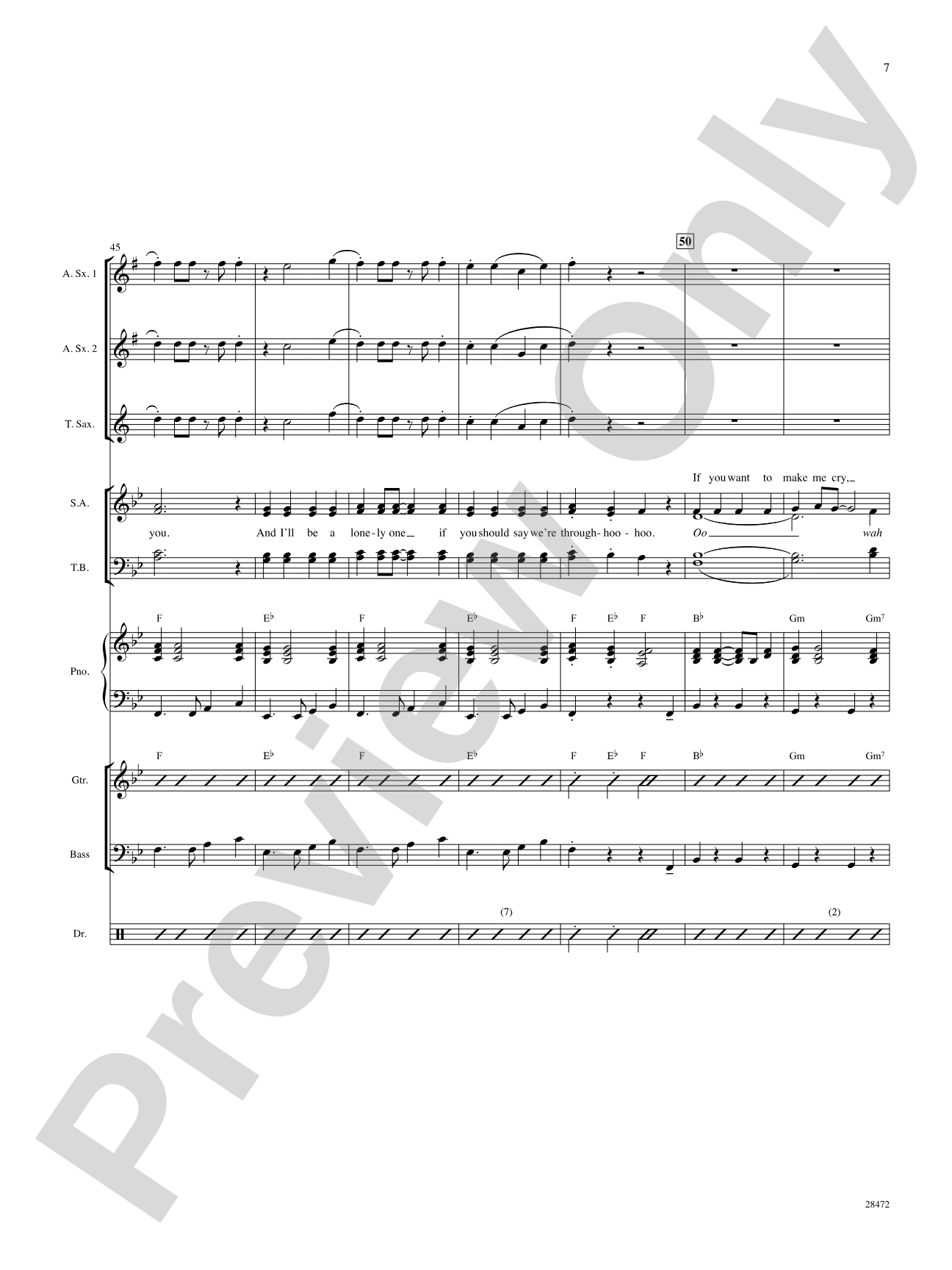
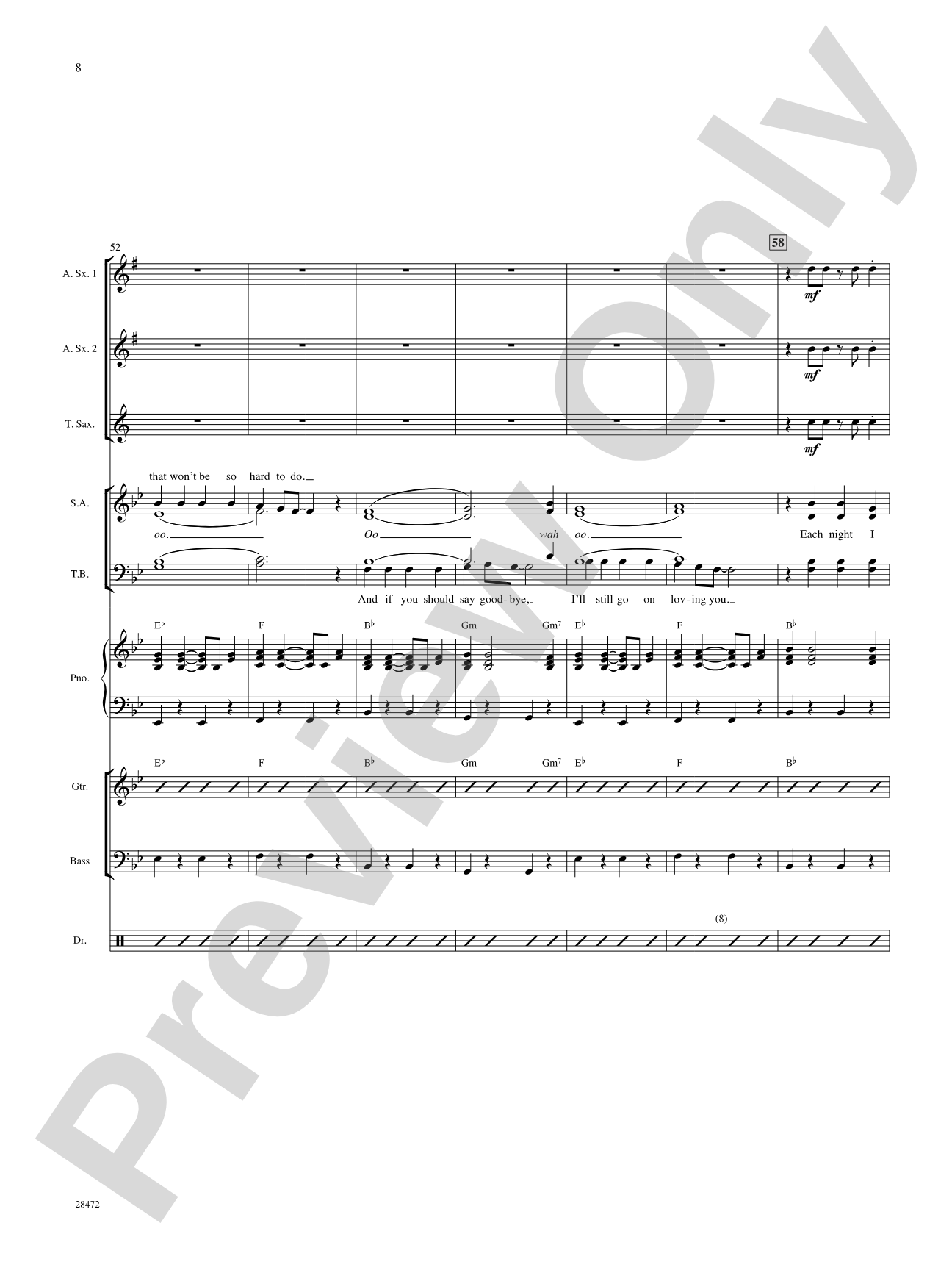

A Teenager in Love: Score: Choral SoundPax
Words and music by Doc Pomus and Mort Shuman / arr. Jay Althouse
Item: 00-PR-0001312
$8.00
Pickup currently not available
Description
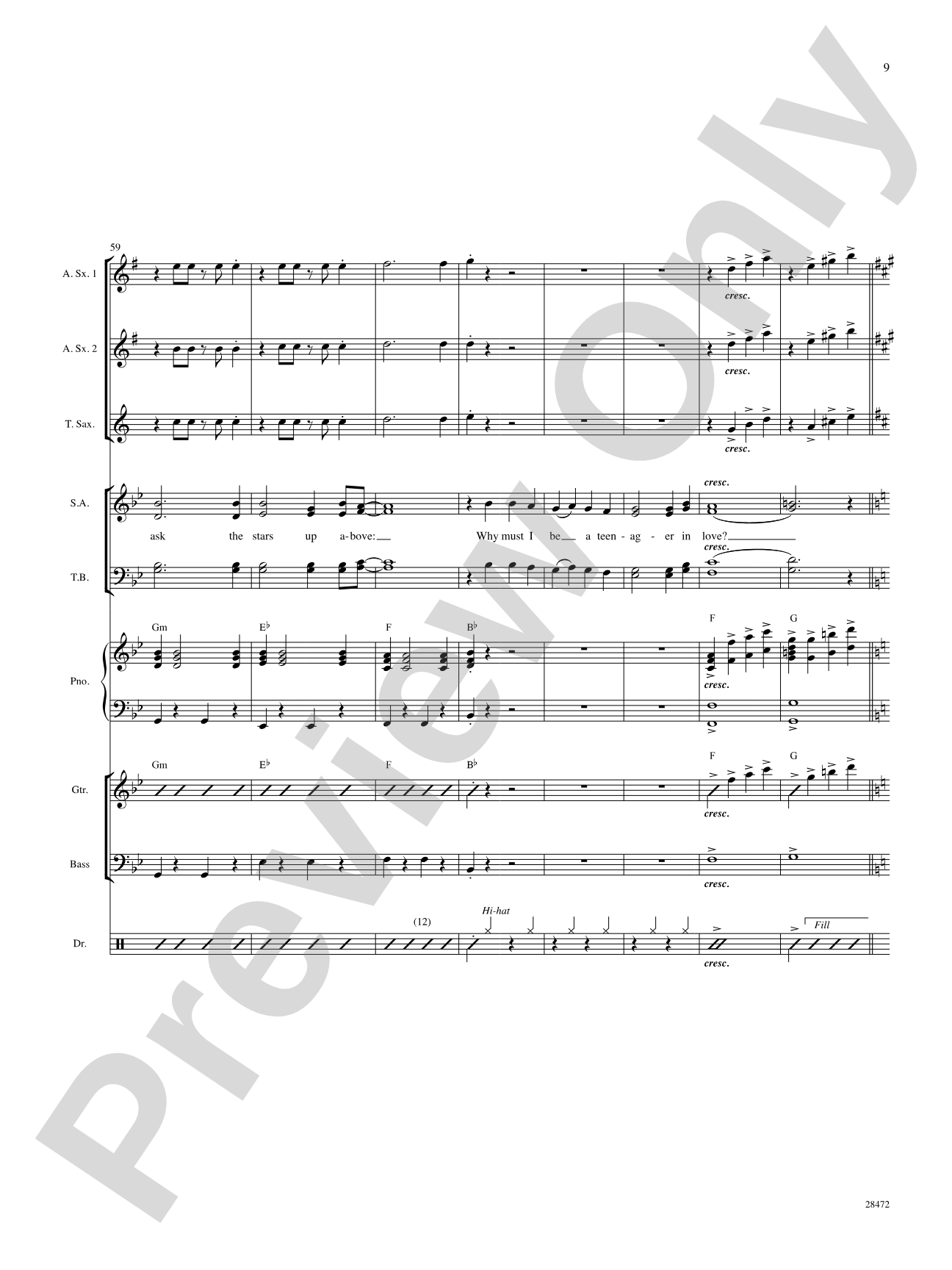
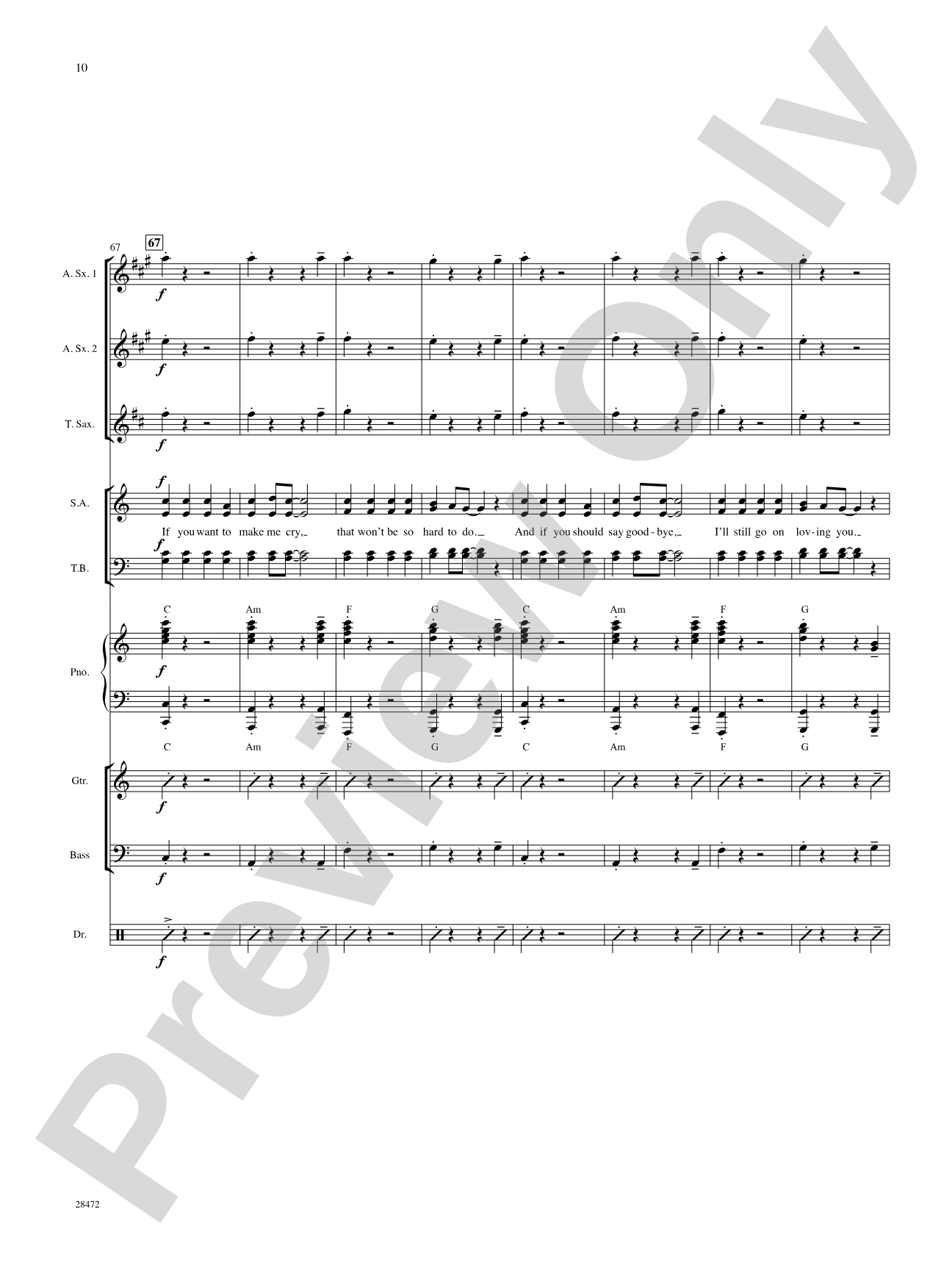
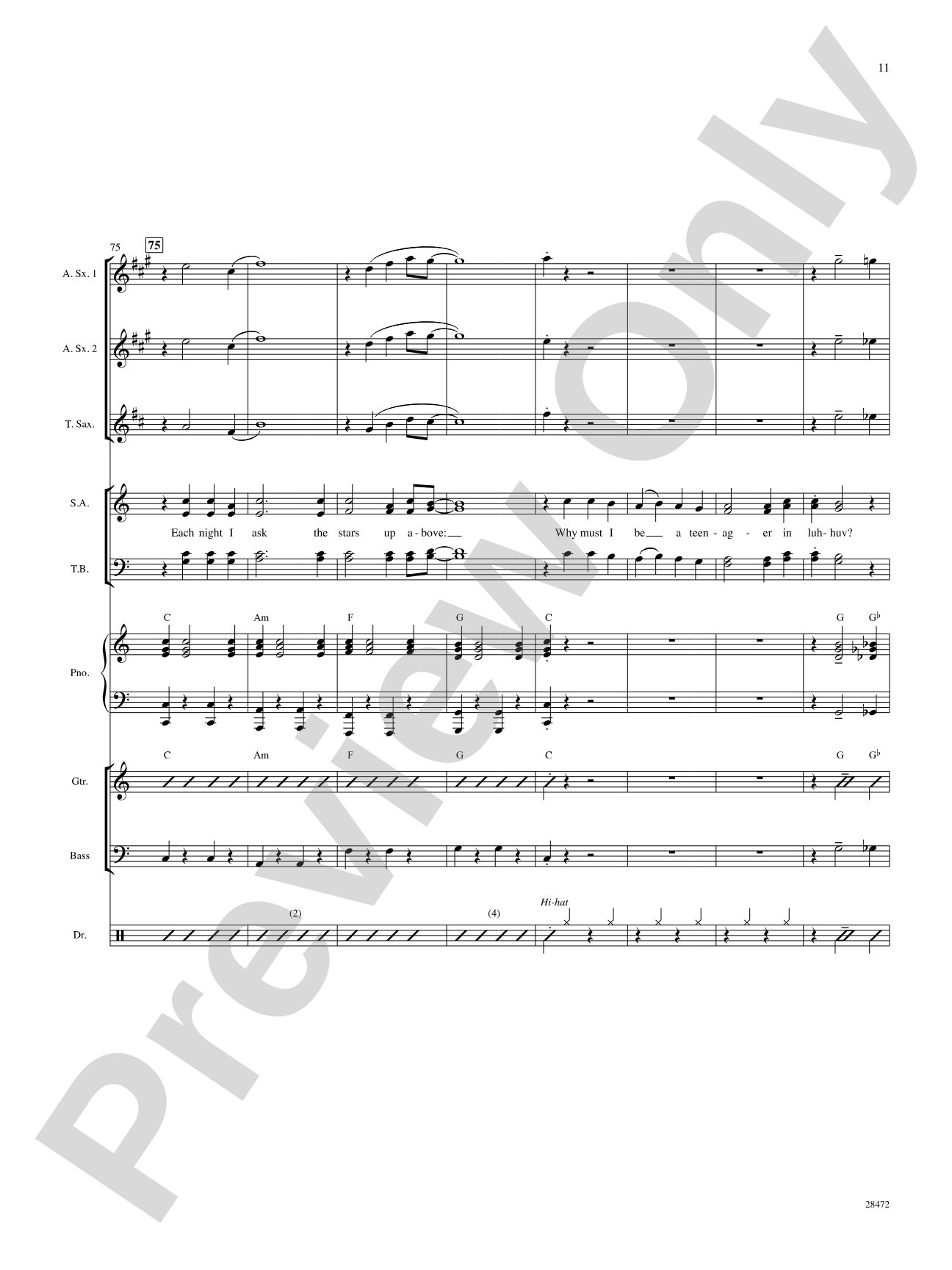
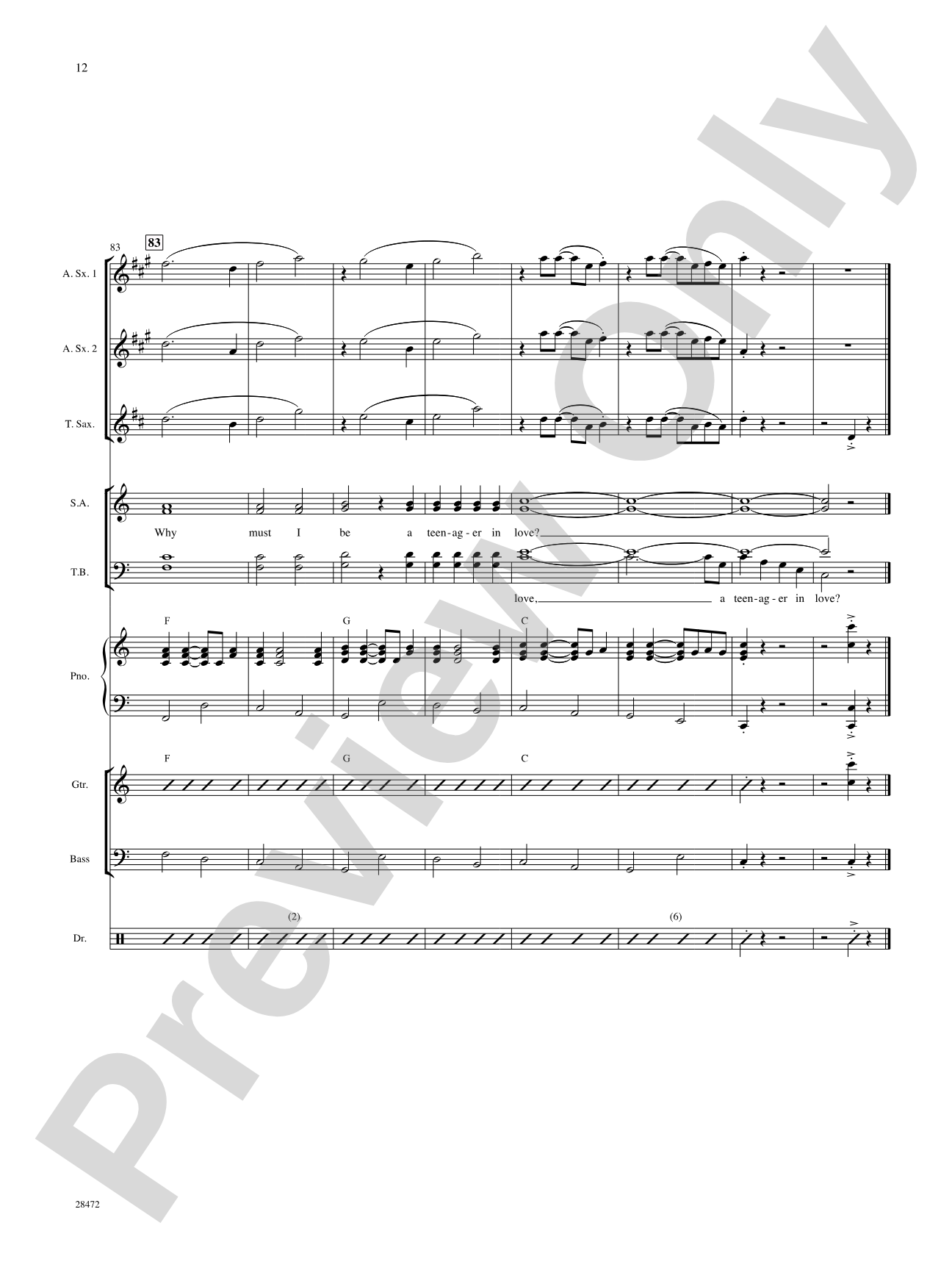
Oh the heartache! "Why must I be a teenager in love?" It's a musical question from the sock hop days of the fabulous '50s. The jitterbug-style arrangement is lively and fresh, yet captures the feel of a more innocent era. Includes parts for 2 alto sax., tenor sax. and rhythm.


Don't just read it, hear it, play along with it, and watch your students grow with it. In MakeMusic Cloud, A Teenager in Love: Score: Choral SoundPax comes alive with professional accompaniment, adjustable tempo, and built-in practice tools that turn solo practice into real progress.
Open in the Player
Jump straight in and assign it today.
Start Your Free Trial
Open this title and explore the full library in minutes.
Sample Audio
1
Audio File
--:--
0:00
0:00
Sample Video
No sample videos found.
Additional Details
Series:
Alfred Pop Choral Series
Publisher:
Alfred Music
Page Count:
24
SKU:
00-PR-0001312
Instrumentation:
SoundPax
More about this title
About the Composer: Doc Pomus
Doc Pomus (1925-1991) was a lyricist and songwriter who shaped the sound of 1950s pop and rock and roll. Alongside collaborators like Mort Shuman, he wrote some of the decade's most enduring hits, crafting lyrics that captured teenage emotion with wit and sincerity. His work appeared in films, on radio, and in live performances across America, making him a crucial figure in the development of popular songwriting during rock and roll's formative years.
Why we love this
This arrangement taps into the infectious energy of 1950s pop without requiring a full jazz ensemble or complicated rhythm section setup. Jay Althouse's jitterbug-style writing is immediately singable for mixed choirs while the optional saxophone parts add authentic period color and give your instrumentalists a genuine role in the performance.
What to expect
Nostalgic and playful, this arrangement captures the innocent yearning of 1950s teenage romance with a bouncy, optimistic energy. The jitterbug style keeps the piece light and engaging, making it feel more like a musical conversation than a formal concert number.
Who it's for
Mixed or treble choirs looking for concert repertoire that entertains audiences without requiring extensive vocal range or complex harmonic demands. Directors of intermediate-level groups will find the vocal lines accessible while the optional instrumental parts offer rewarding opportunities for saxophonists.
How to get the most out of it
- Shape the phrasing to match the natural swing of conversational speech; the humor of 'Why must I be a teenager in love?' lands better when singers breathe where the words would naturally pause rather than at phrase marks.
- If you're using the recorded accompaniment, have your rhythm section listen to it in rehearsal before attempting to play along so they understand the tempo and groove.
- Balance the saxophone parts so they support rather than overpower the choral sound; they're period texture, not a competing melody.
How to use it
Program this as a palate-cleanser between more serious choral selections or as part of a retro-themed concert that celebrates classic American pop. It also pairs well with other novelty numbers or period pieces when building a program around mid-twentieth-century popular music.
Skills your students will build
- Swing rhythm and syncopation characteristic of 1950s popular music
- Diction clarity in comic or conversational-style choral singing
- Balance and blend when integrating optional saxophone parts with choir
- Stylistic interpretation of period popular music versus classical choral literature