
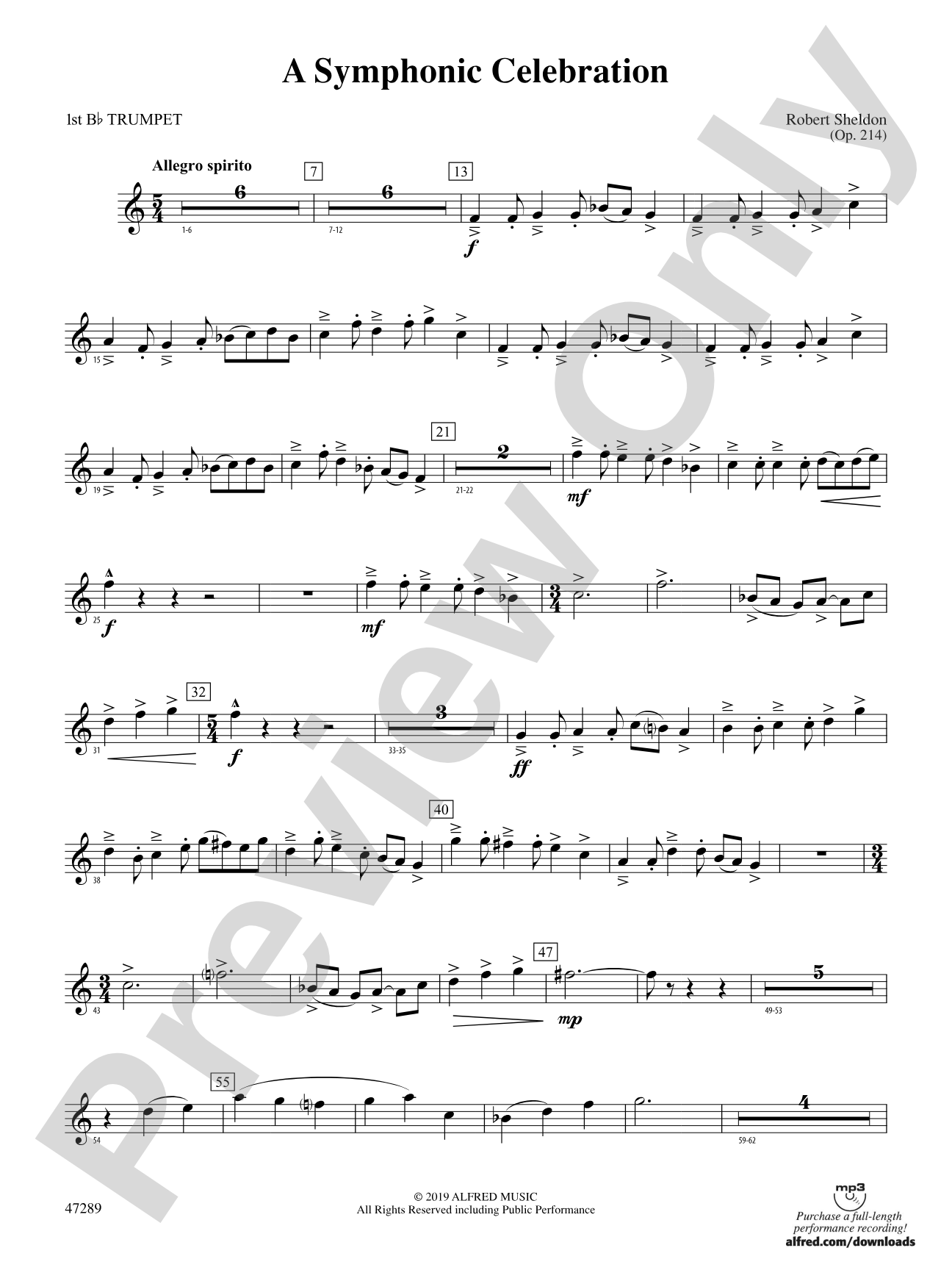

A Symphonic Celebration: 1st B-flat Trumpet
By Robert Sheldon
Grade: 4.5 (Medium)
Item: 00-PC-0017902_T1
$3.00
Pickup currently not available
Description
This energetic and uplifting piece features tuneful melodies and playful rhythms in various meters. Colorful orchestration and moments of lyricism add to the variety of styles and textures, providing a joyful showcase for advanced ensembles. This title is available in MakeMusic Cloud.


Don't just read it, hear it, play along with it, and watch your students grow with it. In MakeMusic Cloud, A Symphonic Celebration: 1st B-flat Trumpet comes alive with professional accompaniment, adjustable tempo, and built-in practice tools that turn solo practice into real progress.
Open in the Player
Jump straight in and assign it today.
Start Your Free Trial
Open this title and explore the full library in minutes.
Sample Audio
1
Audio File
--:--
0:00
0:00
Sample Video
Additional Details
Series:
Alfred Concert Band
Publisher:
Alfred Music
Page Count:
284
SKU:
00-PC-0017902_T1
More about this title
About the Composer: Robert Sheldon

Robert Sheldon stands among the most frequently performed composers of wind band repertoire in the world. His works appear regularly on state and national contest lists, and his commissions sustain a prolific output year after year. Beyond the page, Sheldon serves as guest conductor for honor bands across the United States and internationally, bringing his compositions to life in rehearsals from Japan to Australia.
Recognized with honors from the American School Band Director's Association, Phi Beta Mu, and ASCAP, Sheldon's music has reached audiences at Carnegie Hall, the Kennedy Center, and the Sydney Opera House. He has also shaped music education through clinician work at universities and state conferences, and served as lead author of Sound Innovations for Concert Band. In 2020, VanderCook College of Music awarded him an honorary doctorate in recognition of his contributions to the field.
Why we love this
Sheldon writes with a conductor's ear for what makes an ensemble sound vibrant and engaged. The mix of tuneful melodies, rhythmic playfulness, and varied meters keeps players alert without overwhelming them, while the orchestration gives every section something memorable to play. This is the kind of piece that builds confidence in advancing ensembles and leaves audiences genuinely entertained.
What to expect
Energy radiates from the opening, carried by melodic hooks and rhythmic vitality that never feel hurried. The piece shifts moods fluidly, pausing for moments of genuine warmth before returning to its celebratory character, creating a musical arc that keeps performers and listeners engaged from start to finish.
Who it's for
Advanced high school and college concert bands seeking a work that demonstrates technical skill while remaining joyful and accessible to audiences. Directors programming a contest or festival performance will find a piece that sits squarely in the medium difficulty range but delivers genuine musical substance.
How to get the most out of it
- Attend closely to the meter changes; mark your score clearly and conduct them decisively so the ensemble stays locked together through the transitions.
- Balance the colorful orchestration by listening for which section carries the primary melody in each section, then shape the supporting parts accordingly.
- Shape the lyrical passages with rubato and dynamic nuance to showcase contrast with the more rhythmically driven material.
- Use the accompaniment recording to establish tempo and style; rehearse sections separately, then bring them together gradually.
How to use it
Open a concert with this piece to establish an uplifting tone and demonstrate the ensemble's rhythmic precision and sectional balance. It pairs well with contrasting slower works and serves equally well as a festival or contest selection where its combination of accessibility and musical substance will impress adjudicators.
Skills your students will build
- Reading mixed meters and shifting between duple and triple divisions
- Balancing melodic lines across multiple sections and orchestral voicings
- Executing rhythmic precision in playful, syncopated material
- Responding to dynamic and textural contrast while maintaining ensemble cohesion
- Sustaining musical momentum through extended lyrical passages