A Suite of Baroque Dances: Flute Sheet Music Preview

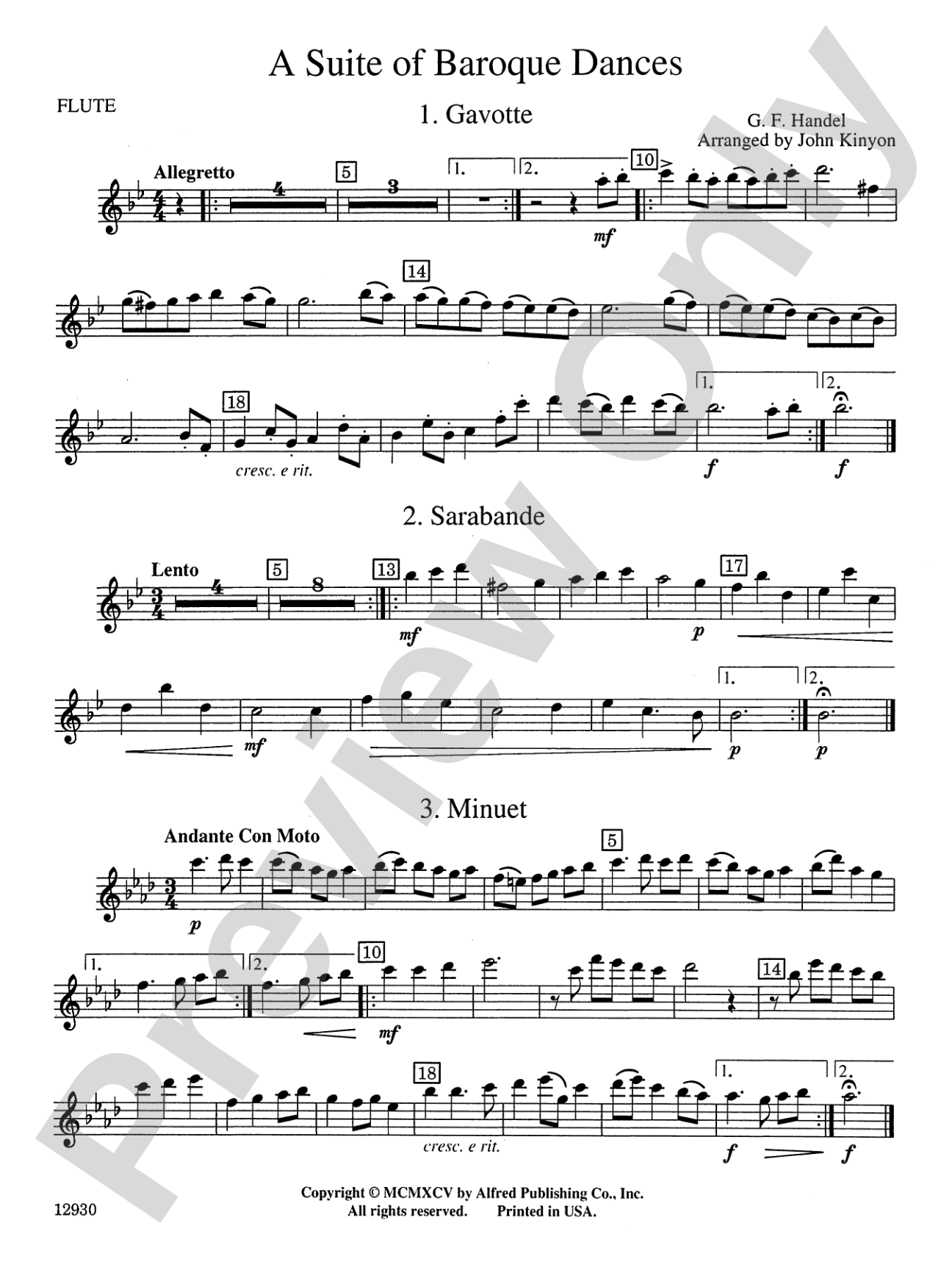
A Suite of Baroque Dances: Flute

By George Frideric Handel / arr. John Kinyon

Grade: 1 (Very Easy)

Item: 00-PC-0000124_F1

Digital Download
$3.00
Description
This title is available in MakeMusic Cloud.

Don't just read it, hear it, play along with it, and watch your students grow with it. In MakeMusic Cloud, A Suite of Baroque Dances: Flute comes alive with professional accompaniment, adjustable tempo, and built-in practice tools that turn solo practice into real progress.

Sample Audio
0:00
0:00
Sample Video
Additional Details
Series: Mini Score Series
Publisher: Alfred Music
Page Count: 102
SKU: 00-PC-0000124_F1

More about this title

About the Composer: George Frideric Handel

George Frideric Handel (1685–1759) stands as one of the Baroque era's most prolific and influential composers. Born in Germany and trained in Italy, he spent most of his career in England, where he composed operas, oratorios, instrumental works, and ceremonial music for the royal court. His gift for memorable melody and structural clarity made his music accessible to both aristocratic audiences and the general public.

Handel's instrumental works, particularly his suites and concertos, showcase the rhythmic vitality and dance forms that define Baroque style. For student musicians, his compositions offer clean harmonic writing, balanced phrasing, and the architectural clarity that makes Baroque music such an effective teaching tool. His melodies have endured for nearly three centuries because they are genuinely singable and easy to remember.

Why we love this

Kinyon's Grade 1 arrangement strips these Baroque dances down to their essential charm without sacrificing the character that makes Handel worth playing. Young musicians get immediate access to real masterwork material, which builds confidence and pride in their musicianship. The suite format gives conductors flexibility to program individual movements or the full work, making it practical for contests, festivals, and regular concerts alike.

What to expect

These dances sparkle with courtly elegance and rhythmic precision. You hear the snap of French overture dotting, the graceful arc of Baroque melody, and the transparent clarity of period orchestration, all rendered in a way that young musicians can execute with confidence and musicality.

Who it's for

Beginning and early intermediate concert bands looking for repertoire with real musical substance. This arrangement works equally well for bands preparing contest material or for directors who want to introduce students to Baroque style and structure without the reading challenges of unedited scores.

How to get the most out of it

  • Shape each dance phrase with clear articulation and consistent air support; Baroque style rewards precision over vibrato or heavy dynamics.
  • Balance the band so that the main melodic line speaks clearly without drowning out inner voices, especially in the lower woodwinds and brass.
  • Establish steady, unrushed tempos that let the rhythmic character of each dance emerge; resist the urge to accelerate.
  • Use the dynamic markings as structural signposts; Baroque dances rely on contrast between sections rather than gradual swells.

How to use it

Program this as a complete suite to give concerts an educational arc, or feature individual movements as fillers between heavier contemporary pieces. The Grade 1 difficulty and Baroque flavor create an excellent pairing with Renaissance or early Classical works, and the suite format works naturally on festival and contest programs.

Skills your students will build

  • Phrasing and shaping in Baroque style
  • Articulation clarity and consistency across the ensemble
  • Reading balanced multi-part texture with independent inner voices
  • Recognizing and performing dance forms (Allemande, Courante, Sarabande, Gigue)
  • Rhythmic precision with dotted figures and motivic development

You May Also Like