
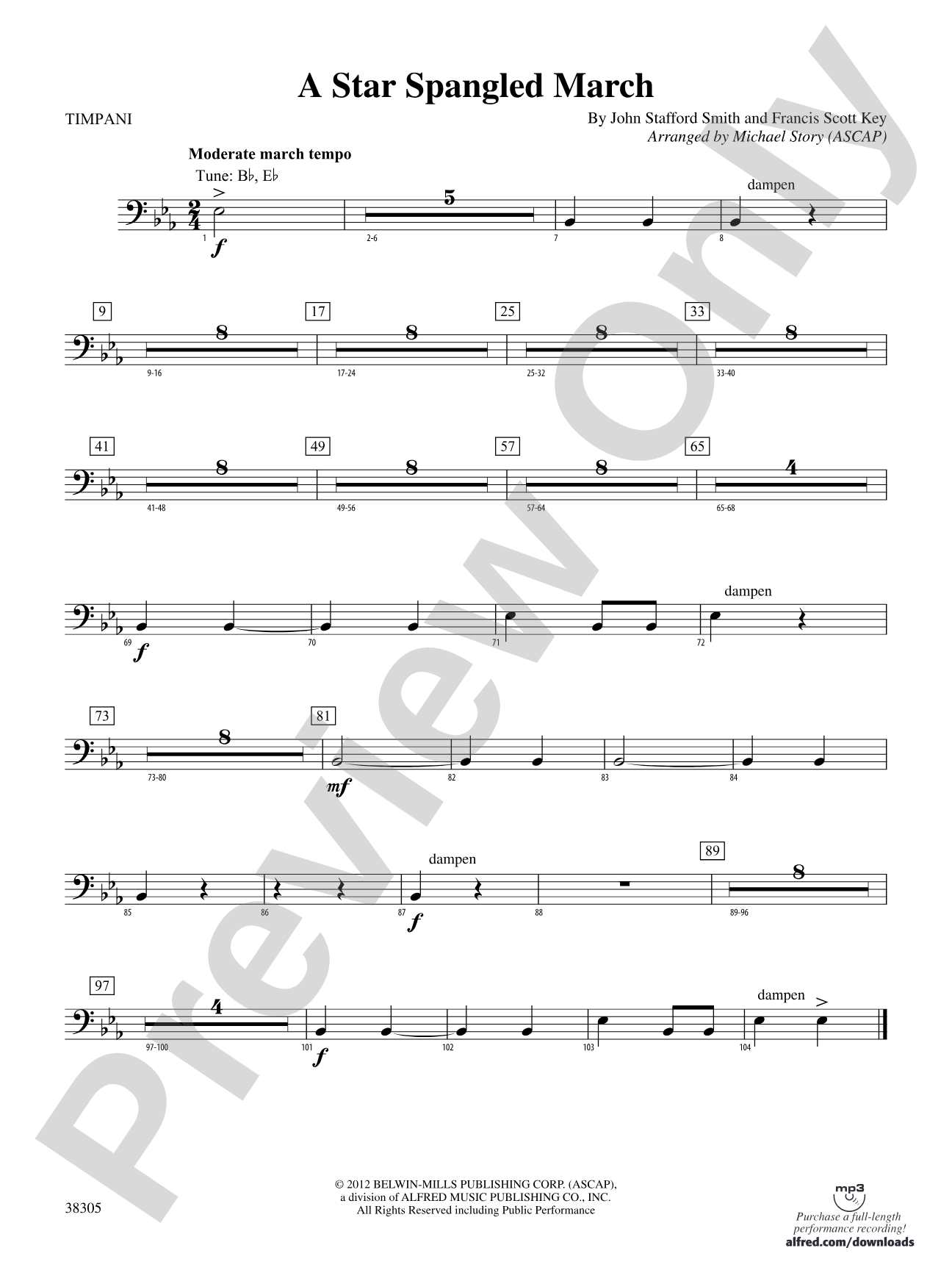

A Star Spangled March: Timpani
By John Stafford Smith and Francis Scott Key / arr. Michael Story
Grade: 1 (Very Easy)
Item: 00-PC-0015408_TMP
$3.00
Pickup currently not available
Description
As the title implies, this piece is based on the National Anthem of the United States, with a few snippets of other patriotic themes included. This energy-charged arrangement will have your beginners marching through your concert with pride. (2:00) This title is available in MakeMusic Cloud.


Don't just read it, hear it, play along with it, and watch your students grow with it. In MakeMusic Cloud, A Star Spangled March: Timpani comes alive with professional accompaniment, adjustable tempo, and built-in practice tools that turn solo practice into real progress.
Open in the Player
Jump straight in and assign it today.
Start Your Free Trial
Open this title and explore the full library in minutes.
Sample Audio
1
Audio File
--:--
0:00
0:00
Sample Video
No sample videos found.
Additional Details
Series:
Belwin Beginning Band
Publisher:
Alfred Music
Page Count:
134
SKU:
00-PC-0015408_TMP
More about this title
About the Composer: John Stafford Smith
John Stafford Smith (1750-1819) was an English composer and organist whose output spanned hymns, glees, and vocal music. Though prolific in his lifetime, he is remembered almost entirely for one melody: the tune now known as "The Star-Spangled Banner." Smith originally composed this melody for a song called "To Anacreon in Heaven," written around 1773-1775 for a London social club. The tune's marriage to Francis Scott Key's 1814 poem transformed it into one of the world's most recognizable national anthems.
For music educators, Smith's melody represents a teaching moment about how a single strong tune can outlive its original context and carry profound meaning across generations. His gift for memorable, singable melodic writing remains instructive for arrangers and composers working at beginner levels.
Why we love this
Michael Story's arrangement captures the ceremonial weight of the anthem while keeping the orchestration lean enough for Grade 1 musicians to handle without frustration. The addition of patriotic snippets adds color and variety without derailing beginners, and the two-minute duration fits naturally into concert programming without demanding extended stamina. Directors get a piece that sounds substantial and meaningful while their newest musicians experience genuine success.
What to expect
Stately and bright. The familiar melody unfolds with straightforward harmony and orchestration that lets the tune shine; the patriotic flourishes in the accompaniment remind listeners why the anthem matters. Young musicians play something that sounds important and feels proud to perform.
Who it's for
Beginning concert band directors looking for a patriotic piece that carries genuine emotion and ceremony without technical demands beyond Grade 1 capability. This works equally well for school ensembles, community bands, and holiday-specific programming where authenticity matters.
How to get the most out of it
- Shape the melody with clarity and forward motion from the opening; even at this grade level, the anthem deserves singing tone, not a march-like chop.
- Balance the woodwind section carefully when the melody sits in the upper voices; avoid letting flutes and clarinets overpower the harmonic foundation.
- Use the patriotic interludes as moments to shift energy and dynamics; they break the anthem's inherent solemnity and let younger players feel the piece's celebratory character.
- Lock the rhythm section (bass drum, snare, tuba) to the conducted beat, especially during transitions between sections, to keep young bands from rushing.
How to use it
Schedule this for early summer concerts, 4th of July celebrations, or festival appearances where patriotic repertoire is expected or valued. It pairs well on a program with lighter novelty pieces, giving the concert an opening statement of ceremony and purpose. At Grade 1 difficulty, it also works as a confidence-building opener for young ensembles stepping into their first formal performance.
Skills your students will build
- Reading and sustaining legit melody lines in concert contexts
- Balancing melody and accompaniment within a functional harmonic framework
- Interpreting tempo and phrasing at a basic level while maintaining steady band sound
- Managing dynamic contrast between sections of a longer form
- Responding to conducting cues during transitions and structural changes