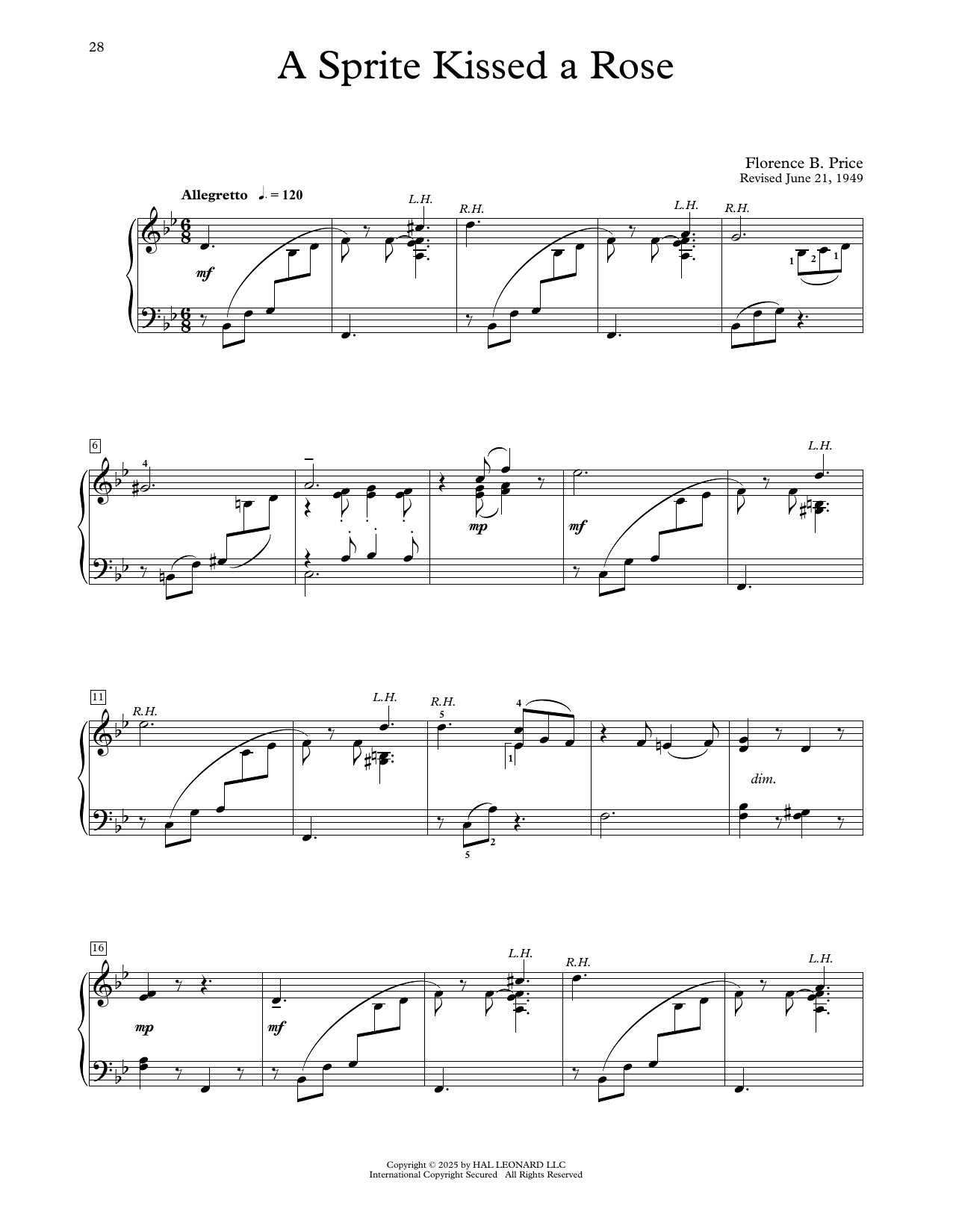
Florence Price (1887-1953) broke racial and gender barriers as the first African American woman to have a symphony performed by a major American orchestra. Her compositional voice blended classical training with the rhythmic and harmonic language of African American musical traditions, creating works that were both formally sophisticated and deeply rooted in her cultural heritage. Price's piano works remain essential to any comprehensive music education, offering students access to a composer whose artistic vision expanded what American concert music could be.
Why we love this
This piece distills Price's lyrical gift into a compact, teachable form. The harmonic language is inviting without being simplistic, giving students room to discover how Price worked with color and chromaticism in ways that feel both familiar and fresh.
What to expect
Elegant and introspective, with moments of tender lyricism. The piece carries a sense of quiet dignity, as if capturing a fleeting but meaningful exchange between two living things.
Who it's for
This three-page work suits intermediate pianists ready to engage with American art music and the harmonic language of the early twentieth century. Teachers will find it valuable for students exploring composers beyond the European canon or developing interpretive maturity.
How to get the most out of it
Attend to the harmonic shifts carefully; Price often moves through unexpected tonal areas, and clarity here helps listeners follow the musical logic rather than hearing it as random wandering.
Shape each phrase as a complete thought, resisting the urge to rush. The title itself suggests a delicate gesture, and pacing serves the music far better than speed.
Let the pedal work for you in sustaining harmonies, but change it cleanly between sections so the textures remain distinct.
How to use it
Consider pairing this with other American composers of Price's era for a focused recital or concert segment. It also works beautifully as a bridge piece between classical and contemporary repertoire, showing students how tradition and innovation coexist in twentieth-century American music.
Skills your students will build
navigating chromatic voice leading and unexpected harmonic progressions
sustaining lyrical phrasing over static or shifting harmonic backgrounds
interpreting early twentieth-century American art song idioms at the keyboard
pedaling technique for harmonic resonance without muddiness
You May Also Like
Scan to Complete Your Purchase
Use your phone's camera to scan the code below
You'll log in on your phone and the order will be added to your account