Melody Bober's teaching philosophy centers on composing pieces that ignite genuine musical curiosity in her students. She holds a Bachelor of Music Education from the University of Illinois at Champaign-Urbana (summa cum laude) and a Master of Arts in Piano Performance from Minnesota State University, Moorhead, studying under acclaimed pianists Joel Shapiro and Andrew Froelich alongside music educator Mary Hoffman and jazz mentor Tony Caramia.
With two decades of public school teaching, university-level instruction, and an active private studio, Bober brings deep pedagogical insight to every composition. She also serves as a church pianist and music director, and her reputation as both clinician and composer has made her a sought-after presenter at piano teacher conventions and workshops across North America.
Why we love this
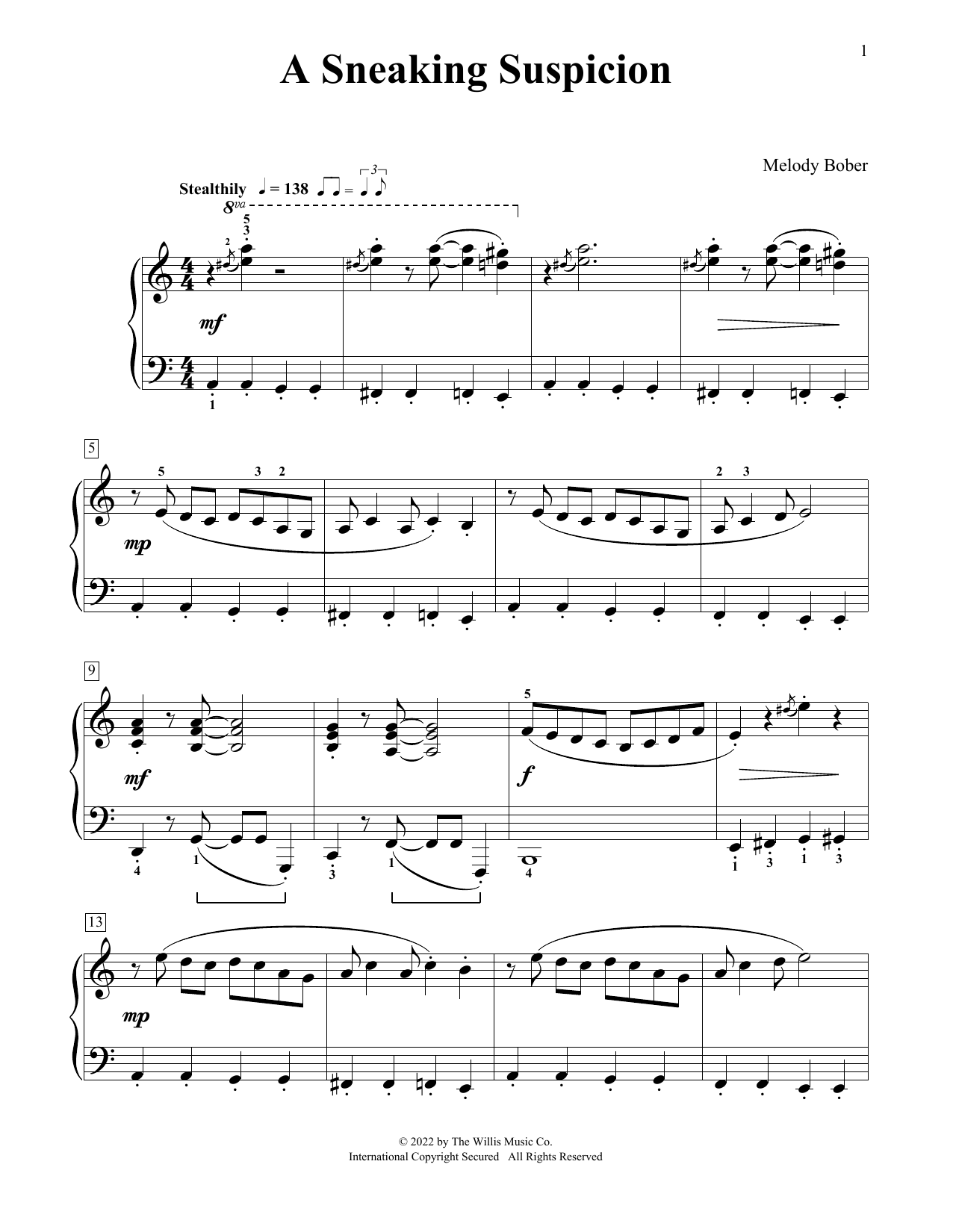
The title alone signals musical storytelling, and Bober delivers exactly that with a piece that uses harmonic movement and rhythmic intrigue to create genuine musical drama. Students encounter authentic compositional techniques without getting bogged down in technical excess, making this an excellent vehicle for developing interpretive maturity.
What to expect
Playful intrigue mixed with a touch of mischief. The piece unfolds like a musical mystery with shifting harmonic colors and rhythmic twists that keep both player and listener engaged, never quite settling into predictability.
Who it's for
Early intermediate pianists ready to explore character pieces with narrative arc and students developing comfort with varied harmonic language. Teachers seeking repertoire that challenges musical interpretation without excessive technical demands will find this especially useful.
How to get the most out of it
Shape the phrase contours dynamically; resist playing at one volume level even within ostensibly quiet sections, as the 'suspicion' deepens and lightens throughout
Distinguish between the motivic material and accompaniment textures by varying your touch; let melody sing while accompaniment sits slightly back
Experiment with rubato in the main theme to heighten the sense of curiosity, but keep rhythmic passages in the accompaniment metrically steady as an anchor
How to use it
Feature this in a recital program showcasing character pieces, or use it as a bridge between classical etudes and early romantic repertoire. Its compact three-page length makes it ideal for student recitals or as an encore piece that leaves audiences smiling.
Skills your students will build
Phrase shaping and dynamic control
Harmonic awareness through chromatic movement
Articulation contrast between melodic and accompanying voices
Musical interpretation and character development
Reading and performing varied rhythmic figures within a connected narrative
You May Also Like
Scan to Complete Your Purchase
Use your phone's camera to scan the code below
You'll log in on your phone and the order will be added to your account