
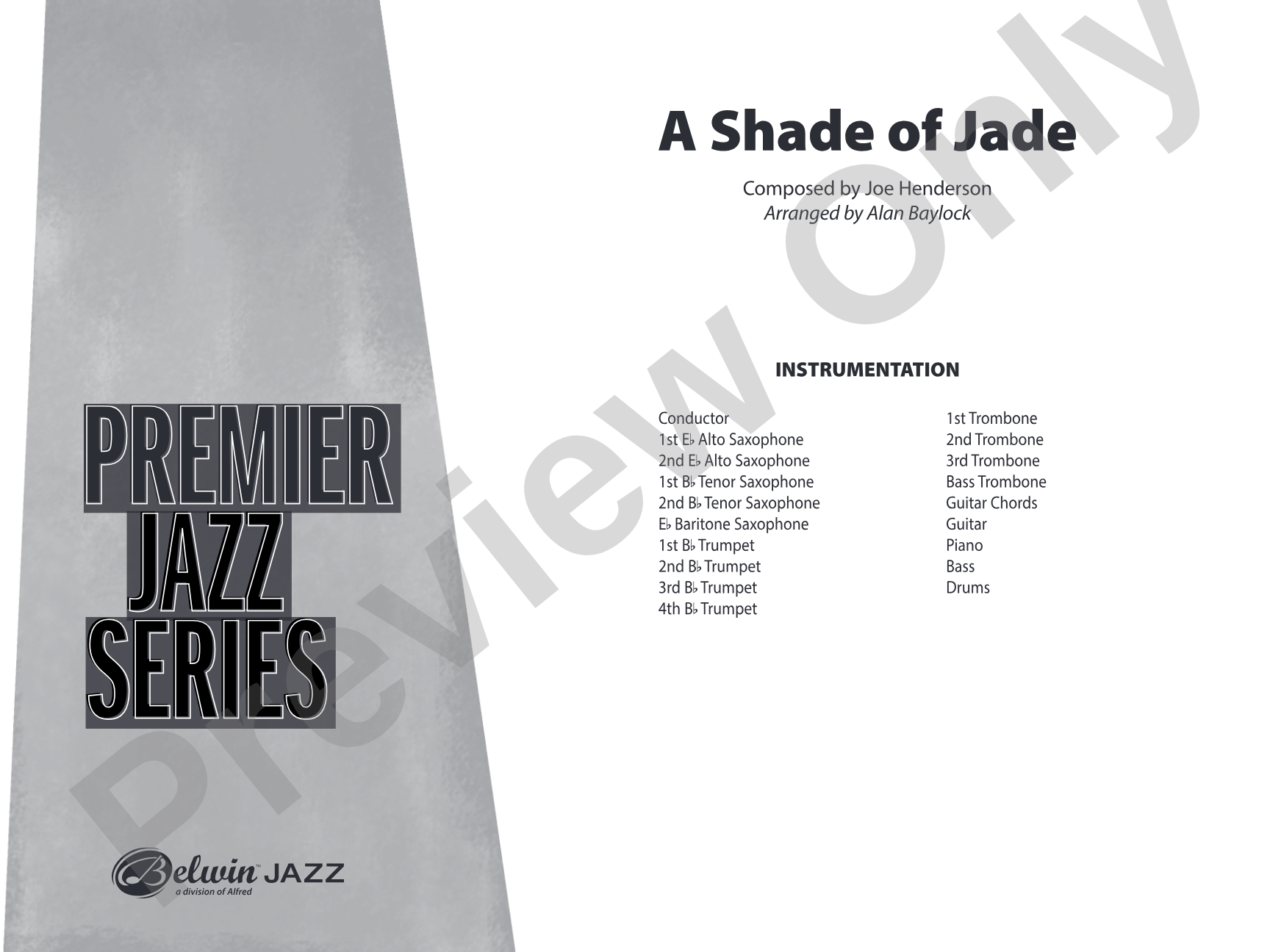
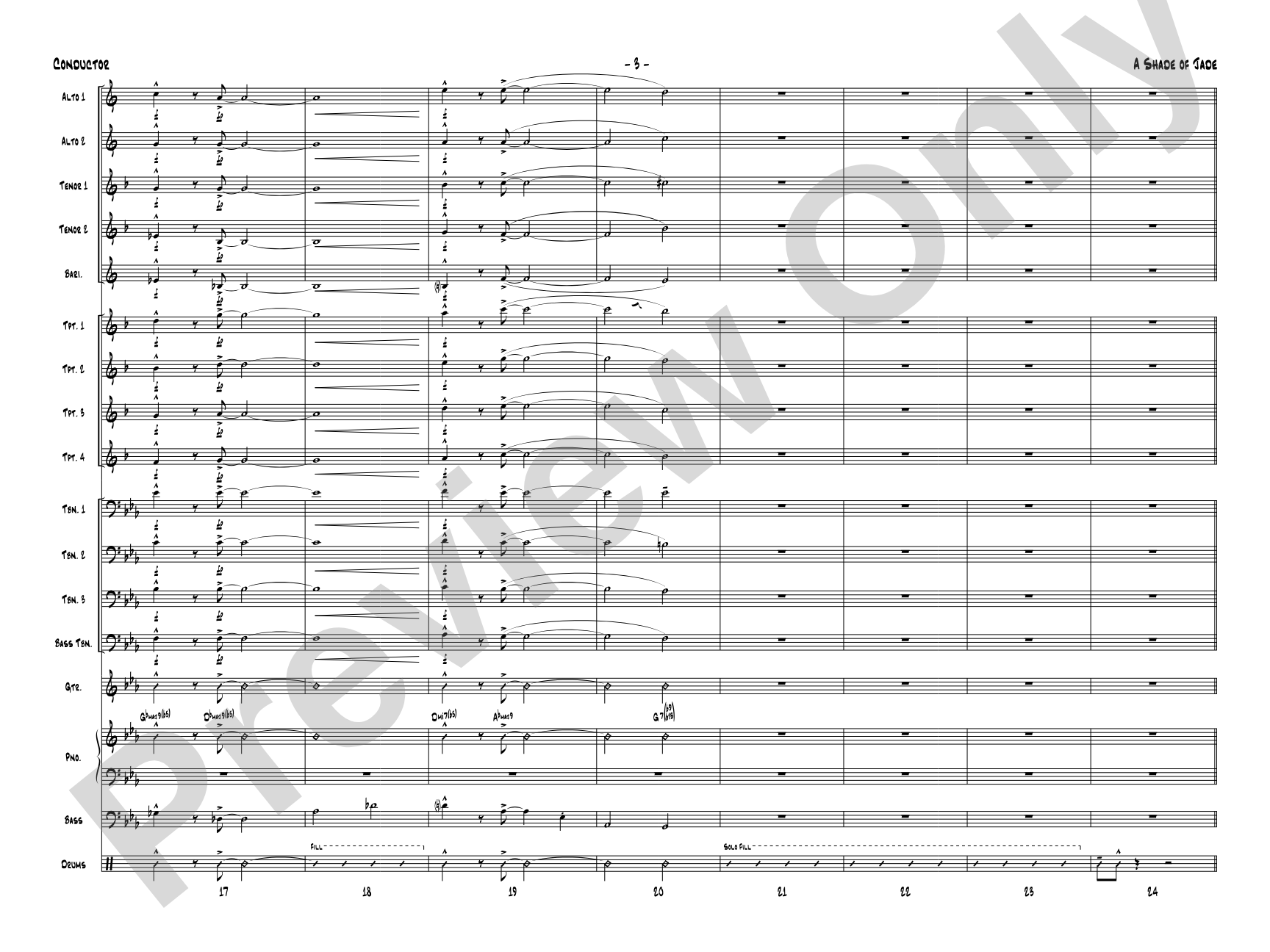
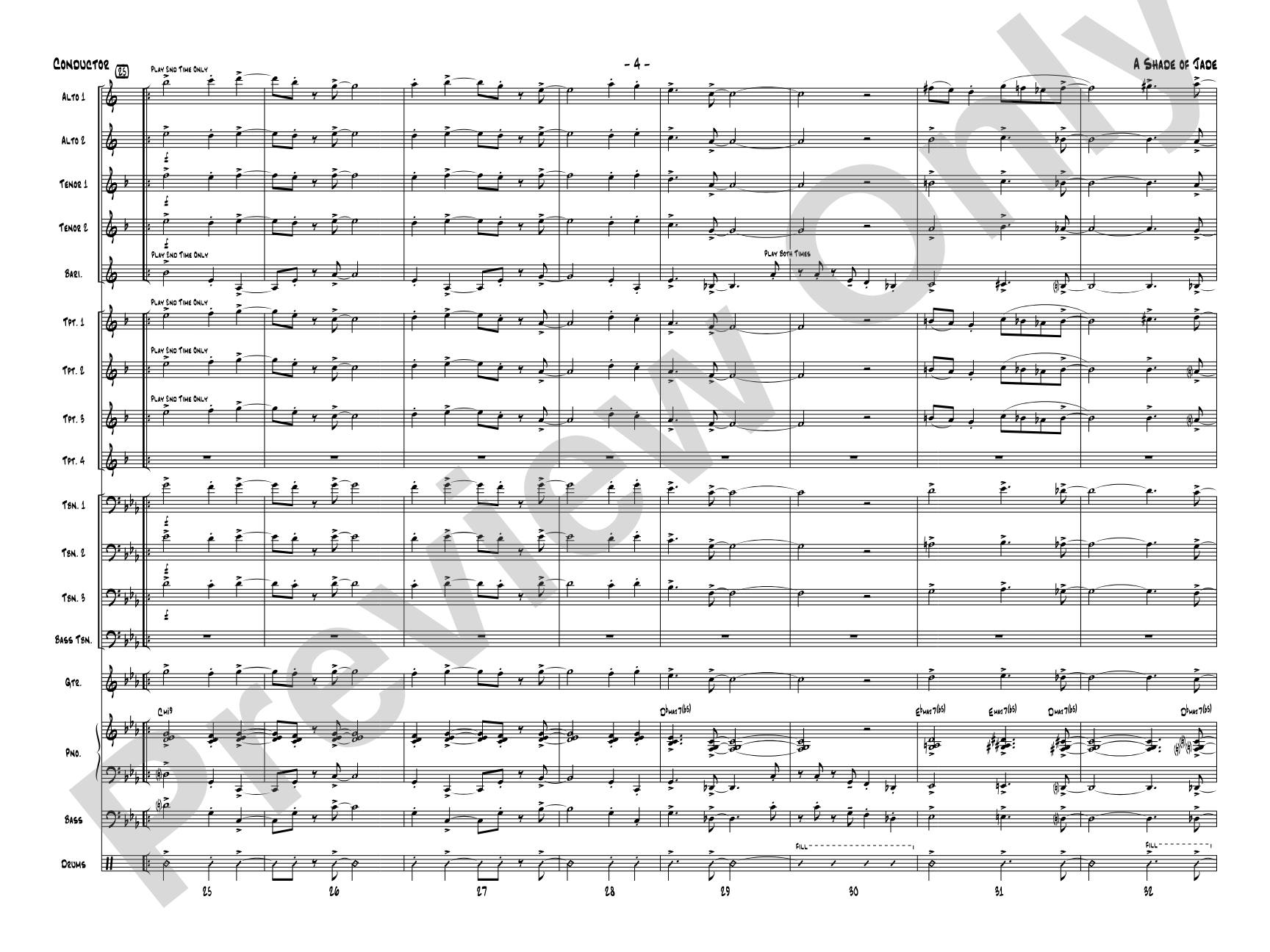
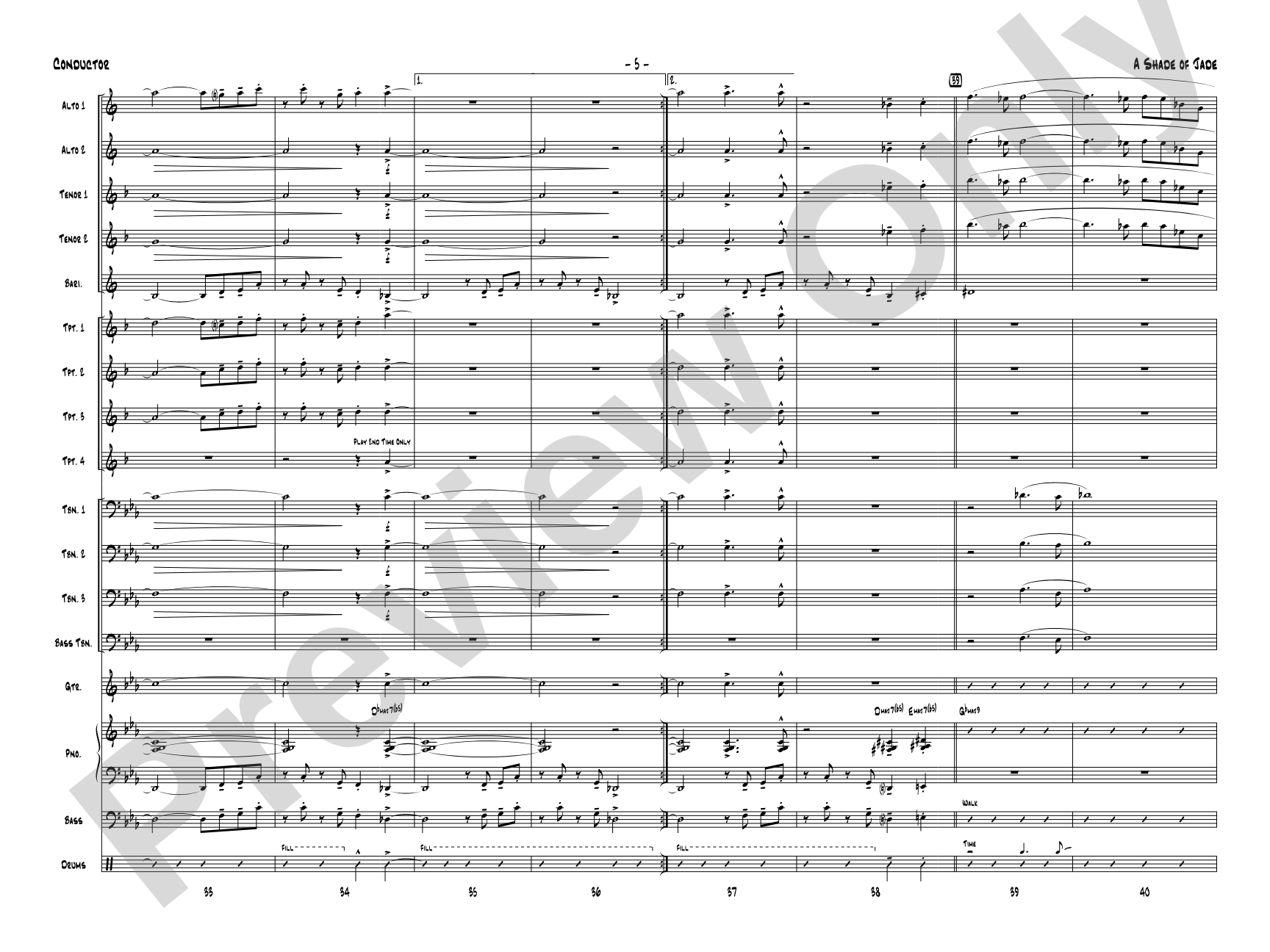
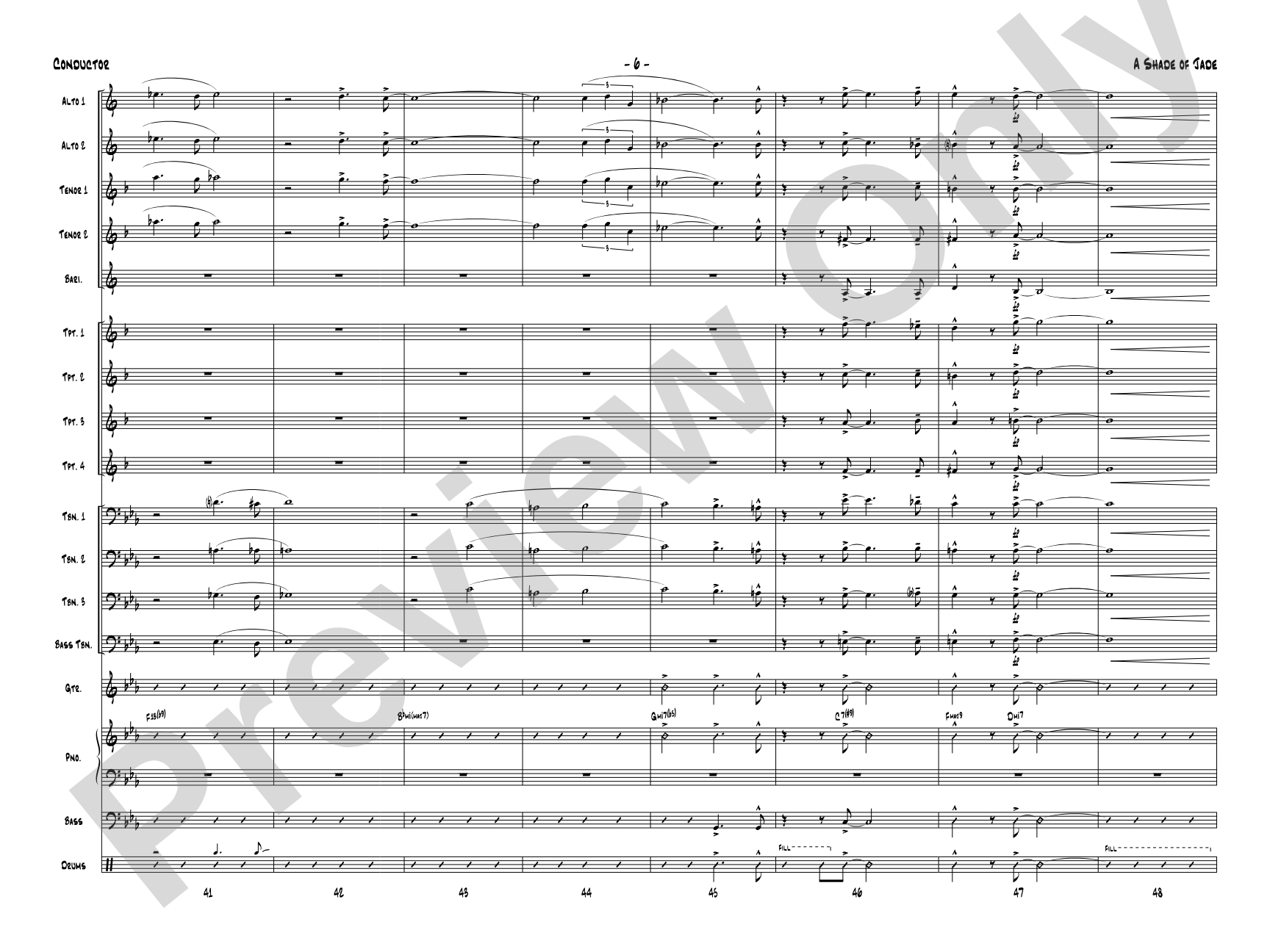
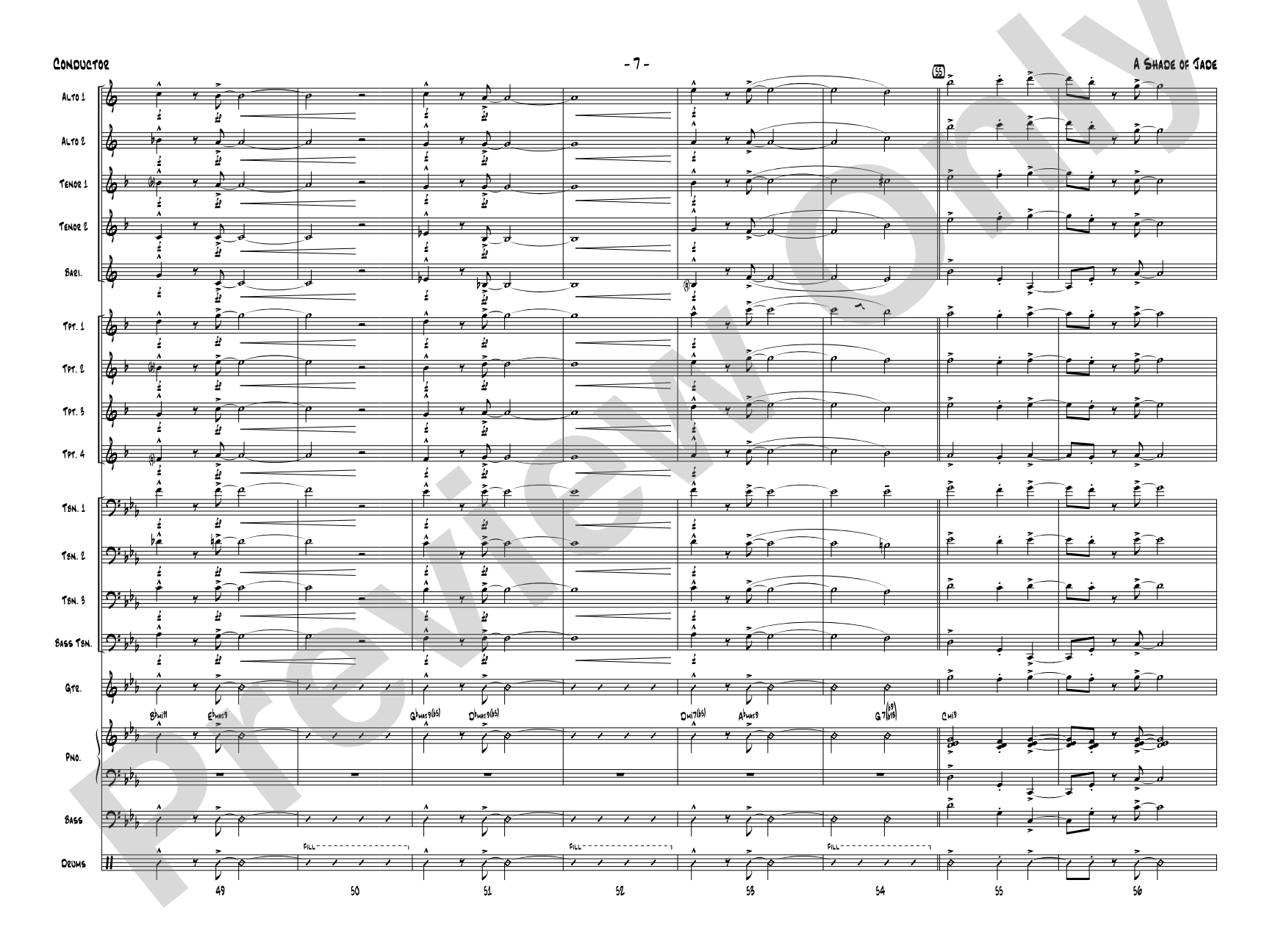
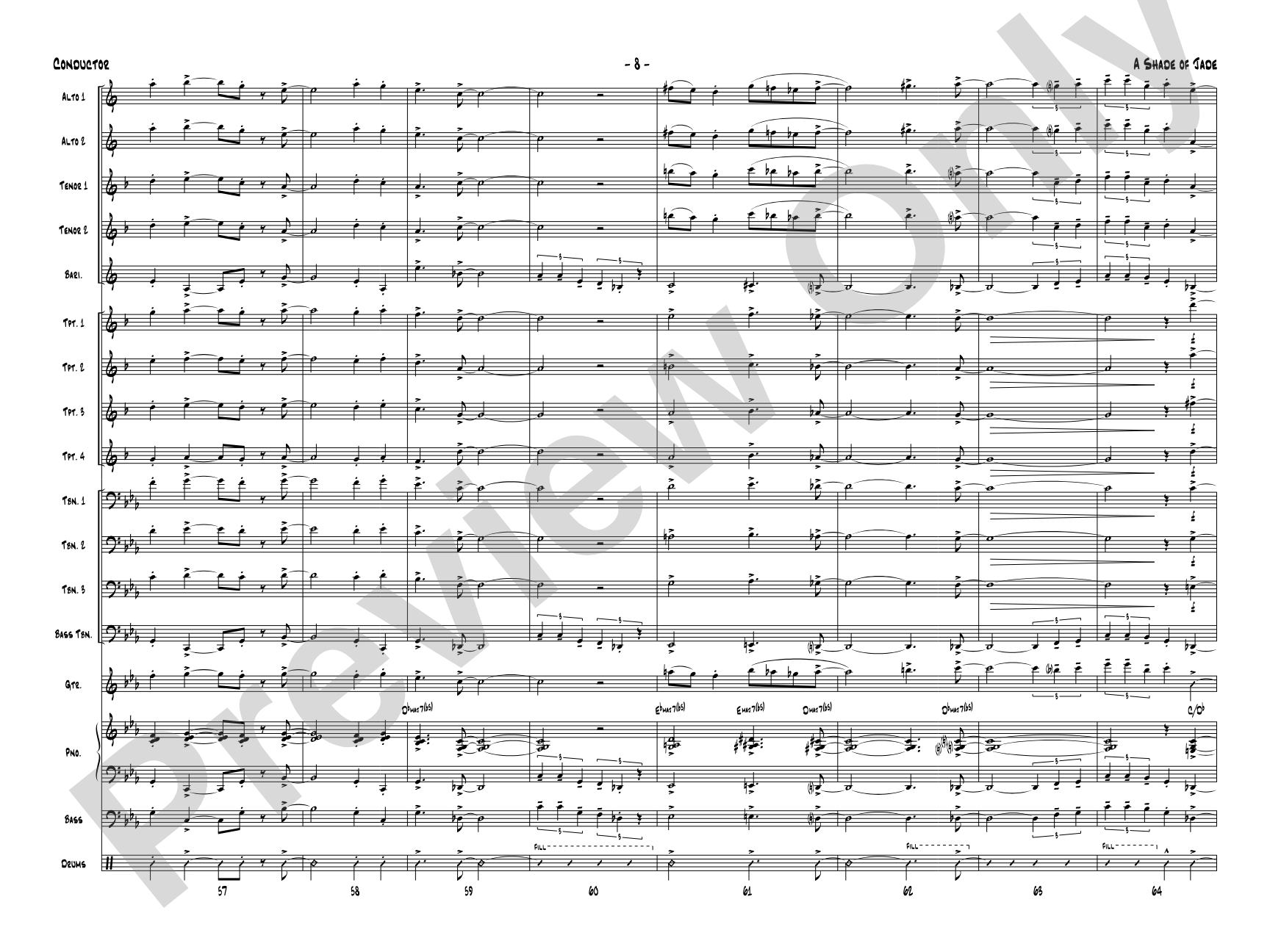
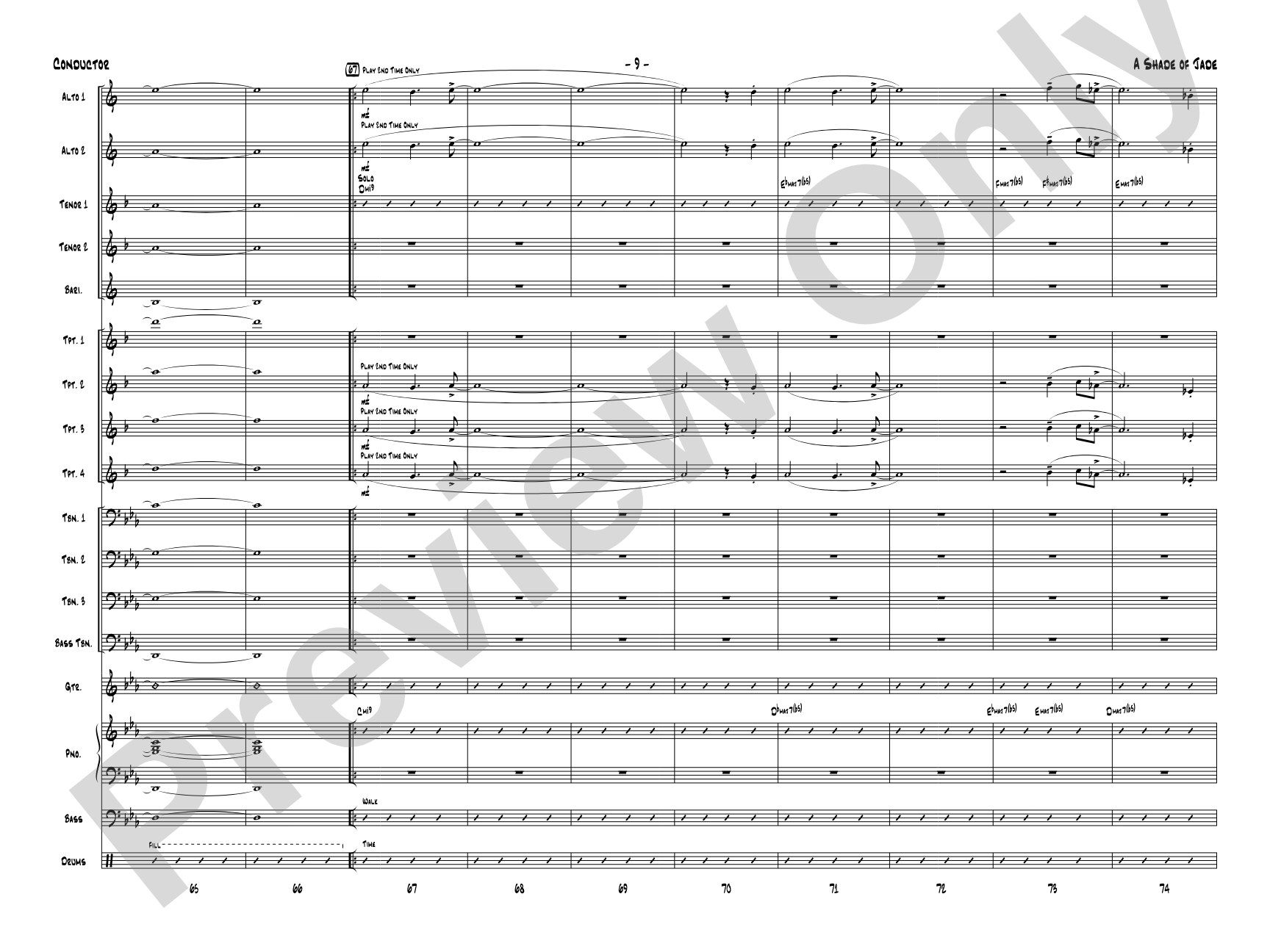
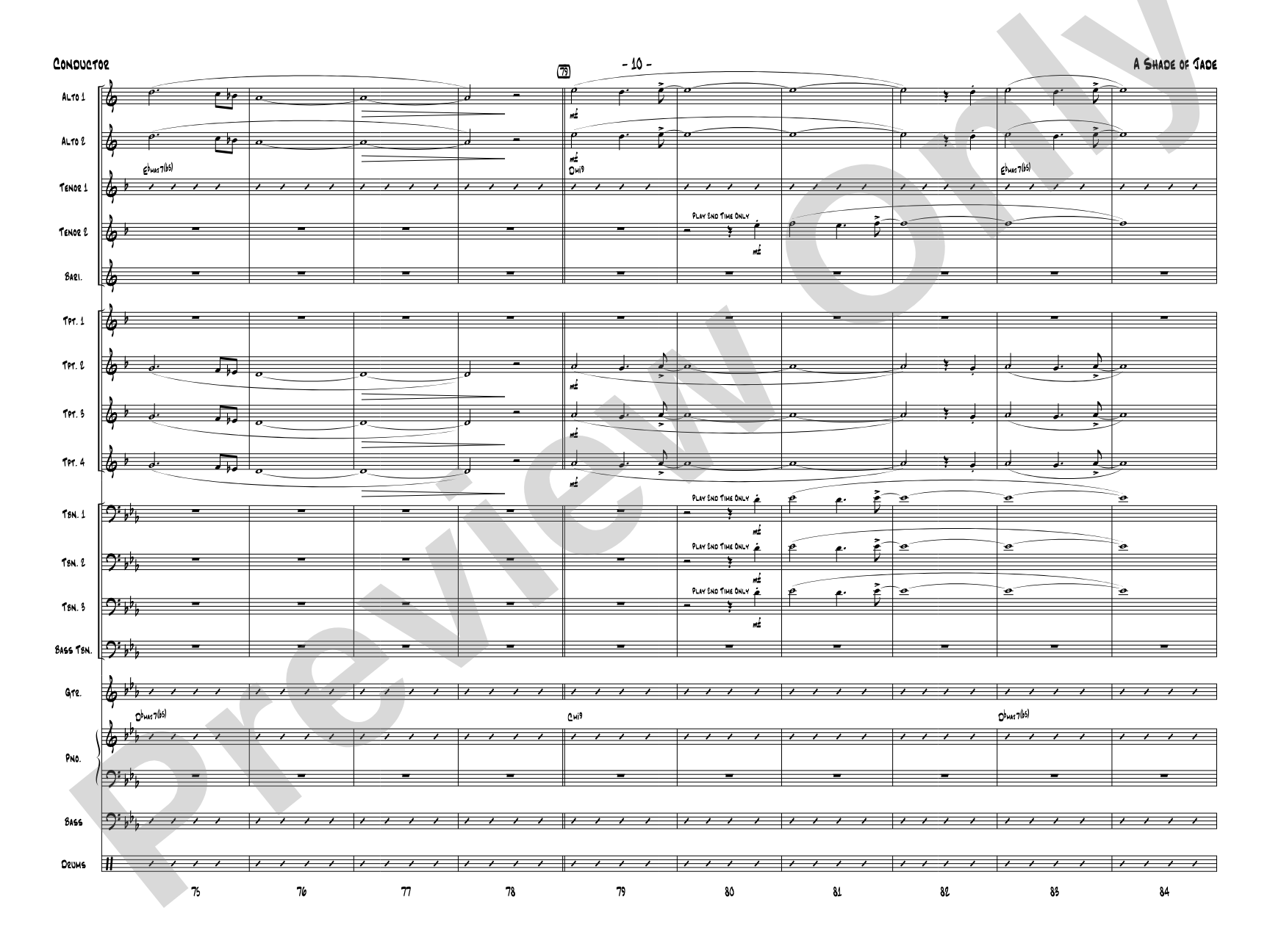
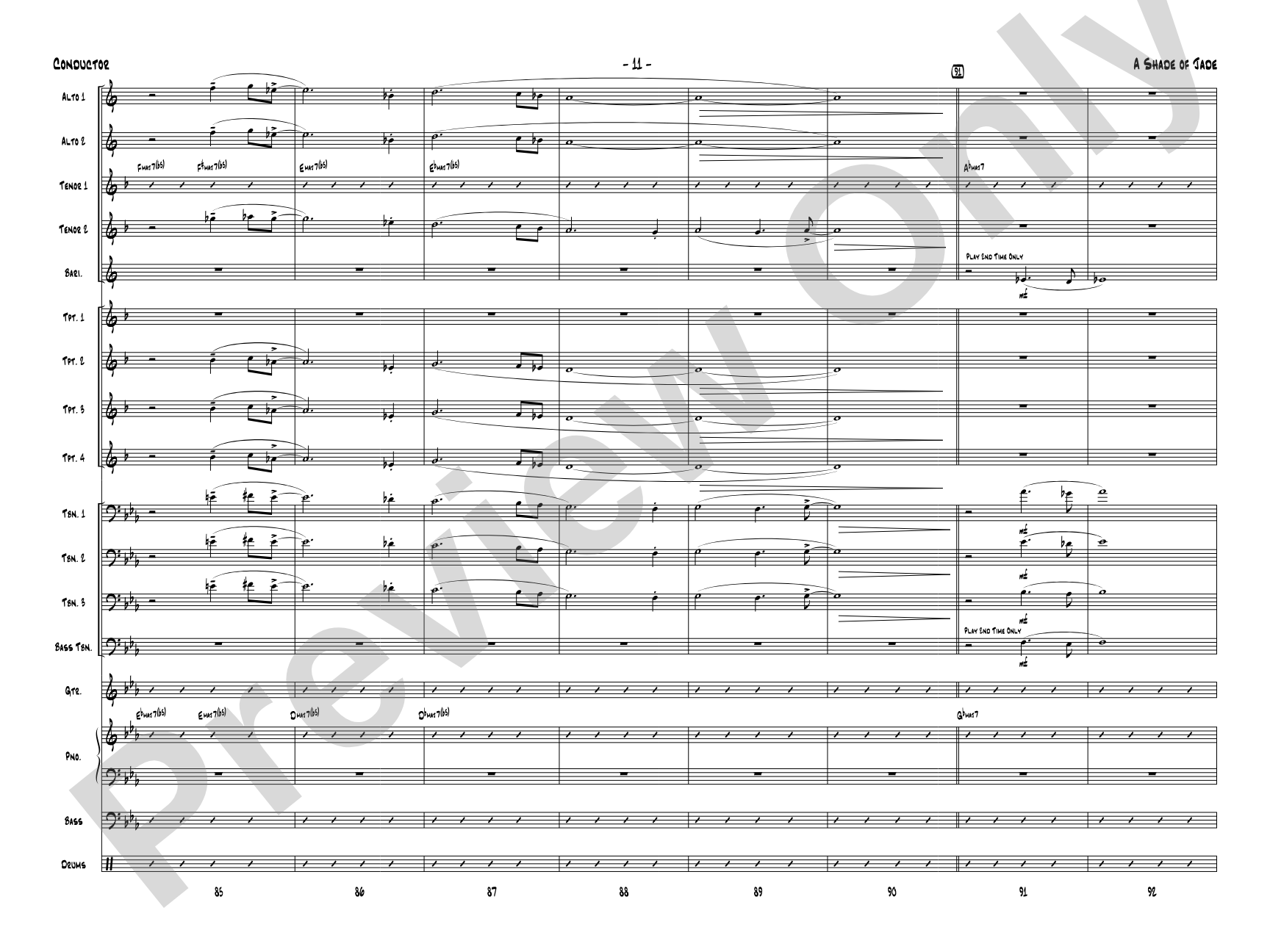
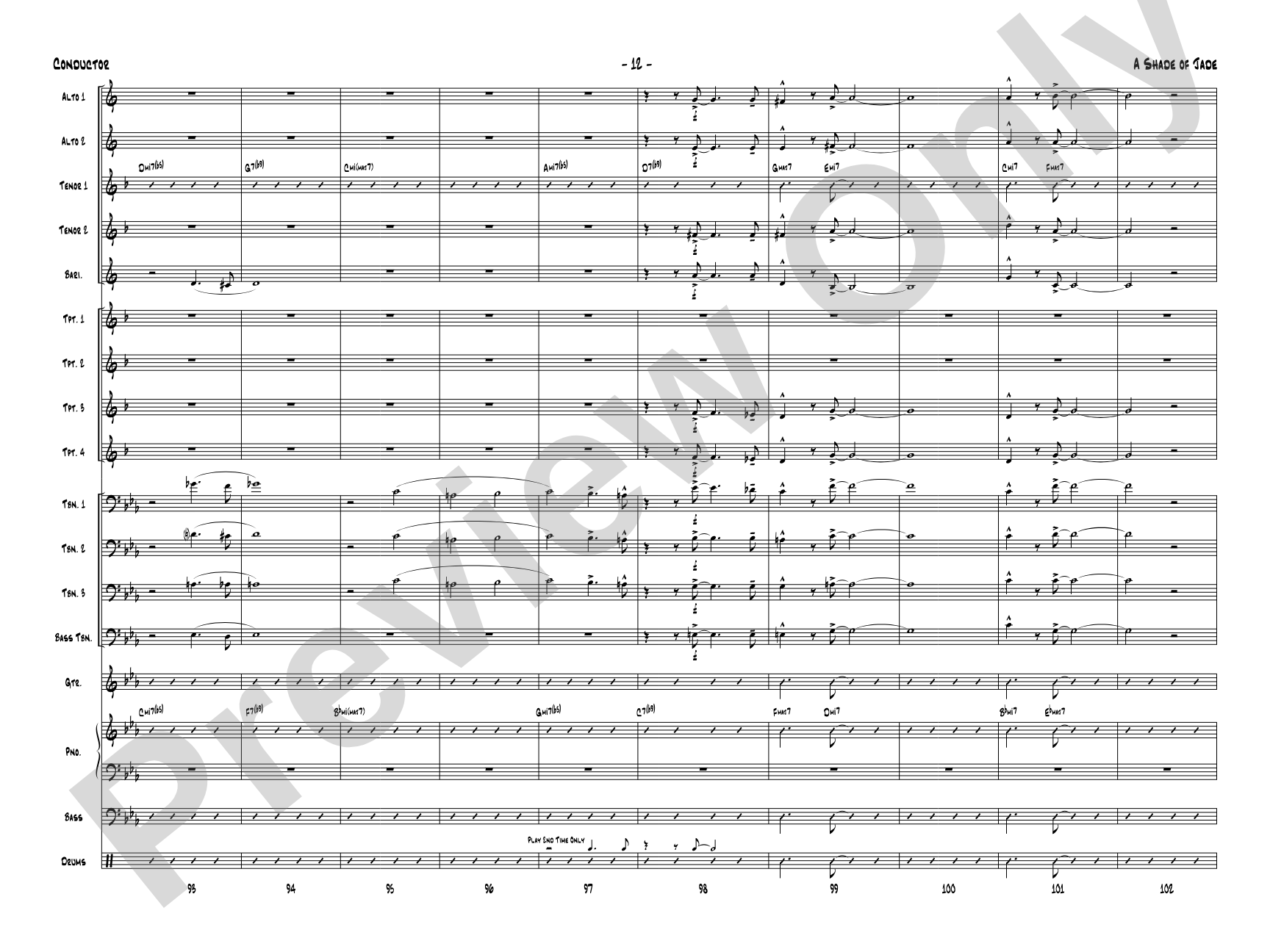
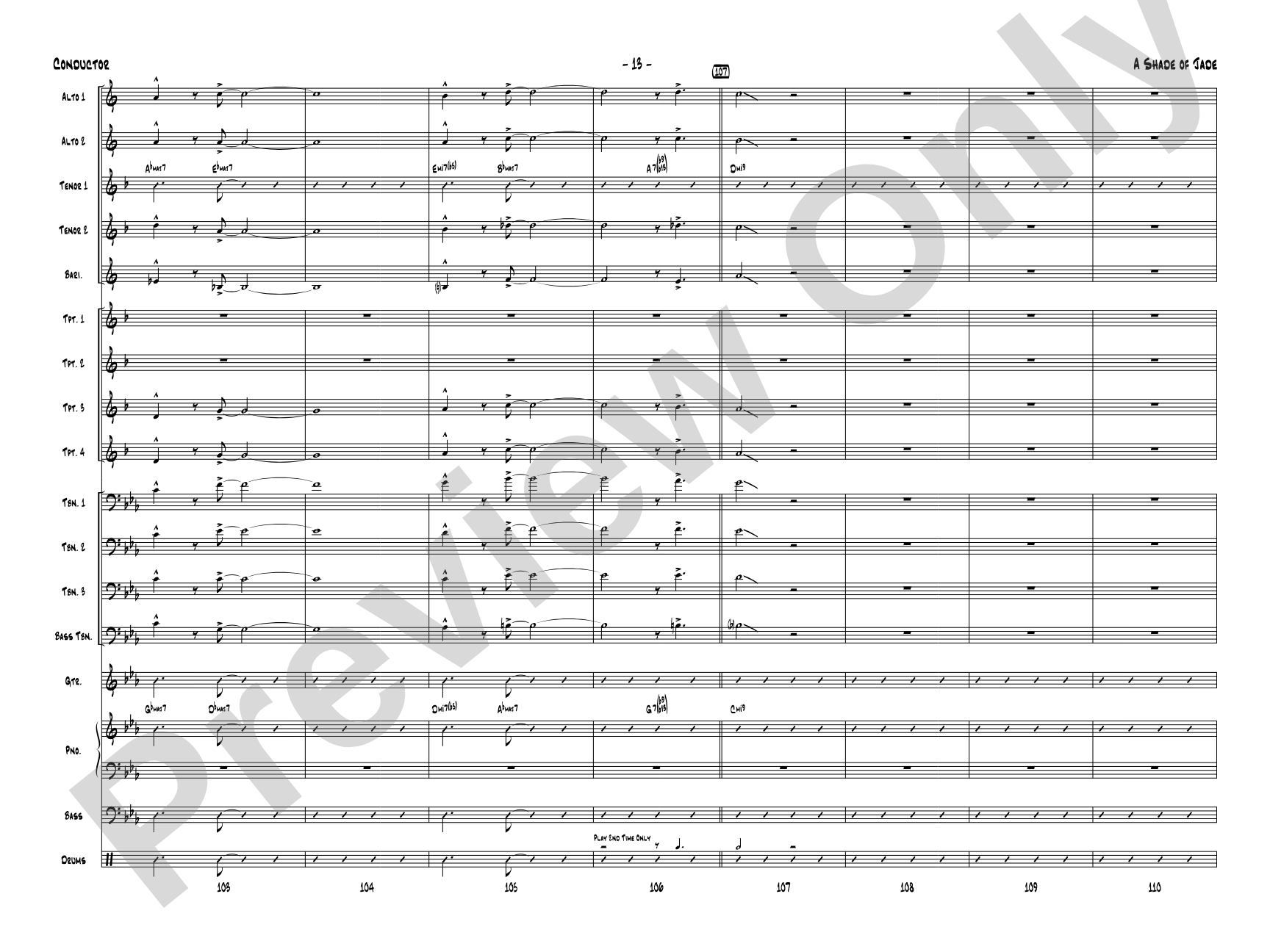
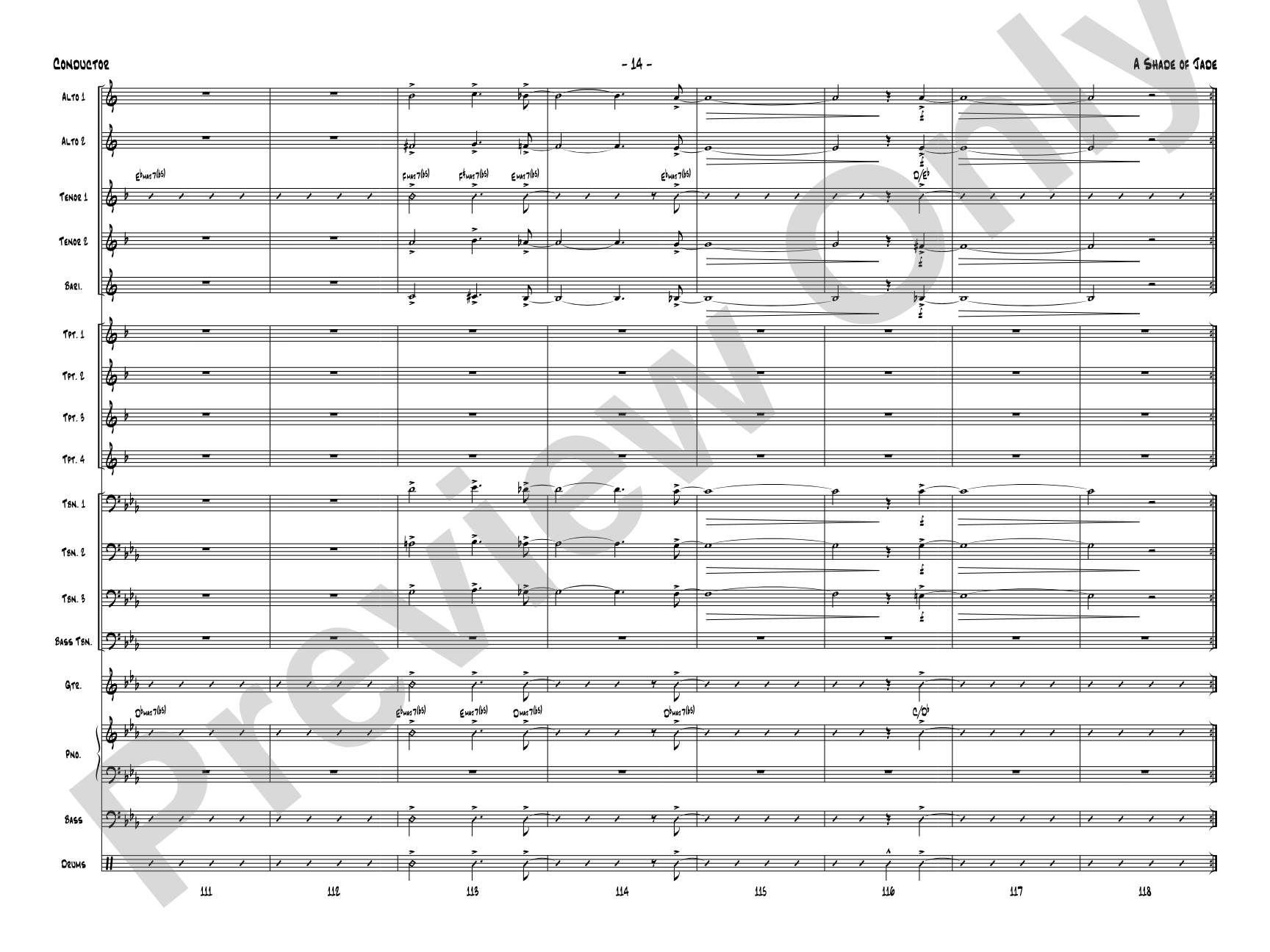
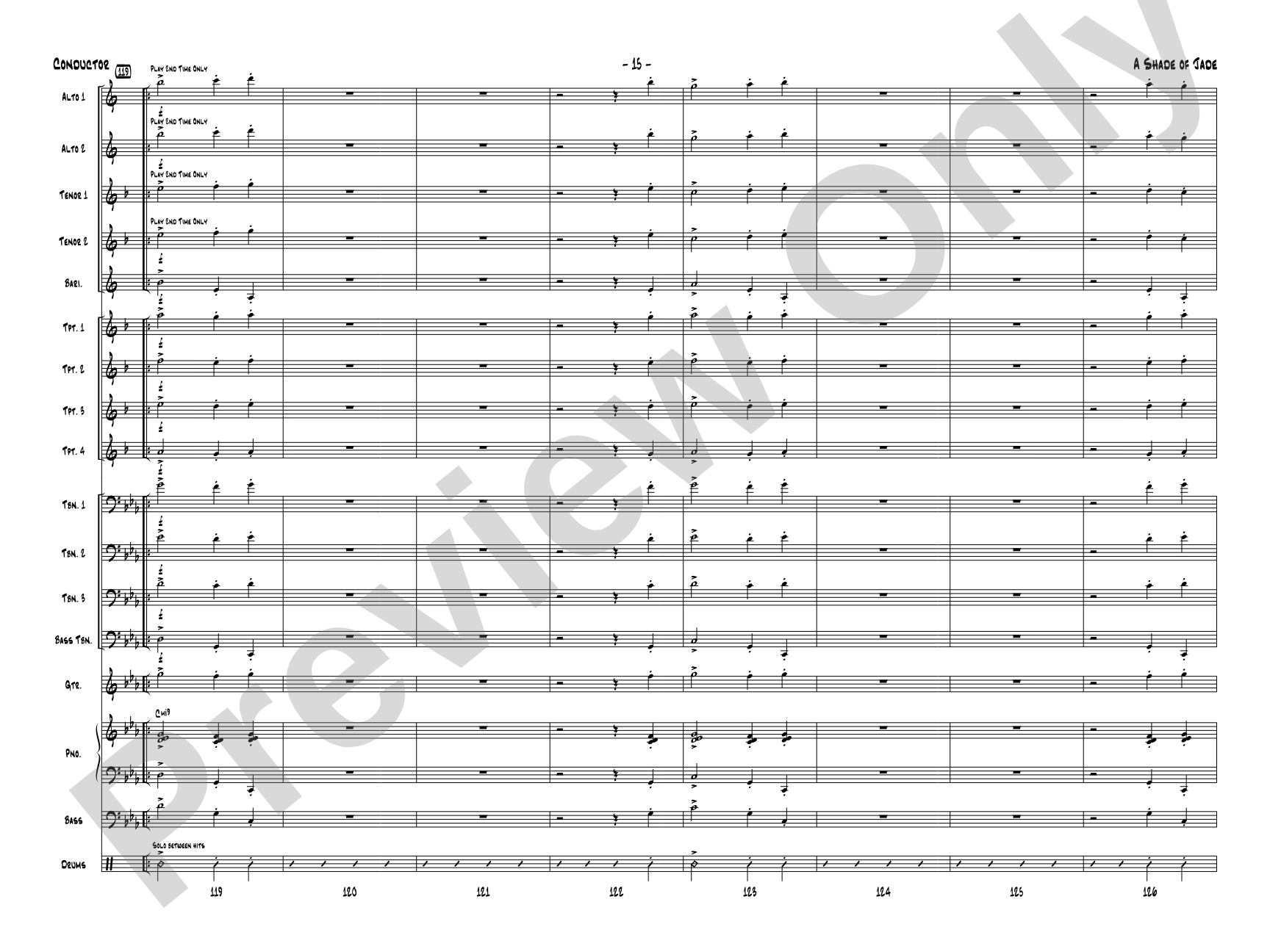
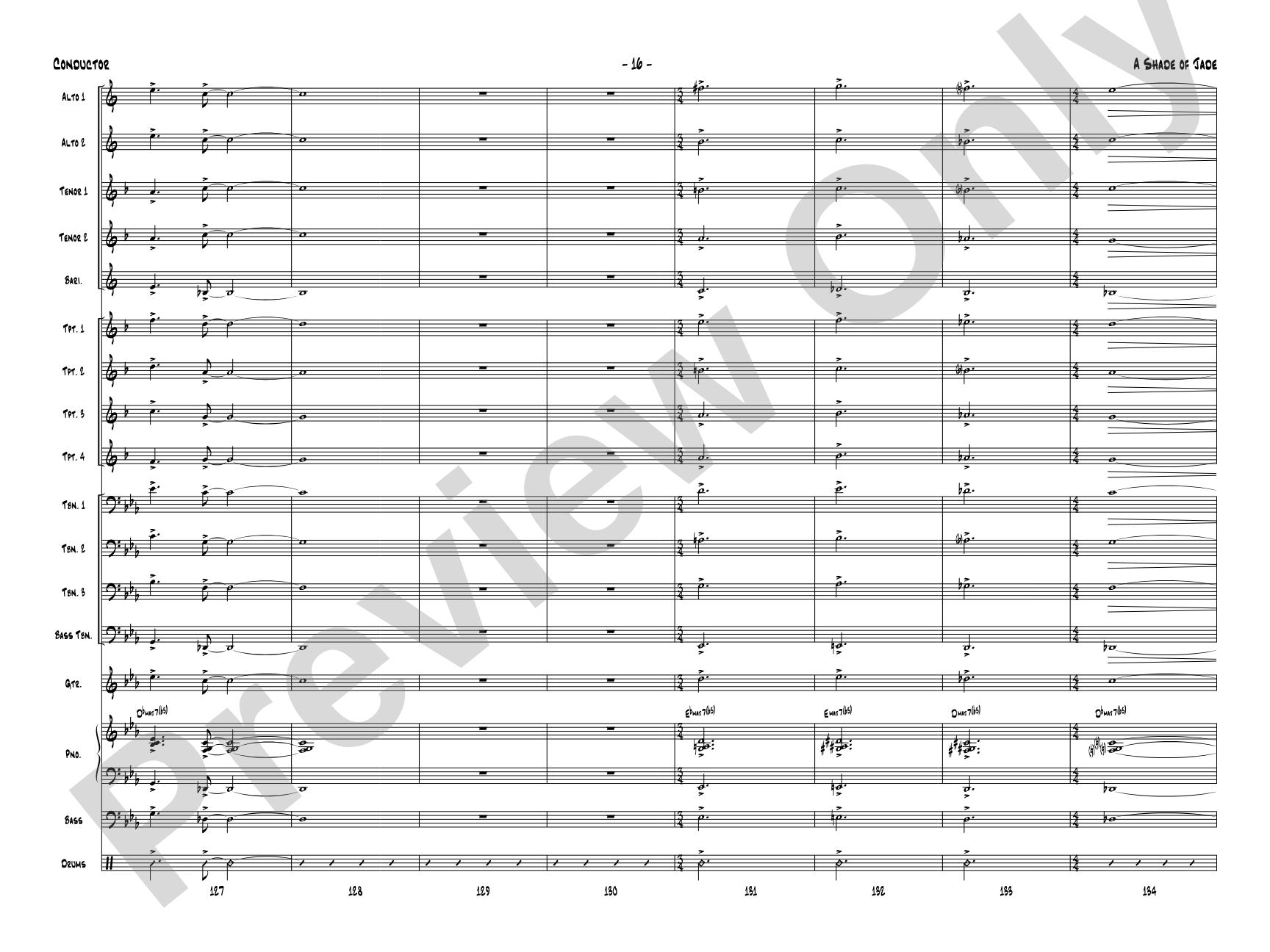
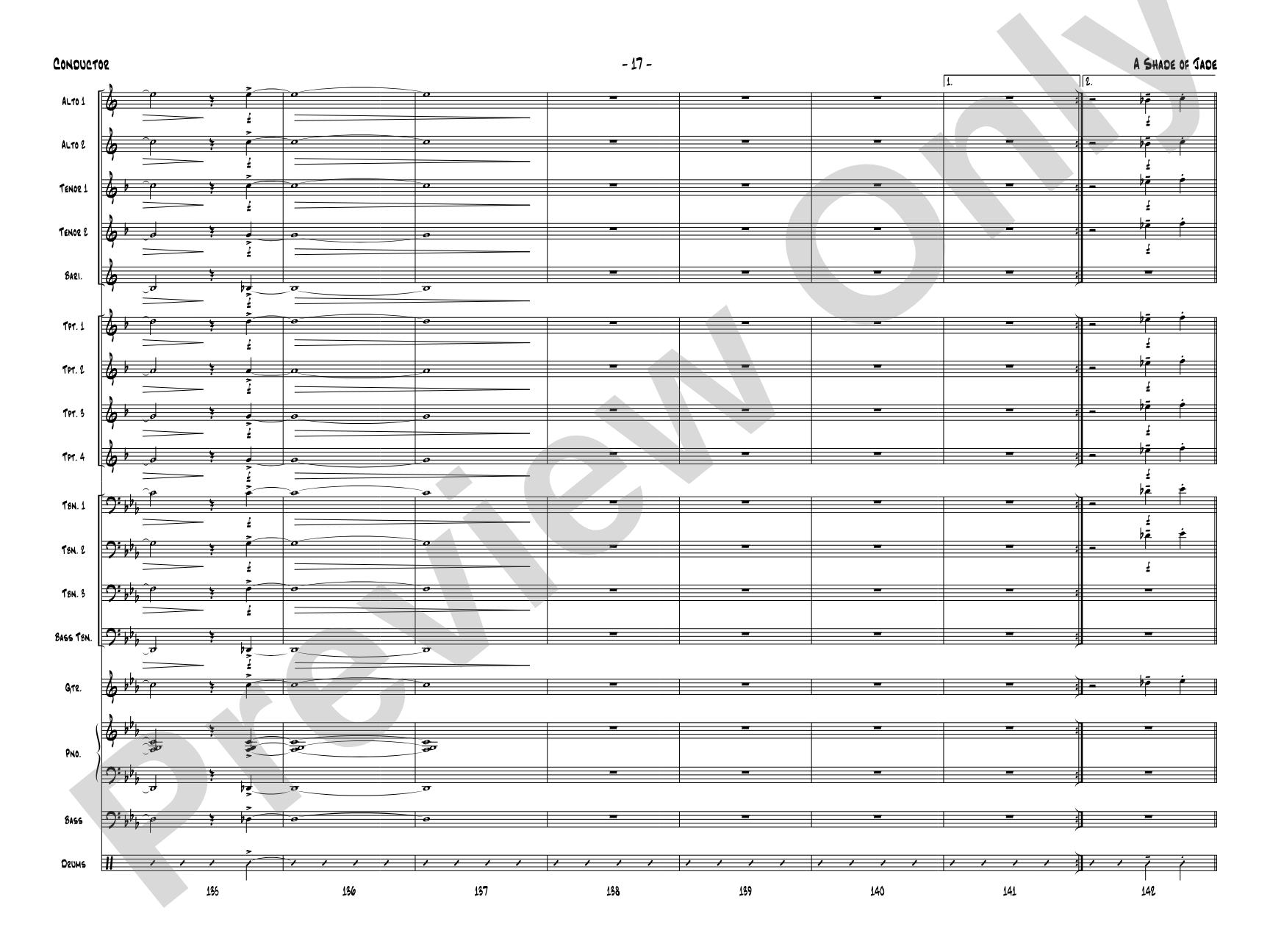
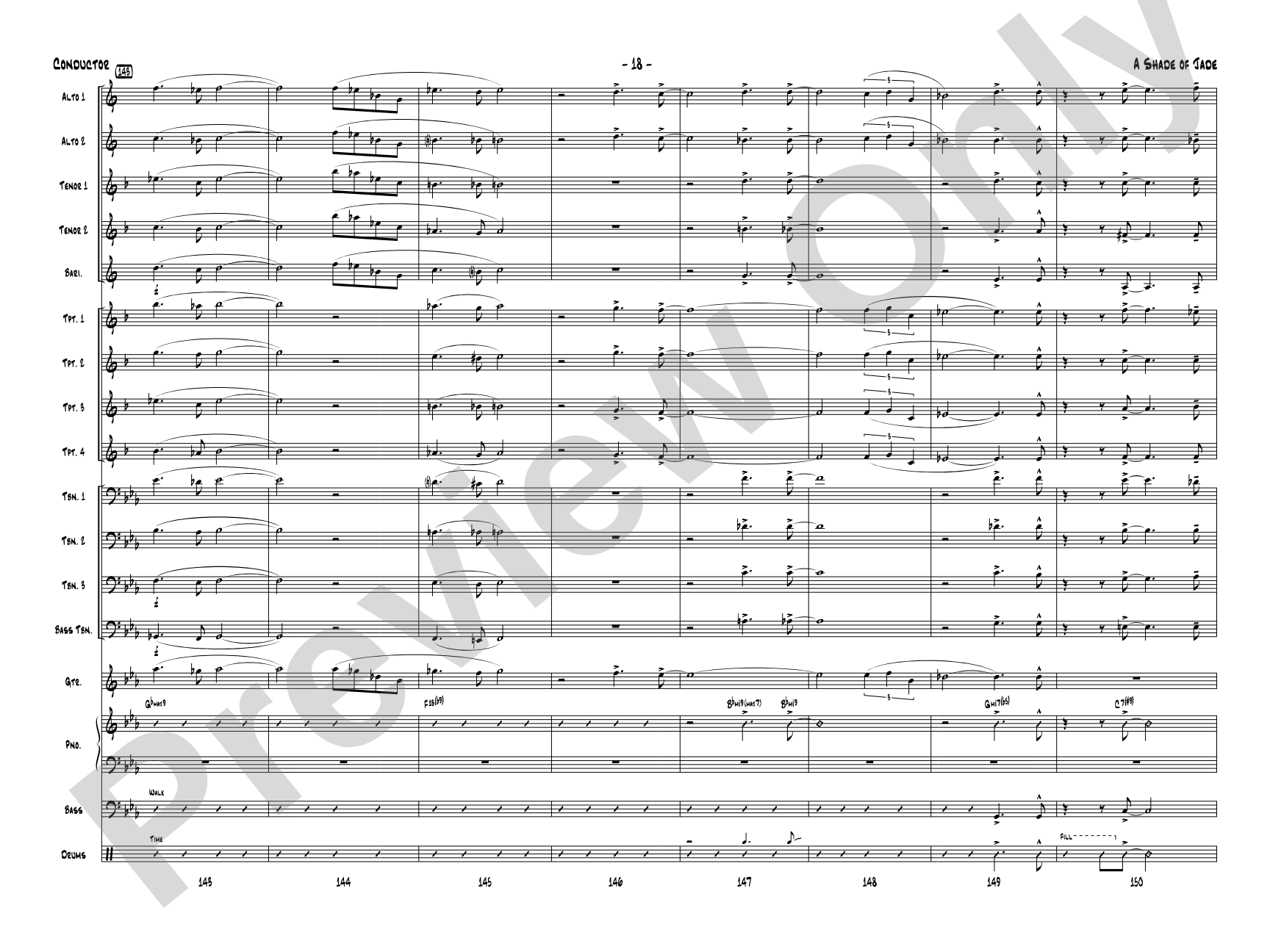

A Shade of Jade: Jazz Ensemble Conductor Score & Parts
By Joe Henderson / arr. Alan Baylock
Grade: 4 (Medium Advanced / Difficult)
Item: 00-PK-0008321

$62.00
One moment…
Description
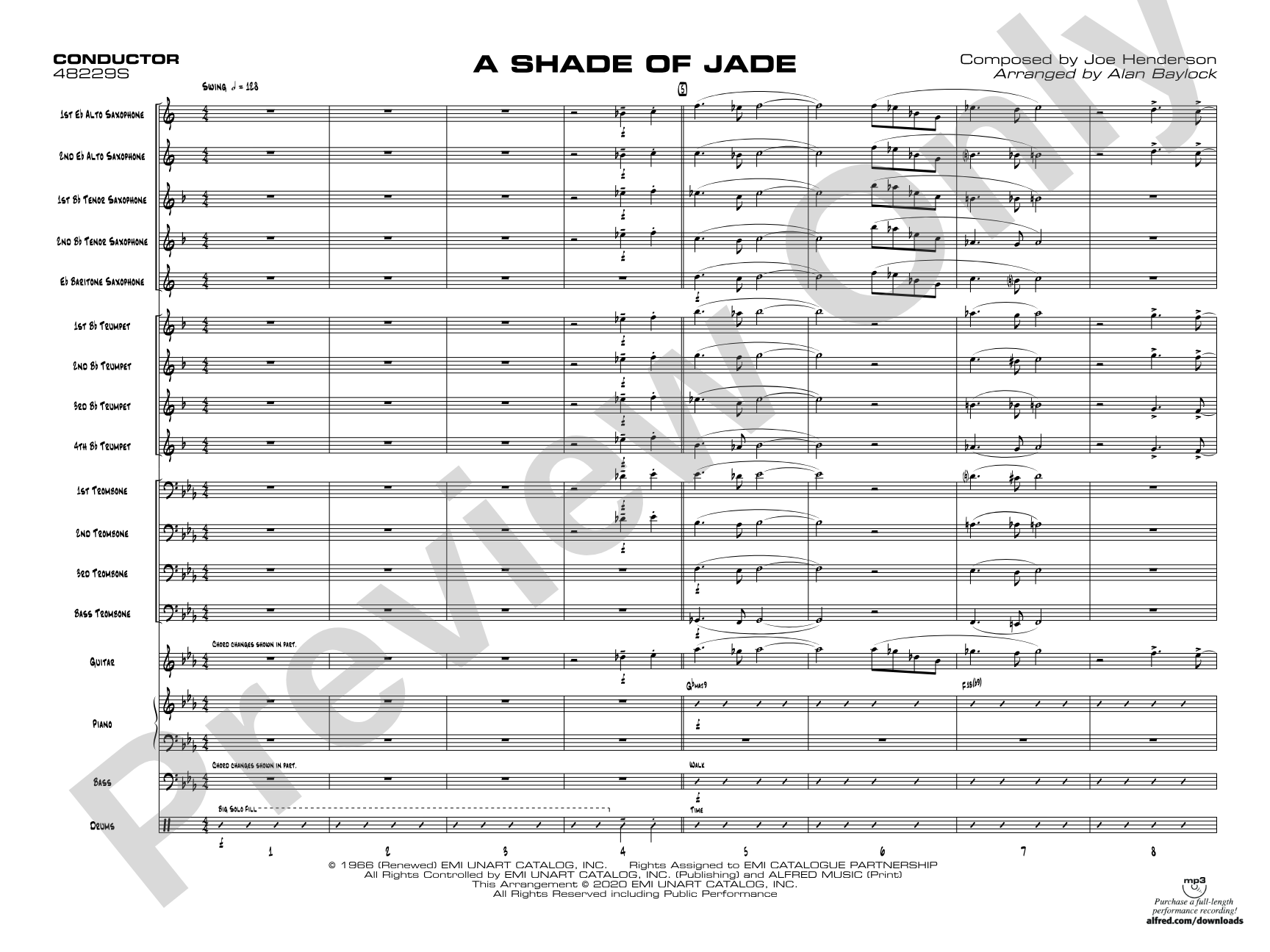
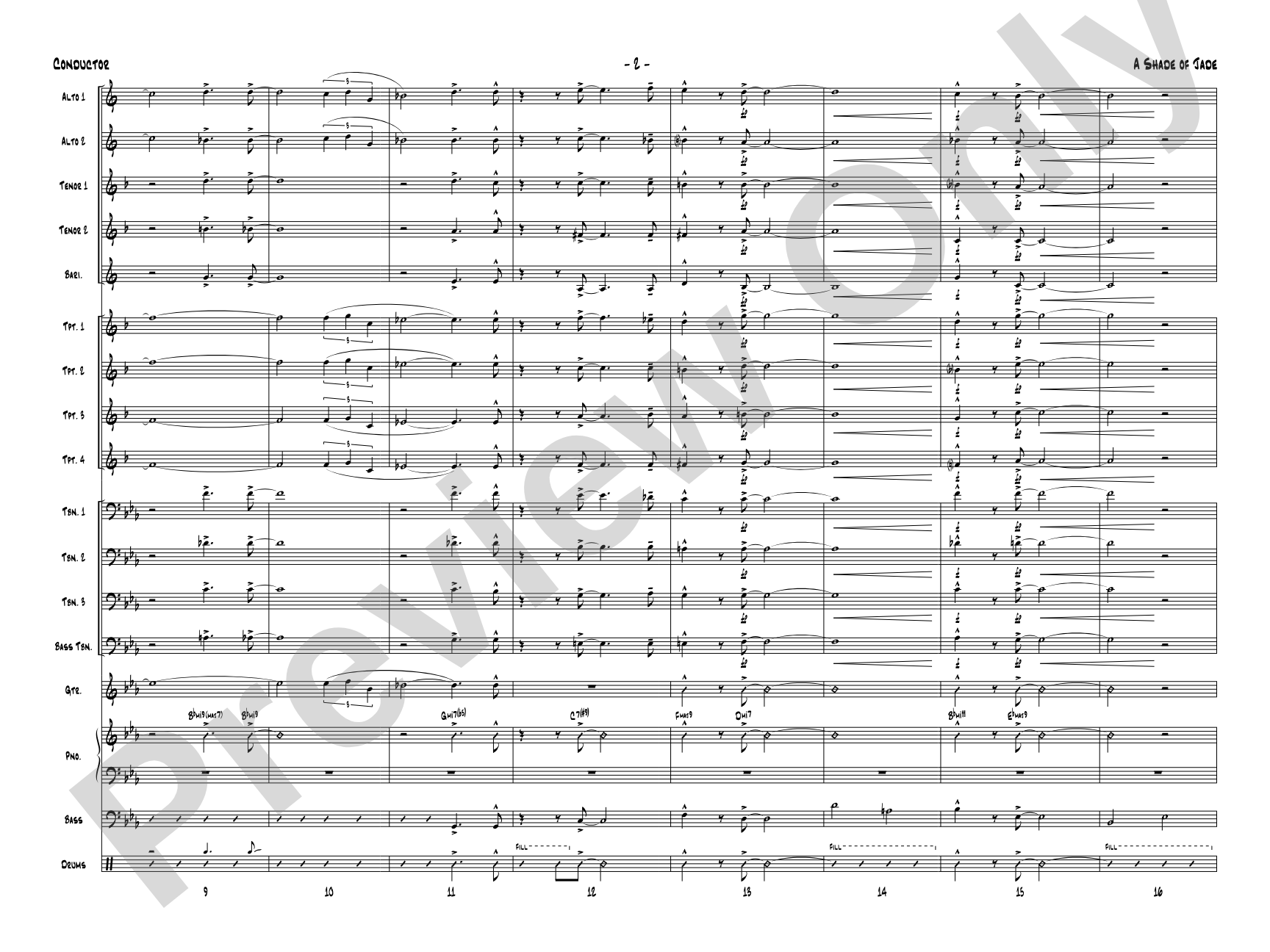
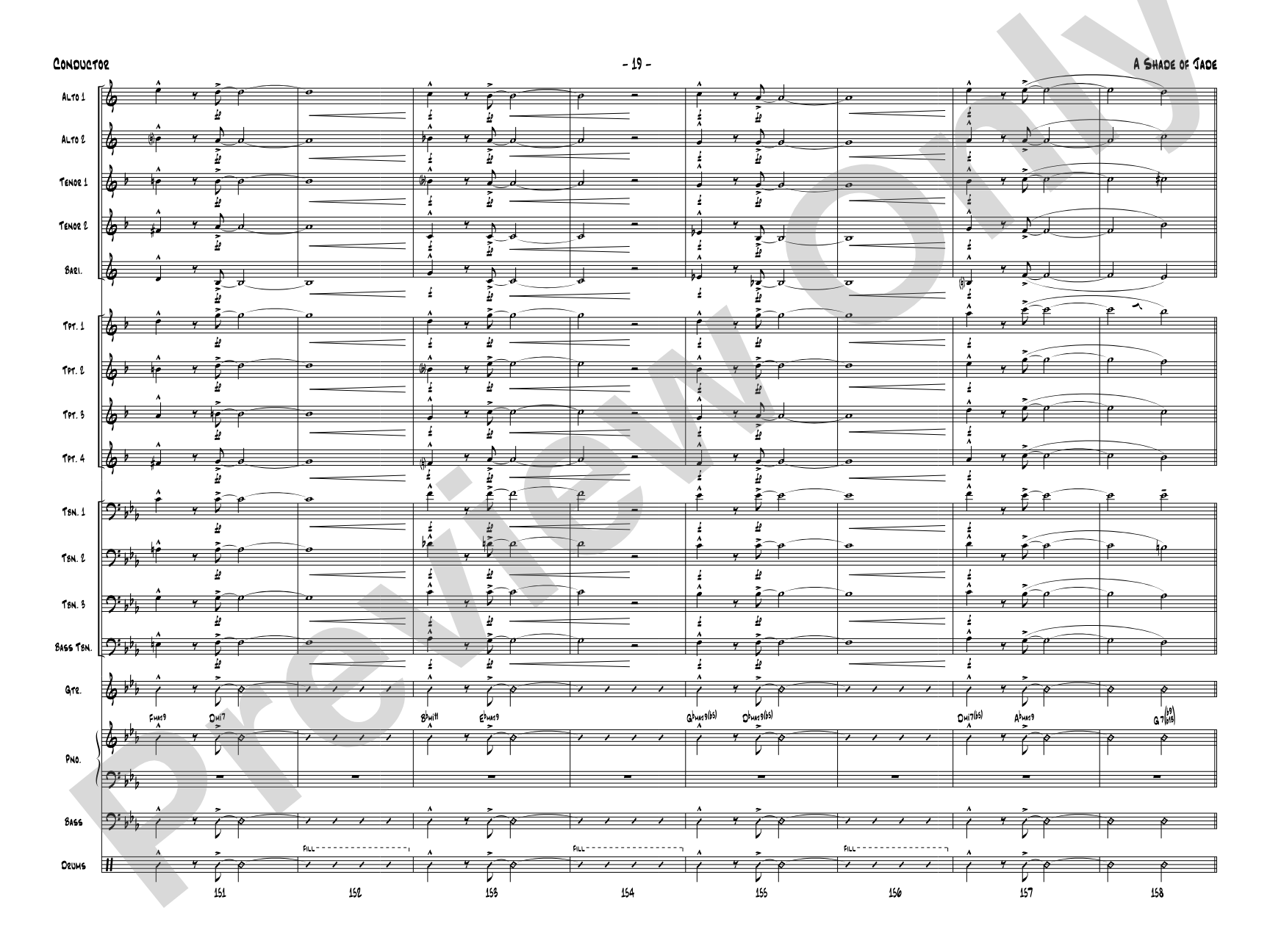
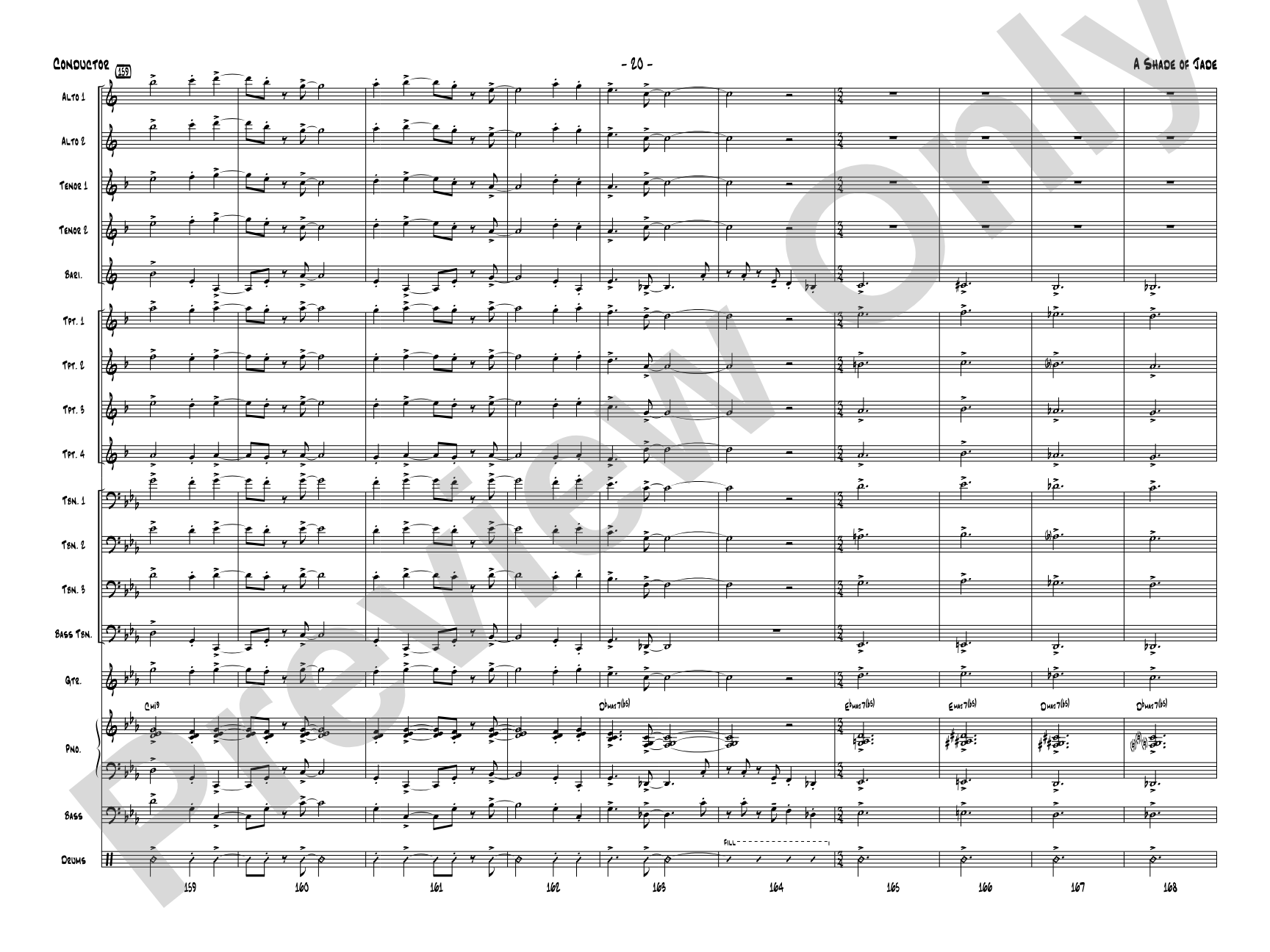
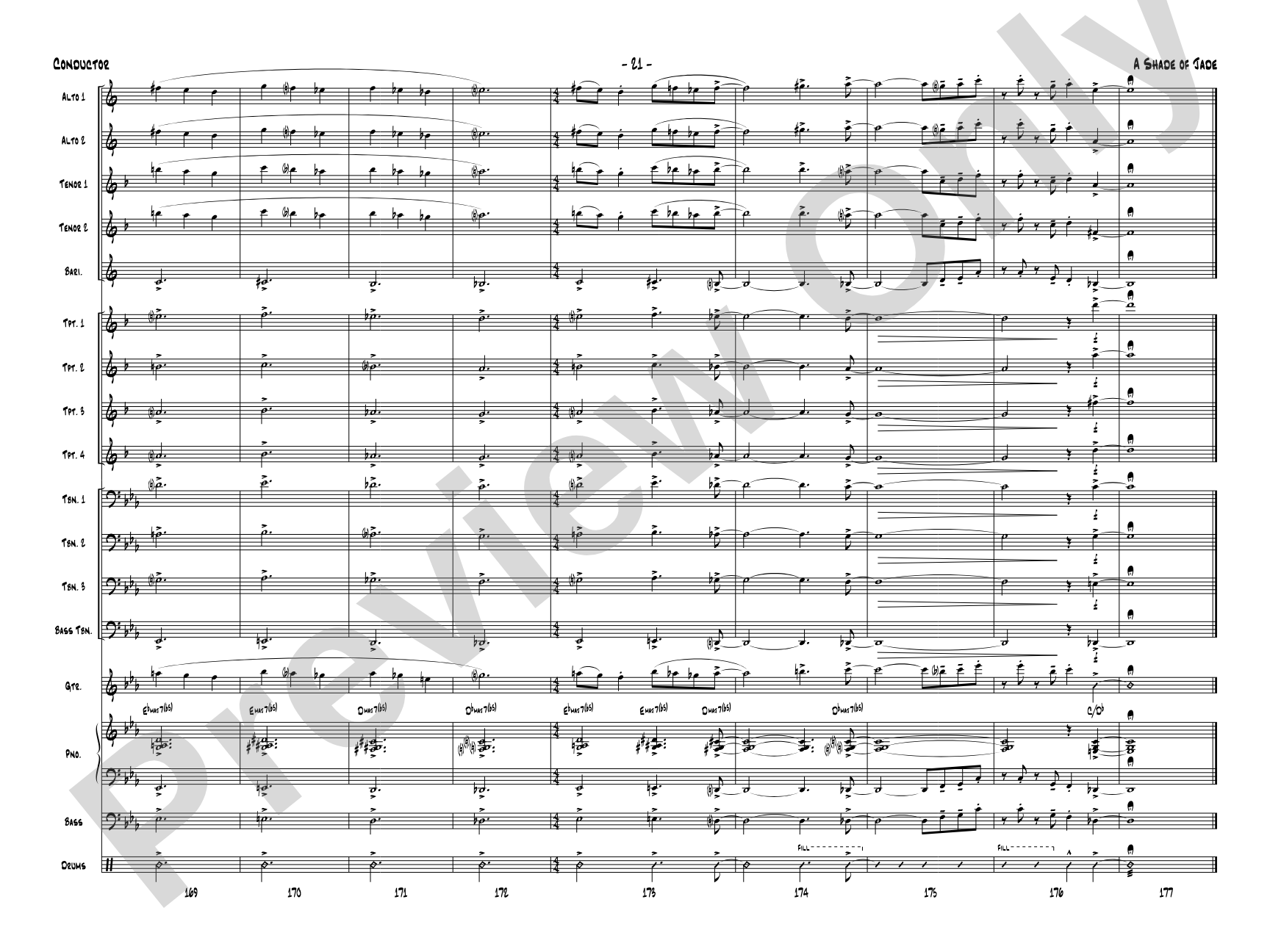
Shade of Jade arranged by Alan Baylock is high energy swing! A jazz standard that is a terrific vehicle for your more advanced band with solo space for tenor 1 and drumset. Lead trumpet range is up to written high D. This chart cooks every measure. First class writing! (3:20) This title is available in MakeMusic Cloud.


Don't just read it, hear it, play along with it, and watch your students grow with it. In MakeMusic Cloud, A Shade of Jade: Jazz Ensemble Conductor Score & Parts comes alive with professional accompaniment, adjustable tempo, and built-in practice tools that turn solo practice into real progress.
Open in the Player
Jump straight in and assign it today.
Start Your Free Trial
Open this title and explore the full library in minutes.
Sample Audio
1
Audio File
--:--
0:00
0:00
Sample Video
Additional Details
Series:
Premier Jazz Series
Publisher:
Alfred Music
Page Count:
74
SKU:
00-PK-0008321
More about this title
About the Composer: Joe Henderson
Joe Henderson stands as one of jazz's most prolific and influential tenor saxophonists, equally commanding as a composer and bandleader. His writing voice is distinctive: harmonically sophisticated, rhythmically inventive, and always in service of melody. Henderson's compositions have become standards in the jazz repertoire, recorded by everyone from Miles Davis to Herbie Hancock, and they remain essential material for serious jazz ensembles.
Why we love this
Baylock's arrangement captures the essential swagger of a Henderson composition while engineering it specifically for ensemble success. The balance of ensemble unison, solo spotlight, and collective interplay gives every player something meaningful to do, and the writing sits genuinely comfortable for advanced high school and college players rather than forcing showiness.
What to expect
High-octane swing that crackles with forward motion from the opening measures through the final shout. The energy never lets up, but the writing stays musical and never sacrifices groove for gymnastics; this is a chart that rewards both precision and feel.
Who it's for
Advanced high school jazz ensembles and college-level groups looking for a vehicle that combines technical demands with genuine musical substance. Your tenor soloist needs security and musicality, and your ensemble needs players who can execute tight ensemble writing while maintaining a relaxed swing feel.
How to get the most out of it
- The tenor 1 solo demands secure changes and rhythmic confidence; have your soloist work the changes separately before bringing the full arrangement into the room.
- Keep the groove locked between your drumset player and bass line; this chart's energy lives in that pocket, so rehearse them together early and often.
- Watch the lead trumpet's high D passages for intonation strain; take them at tempo in sectional rehearsal and address support from the section rather than just the lead player.
- Front-load work on the rhythmic figures in the ensemble sections; the swing feel depends on precision, not just feel, especially in tighter unison passages.
How to use it
Deploy this as a centerpiece for a jazz concert where you want to showcase both ensemble chops and individual soloist talent. It pairs naturally with uptempo standards and works equally well as a program opener or closing number that leaves the audience energized.
Skills your students will build
- Swing groove and rhythmic precision in ensemble context
- Secure navigation of jazz harmonic changes
- Solo construction and improvisation over chord changes
- Lead trumpet register extension and intonation in upper range
- Section balance and blend in tight unison figures
- Communication and lock between rhythm section and ensemble