A Scottish Hymn: E-flat Baritone Saxophone Sheet Music Preview

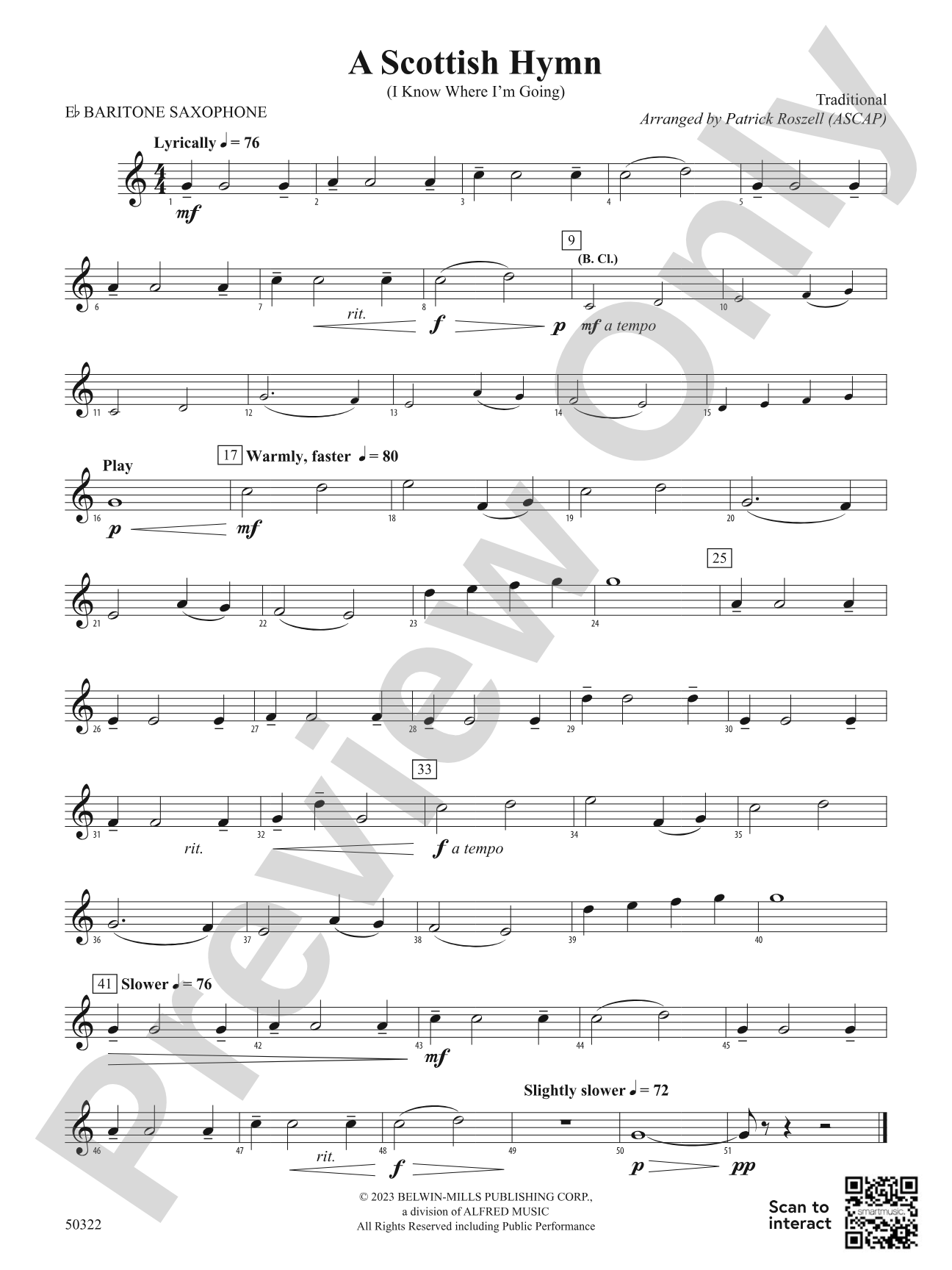
A Scottish Hymn: E-flat Baritone Saxophone

(I Know Where I'm Going)

Traditional / arr. Patrick Roszell

Grade: 1

Item: 00-PC-0018990_BTX

Digital Download
$3.00
Description
Based on the folk song "I Know Where I'm Going," A Scottish Hymn, by Patrick Roszell, is a lush ballad setting that is perfect for teaching lyrical playing to younger musicians. This setting provides numerous teaching opportunities for slurring, legato tonguing, phrasing, intonation, and dynamic shaping. The perfect selection for your next concert or contest! (1:55)

Don't just read it, hear it, play along with it, and watch your students grow with it. In MakeMusic Cloud, A Scottish Hymn: E-flat Baritone Saxophone comes alive with professional accompaniment, adjustable tempo, and built-in practice tools that turn solo practice into real progress.

Sample Audio
0:00
0:00
Sample Video
Additional Details
Series: Belwin Beginning Band
Publisher: Alfred Music
SKU: 00-PC-0018990_BTX

More about this title

Why we love this

This arrangement transforms a beloved Scottish melody into a genuine teaching vehicle rather than a showpiece. Roszell understands what Grade 1 musicians need to develop musicianship: every phrase asks them to shape tone, balance a legato line, and listen critically to intonation. The contest-ready polish doesn't come at the expense of pedagogy.

What to expect

Warm and reflective. The folk melody carries genuine emotional weight while remaining approachable; there's nothing condescending about the voicing. Young players feel the piece's earnest character and respond by engaging with their sound rather than simply reading notes.

Who it's for

Beginning band directors working with Grade 1 ensembles who want serious musicianship content in an accessible package. This works equally well as a concert piece or contest selection for musicians still developing fundamental tone production and phrasing skills.

How to get the most out of it

  • Shape each phrase with a gentle arc rather than playing straight through. Young musicians often need permission to breathe musically; mark your score with breath points that support the melody's natural contours.
  • Address legato tonguing early in sectional rehearsals. Isolate 2-4 bar passages and have students match the articulation of their section before adding the full ensemble.
  • Balance the melody carefully during dynamic changes. Players holding accompanimental figures often grow louder as the lead voice swells; establish what "background" actually sounds like.
  • Use the recording as a reference for phrasing and overall shape, not tempo enforcement. Younger ensembles benefit from hearing how the melody breathes, then finding that character in your rehearsals.

How to use it

Program this as the emotional anchor in a mixed concert, where it will sit comfortably between march or overture selections. Its two-minute length and reflective mood make it an excellent closer for a concert portion or a strong opening for a ballad-forward program.

Skills your students will build

  • Legato tonguing and sustained slurring
  • Phrase shaping and breath management
  • Intonation tuning within lyrical contexts
  • Dynamic control and balance awareness
  • Listening to ensemble voicing while maintaining individual line integrity

You May Also Like