A Salute to Benny Goodman: Drums Sheet Music Preview

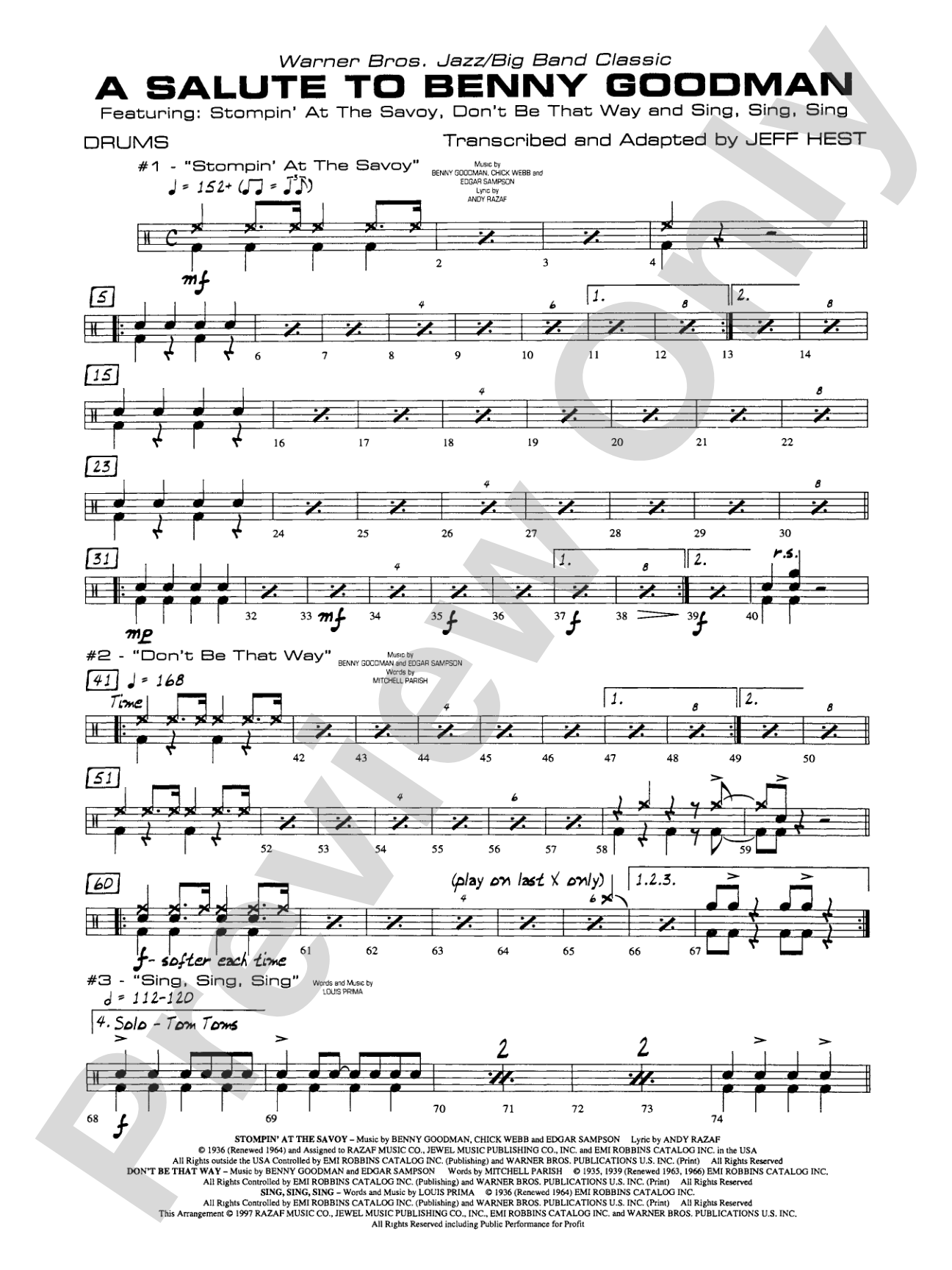
A Salute to Benny Goodman: Drums

Transcr. and adapted by Jeff Hest

Grade: 4 (Medium Advanced / Difficult)

Item: 00-PC-0016120_D

Digital Download
$3.00
Description
One of the greatest big band leaders of all time is duly honored in this medley of jazz standards. Jeff Hest has reworked these jazz masterpieces into a tightly knit mixture of Benny's best that will appeal to both performer and audience alike. It's a perfect opportunity to teach your students some historic (and immensely popular) jazz. (6:20)

Don't just read it, hear it, play along with it, and watch your students grow with it. In MakeMusic Cloud, A Salute to Benny Goodman: Drums comes alive with professional accompaniment, adjustable tempo, and built-in practice tools that turn solo practice into real progress.

Sample Audio
No sample audio found.
Sample Video
Additional Details
Series: Premier Jazz Series
Publisher: Alfred Music
Page Count: 74
SKU: 00-PC-0016120_D

More about this title

About the Composer: Benny Goodman

Benny Goodman (1909-1986) transformed American popular music as a clarinetist, bandleader, and composer who bridged jazz and classical worlds. His 1930s orchestra became synonymous with the swing era, delivering infectious big band arrangements that made jazz accessible to mainstream audiences while maintaining musical sophistication. Goodman's influence on ensemble playing, rhythm section development, and the art of the big band sound remains foundational to jazz education today.

Beyond his commercial success, Goodman championed racial integration in music at a time when it was groundbreaking, collaborating with Black musicians and composers when segregation was the norm. His clarinet playing set a standard for jazz musicianship, and his compositions and arrangements continue to anchor jazz curricula because they balance entertainment value with genuine musical substance.

Why we love this

Jeff Hest's arrangement distills what made Goodman's orchestra special without overwhelming a secondary-level ensemble. The medley approach lets students experience multiple swing-era standards in one rehearsal cycle, building familiarity with the vocabulary and style that defined an era. Performing this teaches your students what good swing articulation, section balance, and groove actually sound like rather than just telling them.

What to expect

Infectious, celebratory swing that swings hard while remaining musically elegant. The medley format creates momentum and variety, moving through classic Goodman themes with the infectious energy that filled dance halls and concert halls from the 1930s onward.

Who it's for

Directors of Grade 4 jazz ensembles ready to program substantive big band literature with historical weight and audience appeal. This works equally well for advanced high school groups and college ensembles looking to anchor a concert in the swing canon.

How to get the most out of it

  • Lock the rhythm section (drums, bass, piano) into a steady swing pulse before layering horns; Goodman's arrangements demand tight synchronization between rhythm and front line.
  • Shade the dynamics within phrases rather than playing at one level; these melodies breathe and swing harder when there's internal contour.
  • Balance the saxophone section carefully against trumpets and trombones so the writing remains clear; Goodman loved a lean, articulate sound.
  • Pay attention to the recorded accompaniment's tempo and feel as a reference point; hearing authentic swing phrasing makes the style immediately accessible to your players.

How to use it

Schedule this as the centerpiece of a jazz concert or as part of a broader big band programming approach. Its 6:20 duration and high entertainment value make it an excellent choice for pops concerts, community events, or any program where you want to demonstrate what your jazz ensemble can accomplish.

Skills your students will build

  • Swing articulation and phrasing in ensemble context
  • Reading and executing dynamic contour within jazz lines
  • Section balance and blend across saxophone, trumpet, and trombone sections
  • Ensemble synchronization with rhythm section (understanding groove rather than just tempo)
  • Historical listening skills and familiarity with swing era repertoire and style

You May Also Like