
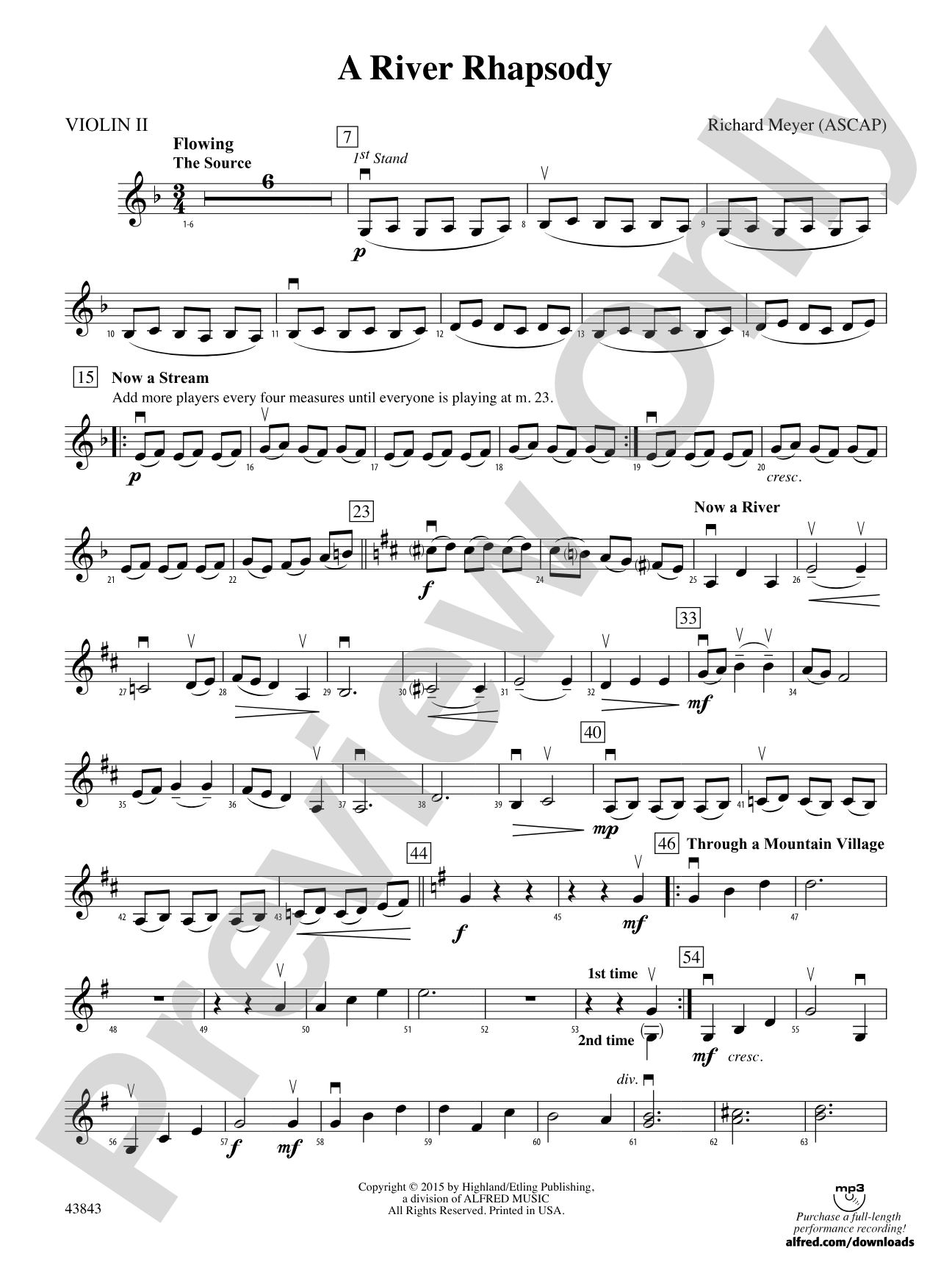

A River Rhapsody: 2nd Violin
By Richard Meyer
Grade: 2.5
Item: 00-PC-0016939_VN2
$5.99
Pickup currently not available
Description
A great way to introduce students to tone painting, this unique and fun-to-play selection traces the path of an imaginary river, which begins as a tiny spring and gradually grows. Themes from three famous "river pieces" are included: "The Beautiful Blue Danube," "Water Music," and "The Moldau." (4:00)


Don't just read it, hear it, play along with it, and watch your students grow with it. In MakeMusic Cloud, A River Rhapsody: 2nd Violin comes alive with professional accompaniment, adjustable tempo, and built-in practice tools that turn solo practice into real progress.
Open in the Player
Jump straight in and assign it today.
Start Your Free Trial
Open this title and explore the full library in minutes.
Sample Audio
1
Audio File
--:--
0:00
0:00
Sample Video
Additional Details
Series:
Highland/Etling String Orchestra
Publisher:
Alfred Music
Page Count:
124
SKU:
00-PC-0016939_VN2
More about this title
About the Composer: Richard Meyer

Richard Meyer has spent four decades shaping string programs across California's public schools, most notably at Oak Avenue Intermediate School in Temple City, where he transformed a 29-student orchestra into a thriving ensemble of 200. His work extends far beyond the rehearsal room: he founded the "Giving Bach" program in 2009, an innovative initiative that brings interactive concerts to students with special needs and those in underserved communities throughout Southern California, earning national recognition for its approach to music access.
As a conductor, Meyer led the Pasadena Youth Symphony Orchestra for 16 years and has guest-conducted All-State orchestras across multiple states, along with clinician appearances at the A.S.T.A. National Conference and university workshops. His prolific output as a composer and arranger includes over 190 published works, and he served 16 years as string editor for Alfred Publishing Company. Meyer is also co-author of widely used string curricula, including the String Explorer Series and Sight-read It for Strings.
Why we love this
Meyer crafts tone painting with real orchestral sophistication while keeping the technical demands accessible to Grade 2.5 players. The narrative arc of a river journey gives students a concrete musical image to follow, and the strategic use of three recognizable themes rewards their listening skills without feeling like a "greatest hits" compilation. A director can program this with confidence that it will engage both performers and audiences in a genuinely musical way.
What to expect
A River Rhapsody unfolds like a journey you can hear and feel: you begin in intimate, delicate space and gradually expand into something grander and more confident. The familiar melodies emerge naturally within the orchestral landscape, creating moments of recognition that delight both players and listeners while never overwhelming the central image of water in motion.
Who it's for
This score and parts set is ideal for middle school or advanced elementary string orchestras ready to explore descriptive music and layered orchestration. The Grade 2.5 level keeps technical barriers low while the thematic content and four-minute arc demand genuine musical maturity from conductors and players alike.
How to get the most out of it
- Build the dynamic shape gradually as the river grows from spring to full flow; resist the urge to jump to forte too quickly, since the journey spans the entire piece.
- Listen closely for the moment each famous theme enters and clarify which section carries it; string players often focus inward, so front-seat awareness of the orchestral texture keeps the narrative clear.
- Balance the accompaniment figures with melodic lines so the river's movement stays visible rather than disappearing behind harmonic support.
- Use the character transitions as opportunities to shift bow weight and vibrato: a tiny spring moves differently than a mighty river.
How to use it
Program this as a centerpiece on a winter or spring concert where you want to shift focus to storytelling and orchestral color; it works beautifully alongside folk-based selections or as the anchor for a thematic concert about nature and water. The contest/festival designation also makes it a strong choice for developing ensembles working toward their first competitive performance.
Skills your students will build
- Tone painting and musical imagery (translating narrative into sound)
- Dynamic shaping and crescendo control over extended passages
- Orchestral balance and awareness of inner voices
- Recognition of theme and variation within familiar melodies
- Ensemble precision in transitions between musical sections