
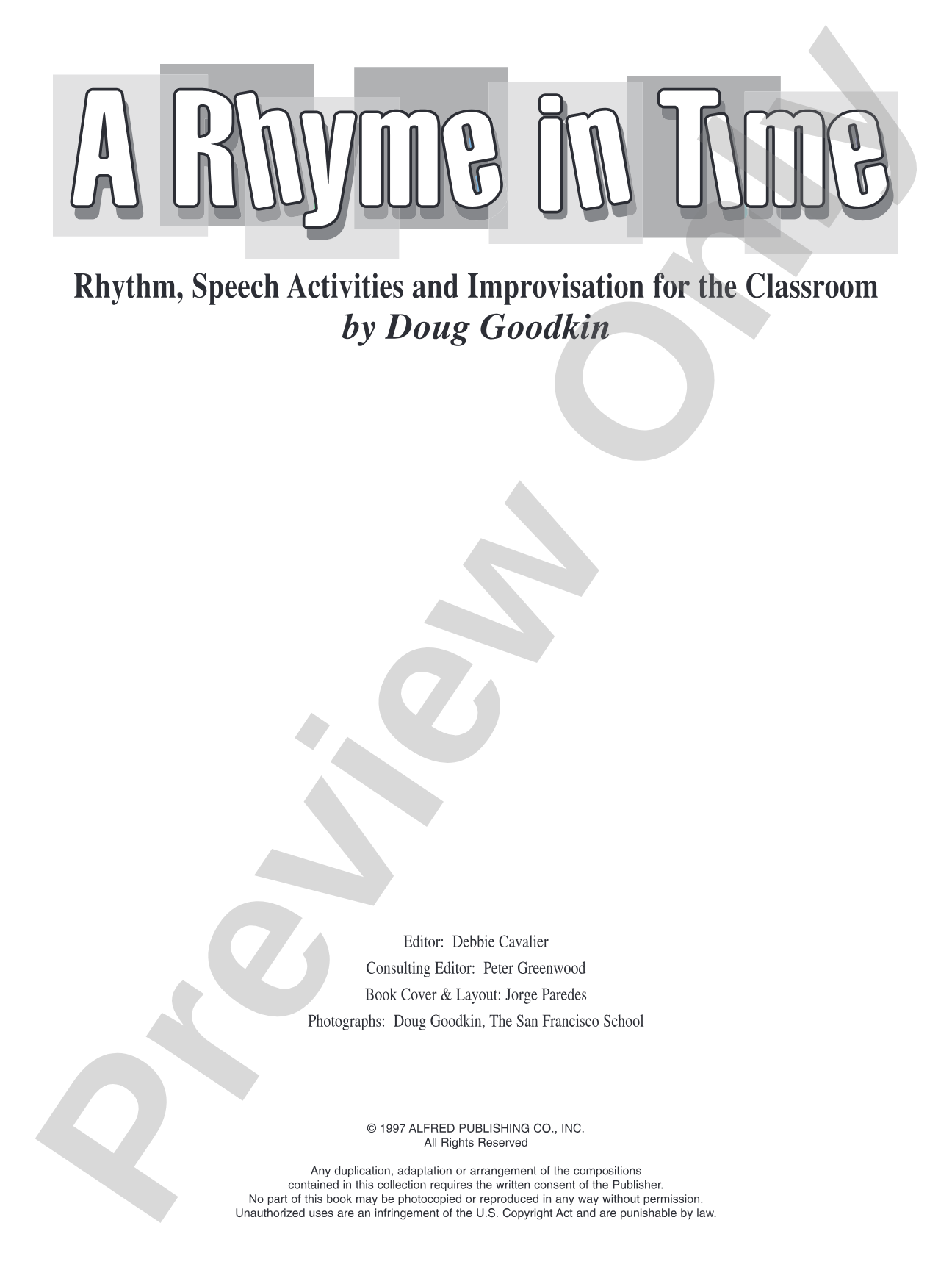

A Rhyme in Time: Rhythm, Speech Activities, and Improvisation for the Classroom
Rhythm, Speech Activities, and Improvisation for the Classroom
By Doug Goodkin
Level: Elementary
Item: 00-PB-0002085
$14.95
Pickup currently not available
Related Items
A Rhyme in Time: Book |
$14.95
|
View |
Description
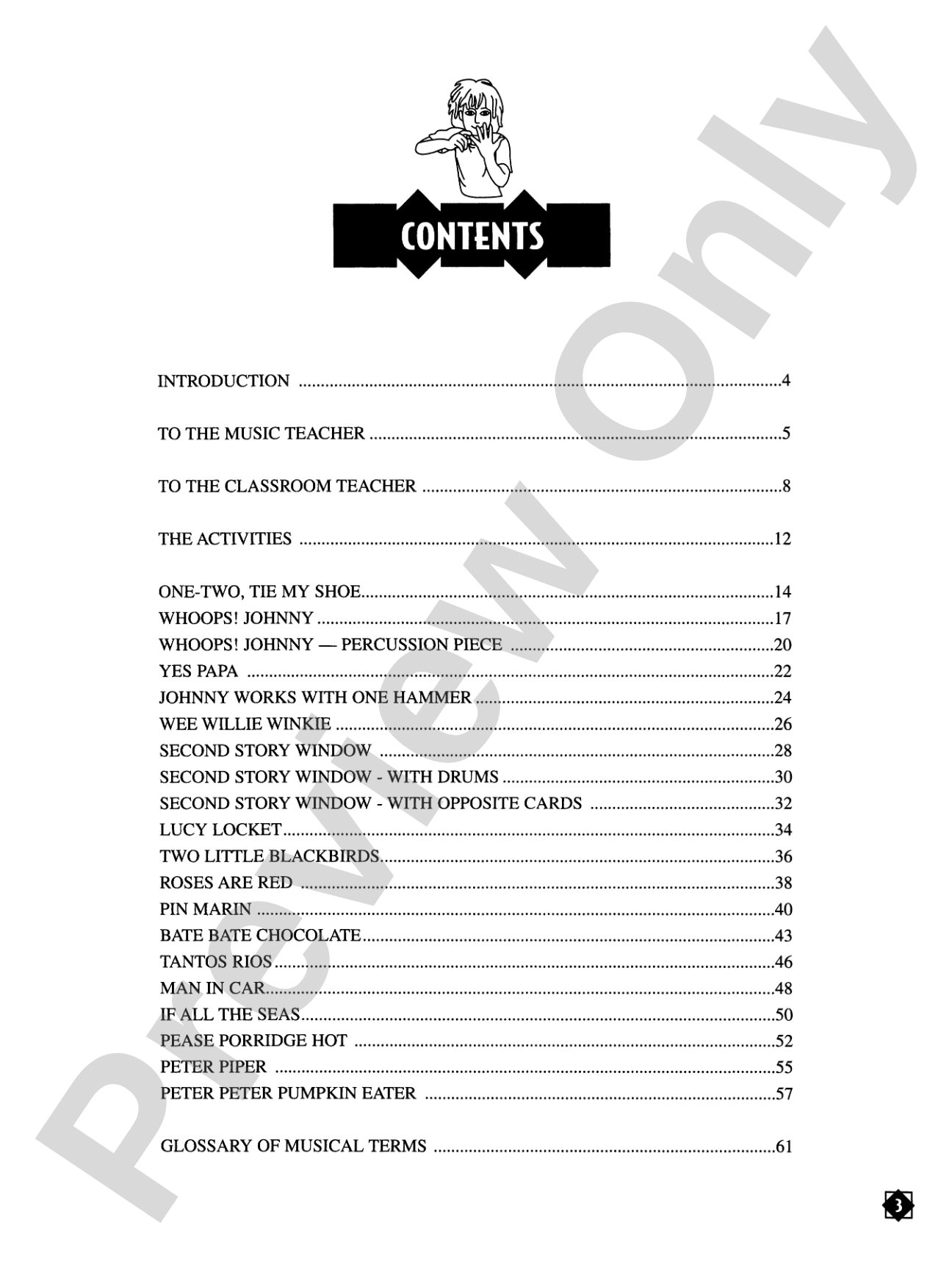
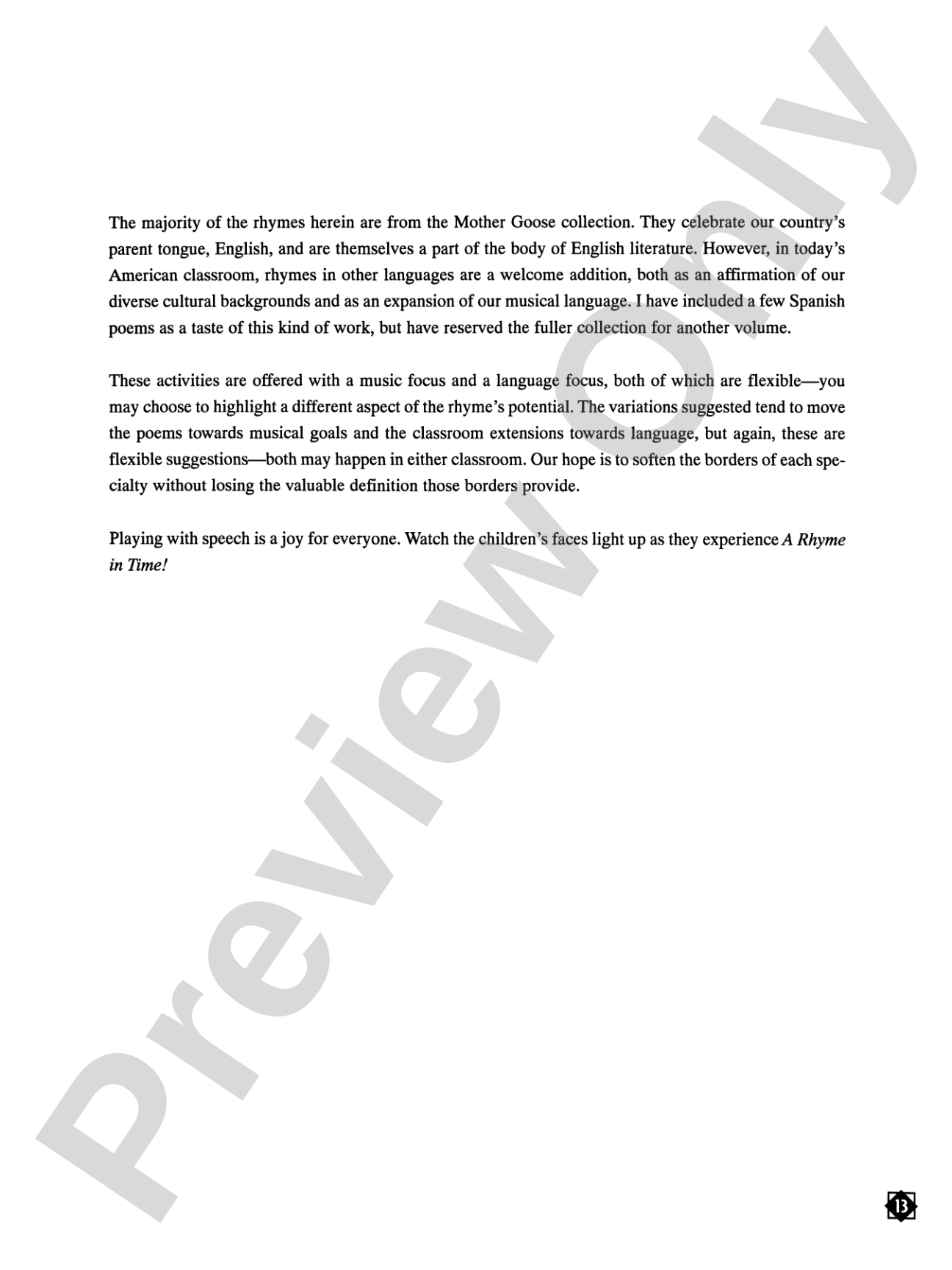
A well-rounded collection of language, movement, and music activities for grades K--8. The pieces integrate well with language arts programs; the rhymes and poems build a foundation for rhythm, phrase, and form. With a developmental process based on the Orff-Schulwerk, each lesson is designed with an open structure that makes them adaptable to the skill level of any group. Includes: One-Two, Tie My Shoe * Wee Willie Winkie * Baté Baté Chocolate * Tantos Rios * Second Story Window * Whoops! Johnny * Two Little Blackbirds and many more.


A Rhyme in Time: Rhythm, Speech Activities, and Improvisation for the Classroom isn't in MakeMusic Cloud just yet...but it could be. Let us know you'd like to see it, and you'll help shape what comes next. In the meantime, start a free trial and dive into thousands of interactive titles your students can play along with today.
Request This Title
Tell us you want it.
Start Your Free Trial
Explore everything that's ready to play right now.
Sample Audio
No sample audio found.
Sample Video
No sample videos found.
Additional Details
Publisher:
Alfred Music
Page Count:
64
SKU:
00-PB-0002085
More about this title
About the Composer: Doug Goodkin

Doug Goodkin has shaped elementary music education for nearly five decades at The San Francisco School, where he develops sequential music and movement instruction for learners from preschool through eighth grade. His influence extends globally through teaching residencies across six continents and his leadership of the San Francisco Orff Course, cementing his status as a central figure in contemporary Orff Schulwerk practice.
Beyond traditional Orff pedagogy, Goodkin has pioneered approaches that weave jazz idioms, world music, language development, and social learning into the Schulwerk framework. His seven books and extensive catalog of articles document this integration, making him a resource for teachers seeking to connect music with literacy and community in elementary classrooms.
Why we love this
The open structure means you adapt every activity to your students rather than forcing your students into a rigid sequence. Goodkin builds genuine pedagogical progression within each lesson while leaving room for improvisation and differentiation, which is rare in materials this comprehensive. The marriage of language arts and music through rhyme and rhythm creates dual literacy benefits without feeling forced or artificial.
What to expect
These activities pulse with the energy of children's rhymes and games, yet they're built on solid musical foundations. There's playfulness in the structure, humor in some of the chosen texts, and a sense of discovery as students move from spoken rhythm into pitched melody and coordinated ensemble playing. The overall character feels organic and joyful rather than overly constructed.
Who it's for
Classroom teachers and music specialists working with grades K through 8 who want materials grounded in proven pedagogy but flexible enough to meet mixed ability levels. This resource works especially well for educators integrating music with language arts instruction or seeking to build ensemble skills from the ground up.
How to get the most out of it
- Start with speech and body percussion before adding pitched instruments. This honors the developmental arc and gives students confidence before coordinating multiple sound sources.
- Encourage students to create their own variations once the basic pattern lands. The materials invite improvisation, so lean into student-generated versions rather than polishing a single interpretation.
- Use the poems as anchors for phrasing and breath. Children naturally learn how musical phrases match language phrasing when the text is the starting point.
- Layer instrumental and vocal elements gradually. Begin unison, then add ostinatos, then explore canons and rounds as students internalize the foundational material.
How to use it
Draw from individual activities throughout the year as warm-ups, literacy integration moments, or building blocks for larger ensemble pieces. Many teachers use this collection as their core material for Orff instruction, spiraling back to favorites across grade levels. The developmental approach also works well for professional development sessions or demonstration teaching with mixed age groups.
Skills your students will build
- Connecting spoken language patterns to rhythmic notation and performance
- Coordinating body percussion, vocal, and instrumental sounds as an ensemble
- Improvising within given harmonic and rhythmic frameworks
- Understanding phrase structure through rhyme schemes and musical repetition
- Reading and performing mixed meters and syncopated rhythms
- Creating ostinato patterns and layering them into textures